
An Interesting MIT Tablets Decision: Flavor or Flavorless
The journey of botanical products from their raw, ancient forms to the polished, consumer-friendly options of today is a fascinating story of technology and preference. We live in an era of unprecedented choice, where consistency, convenience, and user experience have become the primary drivers of innovation. This evolution has transformed how people interact with all sorts of natural products, moving them from the field to the high-tech lab. Nowhere is this more apparent than in the modern Kratom market, which has rapidly expanded beyond simple powders and into the realm of precise, concentrated extracts. At the forefront of this new wave are products designed for ultimate convenience and potency: MIT tablets. This has led to a new and intriguing fork in the road for the discerning user: the choice of how their product interacts with their most basic sense—the sense of taste.
A Brief Glimpse into the World of Kratom
Before we can truly appreciate the nuances of a modern, high-tech tablet, we must first have a foundational understanding of the plant from which it is derived. Kratom is not a synthetic product; it is a botanical with deep roots in the history and culture of Southeast Asia.
Kratom is the common name for Mitragyna speciosa, a tropical evergreen tree that’s a member of the Rubiaceae family. This makes it a direct, and rather distinguished, cousin to the coffee plant (Coffea). This botanical relationship provides an immediate clue to its traditional role in its native lands. These impressive trees can soar to heights of 80 feet or more, thriving in the hot, humid, and rain-rich equatorial climates of countries like Indonesia (particularly the island of Borneo), Thailand, Malaysia, and Papua New Guinea.
The part of the plant that has garnered global attention is its large, glossy, deep-green leaves. These leaves are the sole part of the tree harvested for use, as they are the part that contains a complex and fascinating array of natural compounds. For centuries, perhaps millennia, Kratom was not a "product" but a part of daily life for the indigenous populations of these regions.
Its primary traditional use was by manual laborers, farmers, fishermen, and field workers. These individuals faced long, grueling days of physically demanding work, often under the intense tropical sun. To help them maintain their stamina and get through the day, it was common practice to pluck fresh leaves directly from a nearby tree and simply chew them. This method was believed to release the leaf's natural compounds, providing a sustained sense of endurance and a more positive outlook on the day's labor. It was a tool for productivity, a way to make the demanding work feel more manageable.
Beyond this functional role, Kratom also held a social one. A dark, potent tea brewed from dried leaves was often prepared and served to guests as a sign of hospitality or shared among friends and family during social gatherings and village ceremonies. It was a communal botanical, much like coffee or tea is in other parts of the world, used to facilitate social connection and relaxation after a hard day's work.
This tradition of use informs the Kratom products we see today, particularly the "vein" colors that dominate the market. These colors—Red, Green, and White—are not different species of trees. Rather, they are the result of different harvesting and, most importantly, post-harvest processing techniques:
- White Vein: Typically made from younger leaves and, crucially, dried entirely indoors, away from any sunlight. This light-deprivation process is believed to preserve the highest concentration of the primary alkaloid, Mitragynine, leading to a profile associated with energy and focus.
- Green Vein: Often considered the "middle path," these leaves are frequently dried indoors for a period and then moved outdoors to finish drying in the sun, striking a balance in the final chemical profile.
- Red Vein: This type usually undergoes the most significant transformation. After picking, the leaves are often packed into bags and left to ferment or "cure" in their own moisture. This enzymatic and oxidative process alters the alkaloid profile, converting some Mitragynine into other compounds. This is why Red Veins are associated with more relaxing and calming properties.
This traditional knowledge of processing and its effect on the final experience is the very foundation upon which the modern extraction industry is built.
Zooming in on the Alkaloid Mitragynine
To understand what a "MIT Tablet" is, we must move from the botanical level to the chemical one. The "effects" of Kratom, from the traditional leaf-chewing to the modern tablet, are all thanks to a class of natural compounds called alkaloids.
Alkaloids are naturally occurring organic compounds, typically containing at least one nitrogen atom, and they are produced by a vast array of organisms, from fungi to plants. In the plant kingdom, they often serve as a defense mechanism, protecting the plant from being eaten by insects or herbivores dueto their often bitter taste and potent biological activity. For humans, these same compounds have become some of our most well-known and utilized substances. Caffeine in coffee, theobromine in chocolate, and quinine from the cinchona tree are all famous examples of plant alkaloids.
The Kratom leaf is a veritable chemical factory. To date, scientists have identified over 40 distinct alkaloids in Mitragyna speciosa. When someone consumes traditional Kratom powder, they are consuming this entire orchestra of 40-plus compounds at once. This complex interplay is often referred to as the "entourage effect," where the sum of the parts may create a more nuanced or well-rounded experience than any single compound on its own.
However, within this vast orchestra, there is one undeniable lead musician: Mitragynine.
Mitragynine is the most abundant alkaloid in the Kratom leaf. In a typical batch of dried powder, Mitragynine can account for anywhere from 40% to as high as 70% of the total alkaloid content. It is the foundational compound, the chemical signature of the Mitragyna speciosa plant. Chemically, it is an indole alkaloid, and its structure serves as the blueprint for many of the other compounds found in the leaf.
For decades, Mitragynine has been considered the primary driver of Kratom's most well-known properties. It is the compound most closely associated with the "active" or "uplifting" side of the Kratom spectrum. At lower doses, this is the alkaloid that the traditional laborers were seeking for that sense of get-up-and-go and focus. Users who consume high-Mitragynine products (like White Veins or, as we're discussing, MIT-specific extracts) often report a sense of enhanced clarity, a brighter mood, increased sociability, and a clean, uplifting feeling of well-being.
The push for "MIT tablets" comes from a very modern problem: consistency. The alkaloid content of raw Kratom powder is notoriously variable. It can change from tree to tree, from farm to farm, and from harvest season to harvest season. A "White Maeng Da" powder from one vendor might be 1.8% Mitragynine, while from another it might be 1.2%. This variability means the user can never be 100% certain of the experience they will get.
The solution? Extraction and standardization. By chemically extracting the alkaloids from the leaf and then testing and standardizing them, manufacturers can create a product that delivers the exact same amount of Mitragynine, every single time. This is the entire purpose and appeal of the MIT tablet.
A Detailed Breakdown of MIT Tablets
The MIT tablet represents the modern evolution of Kratom consumption. It is a product born from the desire to bypass the plant's natural variability and the inconveniences of its raw form (namely, the messy powder and the notoriously bitter taste). It is a concentrated, precisely dosed, and convenient delivery system for Kratom's primary alkaloid.
Creating a high-quality MIT tablet is a sophisticated, multi-step process that bears more resemblance to pharmaceutical manufacturing than it does to traditional farming:
- Sourcing the Leaf: The process begins, as it must, with the plant. Manufacturers will source huge batches of Kratom leaves, typically a strain that is already known for its high Mitragynine content, such as a potent White or Green Vein.
- Primary Extraction: These large quantities of dried, ground leaf matter are then subjected to a primary extraction. This involves using a solvent (like food-grade ethanol or, in more advanced set-ups, supercritical CO2) to "wash" the leaves. This solvent dissolves the alkaloids, pulling them out of the inert plant fiber. The solvent is then evaporated, leaving behind a dark, thick, resinous paste. This is a "full-spectrum" crude Kratom extract, and it is extremely potent.
- Testing and Standardization: This is the most critical step. A sample of this crude extract is taken to a lab and analyzed using a process called High-Performance Liquid Chromatography (HPLC). This test gives the manufacturer an exact "fingerprint" of the extract, telling them the precise percentage of Mitragynine and other alkaloids. Let's say the crude extract is 40% Mitragynine by weight.
- Compounding (The "Recipe"): The manufacturer now has to "dilute" this potent extract to create a consistent, final product. They will blend the 40% extract powder with a substrate. This substrate could be an inert, food-grade filler (like microcrystalline cellulose) or, very commonly, it could be high-quality plain Kratom powder. They will blend these in a precise, pre-calculated ratio until the final powder blend for the tablets is, for example, exactly 10% Mitragynine by weight.
- Adding Binders and Pressing: This final, standardized powder won't form a hard tablet on its own. It must be mixed with several other inactive ingredients:
- Binders (e.g., Microcrystalline Cellulose): These are the "glue" that helps the tablet hold its shape.
- Flow Agents (e.g., Silicon Dioxide): These ensure the powder flows smoothly and evenly into the tablet press dies, guaranteeing a uniform dose.
- Lubricants (e.g., Magnesium Stearate): These prevent the powder from sticking to the metal punches of the tablet press.
This complete mixture is then fed into an industrial tablet press, a rotating machine that uses immense pressure (several tons) to compact the powder into hard, uniform tablets.
While we use "MIT tablet" as a general term, there are a few variations a consumer might encounter:
- Standardized Full-Spectrum Extract (FSE) Tablets: This is the most common type, made using the process described above. The key is that the extract is "full-spectrum," meaning it contains Mitragynine plus the other secondary alkaloids (Paynantheine, Speciogynine, etc.). This provides the "entourage effect" and a more well-rounded, balanced feel.
- MIT Isolate Tablets: These are a more specialized, high-tech product. In this case, after the initial extraction, the manufacturer uses further refinement (like chromatography) to isolate the Mitragynine from all other alkaloids. The final tablet contains 99%+ pure Mitragynine. These are rarer, more expensive, and offer a much more "one-note" and targeted experience, lacking the "entourage" balance.
- Pressed Powder Tablets: These are not extract tablets at all, but they are worth mentioning. Some vendors simply take raw Kratom powder, add a binder, and press it into a tablet. These are much less potent than extract tablets and are essentially just a "capsule-free" way to take raw powder.
When you buy a bottle of MIT tablets, you must pay attention to:
- The Total Tablet Weight: This is the physical weight of the entire tablet, including the extract, the binders, and any fillers. This is often 500mg, 750mg, or 1000mg (1 gram).
- The Active Alkaloid Content: This is the number that actually matters. It tells you how much Mitragynine is in that tablet.
This strength is expressed in one of two ways:
- By Percentage: The label might say "1000mg Tablet, 8% Mitragynine."
- This requires simple math: 1000mg * 0.08 = 80mg of Mitragynine per tablet.
- By Direct Amount: The label might say "500mg Tablet, Contains 40mg Mitragynine."
- This is much more user-friendly, as the manufacturer has done the math for you.
A "serving" of Mitragynine in an extract tablet can range from 20mg on the low end to over 100mg on the high end. To put this in context, a 5-gram dose of very strong, high-quality raw Kratom powder (at 1.8% Mitragynine) would contain 90mg of Mitragynine (5000mg * 0.018 = 90mg). Thus, a single 90mg MIT tablet can be seen as roughly equivalent to a 5-gram powder dose, but delivered in a compact, tasteless form without any of the bulky, fibrous plant matter.
Also, packaging for these modern products is all about safety, stability, and discretion:
- Multi-Count Bottles: The most common format. Tablets are sold in sealed, pharmaceutical-style plastic bottles (e.g., 30-count, 50-count), usually with child-resistant caps and a cotton wad to prevent breakage.
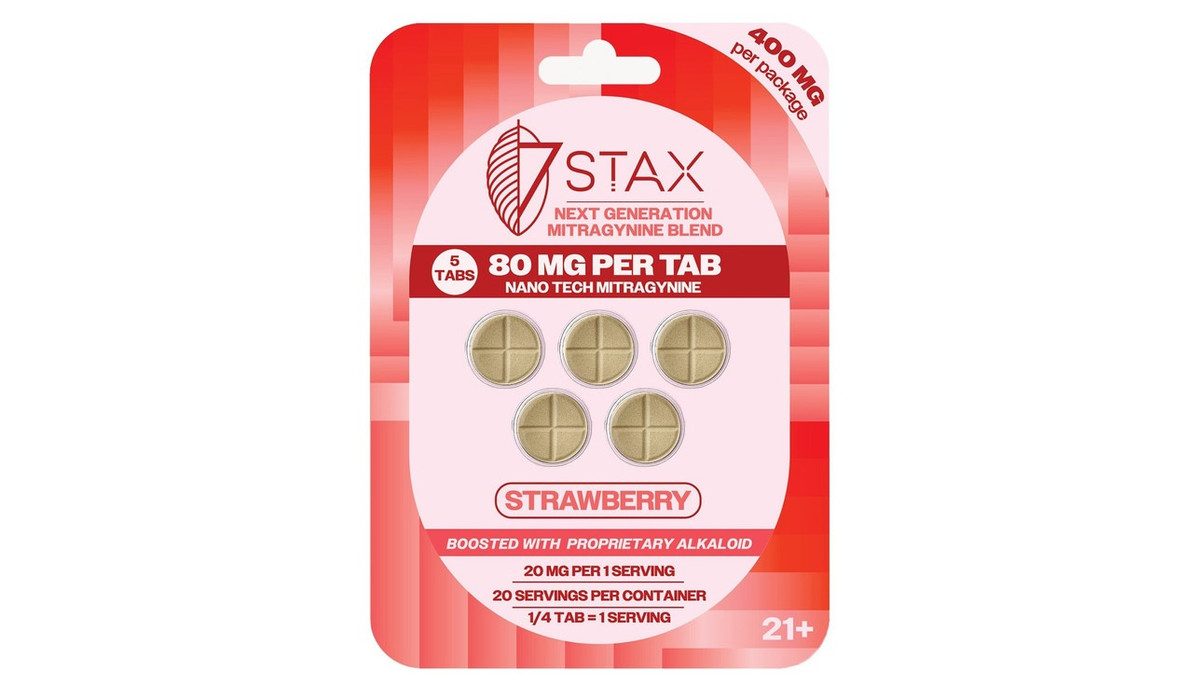
- Blister Packs: Some premium tablets are sold in blister packs, where each tablet is sealed in its own foil or plastic bubble. This is excellent for preserving freshness, protecting the tablet from moisture and oxidation, and makes for very easy, portable, on-the-go use.
Finally, since most MIT tablets are standardized full-spectrum extracts, their effects are often described as a "cleaner", more "predictable" version of a strong Green or White Vein powder:
- The "Feel": Users report a powerful, balanced sense of well-being. It's an "uplifting" experience, often described as enhancing clarity and focus.
- The "Lift": This is the quintessential "get-up-and-go" product. It is sought by users for social occasions to feel more chatty and engaged, for tackling creative projects, or for a general mood and energy boost.
- The "Cleanliness": A major reported benefit is the lack of the "body load" that can sometimes come from consuming several grams of raw plant fiber. The experience is described as less "heavy" and more "clear-headed."
- Consistency: This is the number one benefit. The user knows that the 50mg MIT tablet they take today will feel exactly the same as the 50mg MIT tablet they take next week. This predictability is the product's entire reason for being.
The Great Divide: Flavor or Flavorless
We now arrive at the core of our discussion. The primary benefit of the standard MIT tablet is its ability to be swallowed, completely negating the single greatest barrier to entry for new Kratom users: the taste. Raw Kratom powder is renowned for its flavor, and not in a good way. It is intensely bitter, earthy, and "green," often compared to a mouthful of strong, unsweetened matcha, dirt, and lawn clippings. The "toss and wash" method is a grim-faced necessity, not an enjoyable act.
The standard, flavorless hard-pressed tablet solves this problem perfectly. You place it on your tongue, take a sip of water, and swallow. The entire sensory experience is bypassed. It is a purely functional, efficient delivery system.
But what if it didn't have to be? What if, instead of bypassing the sense of taste, the product could engage it in a positive way? This is the question that has led to the creation of the flavored MIT tablet, a product that is almost always a chewable or dissolvable tablet.
This decision—flavor or flavorless—is not just a minor preference, like choosing a color. It is a fundamental choice about the entire user experience: efficiency vs. enjoyment, passivity vs. activity, and function vs. form.
The Flavorless Option: The Pragmatist’s Choice
The flavorless MIT tablet is the industry standard. It is a hard-pressed, often coated, pill designed to be swallowed whole and intact.
The Experience: The "experience" is, by design, the lack of an experience. It is as simple as taking any vitamin. You get your glass of water, pop the tablet in your mouth, and swallow. There is no taste, no texture, no mess. The onset of effects is determined by your digestion, as the tablet must be broken down by your stomach acids before the Mitragynine can be absorbed, a process that typically takes 30-60 minutes.
The Philosophy: The user of the flavorless tablet is a pragmatist. They are not seeking a sensory journey or a tasty treat. They are seeking a specific, predictable botanical effect. The tablet is a means to an end. The goal is to get the standardized dose of Mitragynine into their system with the absolute minimum amount of fuss, time, and sensory input. It is the very definition of function over form.
Who is this For?
Choosing flavorless can be for:
- The Purist: The user who wants nothing to do with artificial flavors, sweeteners, or colors. They want the extract and the necessary binders, and nothing else.
- The Efficient User: The person who is on the go, who values speed and discretion above all else. Swallowing a pill is the fastest way to consume a dose.
- The Flavor-Averse: This user not only dislikes the taste of Kratom, but they may also dislike the taste of strong mints, "blue razz," or other masking flavors. They prefer neutrality.
- The Traditionalist (in a Modern Way): This user sees the tablet as a "tool" and doesn't want to blur the line by making it feel like "candy."
Pros & Cons:
Yes, there are key advantages and drawbacks when going this route.
Pros:
- Zero Taste: This is its number one benefit. It completely and totally eliminates the infamous bitterness of Kratom.
- No Additives: It does not contain sweeteners (like sucralose, aspartame, or stevia), artificial flavoring agents, or coloring dyes.
- Speed of Consumption: The act of swallowing a pill takes less than two seconds.
- No Lingering Aftertaste: There is no "Kratom-y" residue or artificial sweetener aftertaste left in the mouth.
Cons:
- Requires Liquid: You must have water, juice, or some other beverage on hand to swallow it.
- Difficulty Swallowing: A significant portion of the population has difficulty swallowing pills (dysphagia), especially the larger 1000mg tablets. This can be a major barrier.
- "Medicinal" Feel: The experience can feel sterile, cold, or "medicinal," which some users may find unappealing.
- Delayed Onset: The tablet must be fully broken down in the stomach, which can lead to a slower onset of effects compared to a liquid or chewable.
The Flavored Option: The Innovator’s Choice
The flavored MIT tablet is a direct response to the "cons" of the flavorless model. It is designed to transform the act of consumption from a chore (swallowing) into an experience (tasting). These products are almost exclusively chewable tablets or orally disintegrating tablets (ODTs).
The Experience: This is an active consumption method. The user places the tablet in their mouth and either chews it or allows it to dissolve on their tongue. This immediately releases the flavor, the sweetener, and, of course, the Kratom extract. This means the user is engaging directly with the taste, but it's a taste that has been heavily engineered to be pleasant. Flavors like "Winter Mint," "Citrus Blast," or "Tropical Berry" are common. Because some of the absorption may begin in the mouth (buccal and sublingual absorption), the onset of effects can sometimes be perceived as faster.
The Philosophy: The user of the flavored tablet values the journey as much as the destination. Why should a botanical experience be a grim-faced ordeal? By adding flavor, manufacturers are making the product more accessible, more enjoyable, and more "consumer-friendly." It's about taking a product that is known for its bitterness and performing a sort of culinary alchemy to turn it into a treat. It is form as function.
The Science of Flavoring an Extract: This is the real challenge, and it's far more complex than it sounds. Kratom extract is not just bitter; it's aggressively bitter, with a complex, lingering "green" profile. Simply dumping in sugar isn’t enough. To make a palatable flavored tablet, manufacturers must use a multi-pronged approach:
- Sweeteners: High-intensity sweeteners are a must. Sucralose, stevia, or sugar alcohols (like xylitol or mannitol) are used to provide the primary "sweet" sensation that counteracts the "bitter."
- Flavoring Agents: These are the "top notes"—the mint, citrus, or berry flavor. These can be natural (like peppermint oil) or artificial. Their job is to be the first, most prominent taste the user registers.
- Masking Agents & Bitterness Blockers: This is the high-tech part. These are specific, proprietary compounds that are tasteless on their own but are engineered to "latch on" to the parts of the Kratom alkaloids that bind to our bitter taste receptors. They essentially "run interference," preventing your tongue from ever registering the full bitterness.
- Acids: For fruit flavors, acids like citric acid (for tartness) and malic acid (for a smooth "apple" sourness) are added to make the fruit flavor "pop" and feel more authentic.
Who is this For?
Choosing flavored tablets can be for:
- The Pill-Hater: Anyone who has difficulty or a strong aversion to swallowing pills.
- The Sensory-Driven User: The person who enjoys a full sensory experience and wants their dose to taste good.
- The "New" User: Flavored tablets are an incredibly effective "gateway" for people who are curious about Kratom but have been scared off by horror stories about the taste.
- The Discreet User: A chewable mint-flavored tablet is arguably even more discreet than swallowing a pill, as it just looks like you're having a breath mint.
Pros & Cons:
Yes, there are key advantages and drawbacks when going this route.
Pros:
- Enjoyable Experience: It can transform the act of dosing from a chore into a pleasant moment.
- No Liquid Needed: You can take it anywhere, anytime, without needing a bottle of water.
- Potentially Faster Onset: Absorption can begin in the mouth, which may lead to a quicker ramp-up of effects for some users.
- Great for Pill-Averse Users: It's the only viable tablet option for those who cannot or will not swallow pills.
Cons:
- The Aftertaste Battle: Masking Kratom extract is hard. Even the best-flavored tablets can have a slight "Kratom-y" bitterness that breaks through at the end or lingers as an aftertaste.
- Contains Additives: By definition, it contains sweeteners, flavorings, and other compounds that a "purist" user may wish to avoid.
- The "Treat" Confusion: Making a potent product taste like a treat can be a double-edged sword, as it might blur the user's perception of the product.
- Texture: Some users may not enjoy the chalky or gritty texture of a chewable tablet.
The Decision Chart: Flavor vs. Flavorless
To make this choice even clearer, here is a side-by-side comparison. There is no "winner"—only the right choice for your specific needs, preferences, and lifestyle.
|
Consideration |
Flavorless MIT Tablet (Swallowable) |
Flavored MIT Tablet (Chewable/Dissolvable) |
|---|---|---|
|
Primary Goal |
Efficiency & Function |
Enjoyment & Experience |
|
Taste |
Zero. The entire point is to bypass taste completely. |
Pleasant (e.g., Mint, Citrus). Designed to be tasty. |
|
Consumption Method |
Passive. Swallowed whole with a liquid. |
Active. Chewed or dissolved in the mouth. |
|
Convenience |
High, but requires a beverage. |
Highest. No liquid needed for consumption. |
|
Key "Pro" |
Absolutely no taste, no sweeteners, no flavors. |
No need to swallow a pill; enjoyable taste. |
|
Key "Con" |
Difficult for those who can't swallow pills. |
Can have a slight "Kratom" aftertaste; contains sweeteners. |
|
Onset of Effects |
Standard (30-60 mins). Relies on stomach digestion. |
Potentially Faster (15-45 mins). Absorption can begin in the mouth. |
|
Active Ingredients |
Standardized Extract + Binders/Flow Agents. |
Standardized Extract + Binders + Sweeteners + Flavors. |
|
"Feel" of Product |
Functional, discreet, "medicinal." |
Enjoyable, discreet, "treat-like." |
|
Ideal User |
The pragmatist who wants a fast, clean, tasteless dose. |
The user who hates pills and values a pleasant sensory experience. |
Bottom Line: It is a Matter of Personal Palate
The fact that we are even having this discussion—debating the finer points of a flavored versus a flavorless tablet—is a testament to how far the botanical market has come. It signals a mature industry that is no longer just focused on the raw product, but on the total user experience. This choice is the very definition of a "first-world problem" in the best possible way. It means that manufacturers are listening to consumers and innovating to solve the most common and persistent complaints, like bitter taste and difficulty swallowing pills. The decision ultimately rests on a simple, personal question: are you a person who just wants to get from Point A to Point B with maximum efficiency, or are you someone who believes the journey itself should be a pleasant one? The Calm Leaf has certainly tapped into this desire for both effectiveness and enjoyment.
Recent Posts
-

How to Actually Determine the Effectiveness of CBD + Melatonin Products
The transition from a high-velocity workday to a state of profound nocturnal tranquility often requi …Mar 24, 2026 -
A New But Simplistic Kratom Decision: Kratom Tablets vs. Kratom Capsules
Modern botanical enthusiasts are increasingly trading the cluttered mess of loose powders for a more …Mar 20, 2026 -
Give Your Drinks & Beverages a Nice Boost with THC Drink/Beverage Enhancers
For many people, there’s a specific kind of anticipation that builds when realizing their favorite m …Mar 17, 2026