
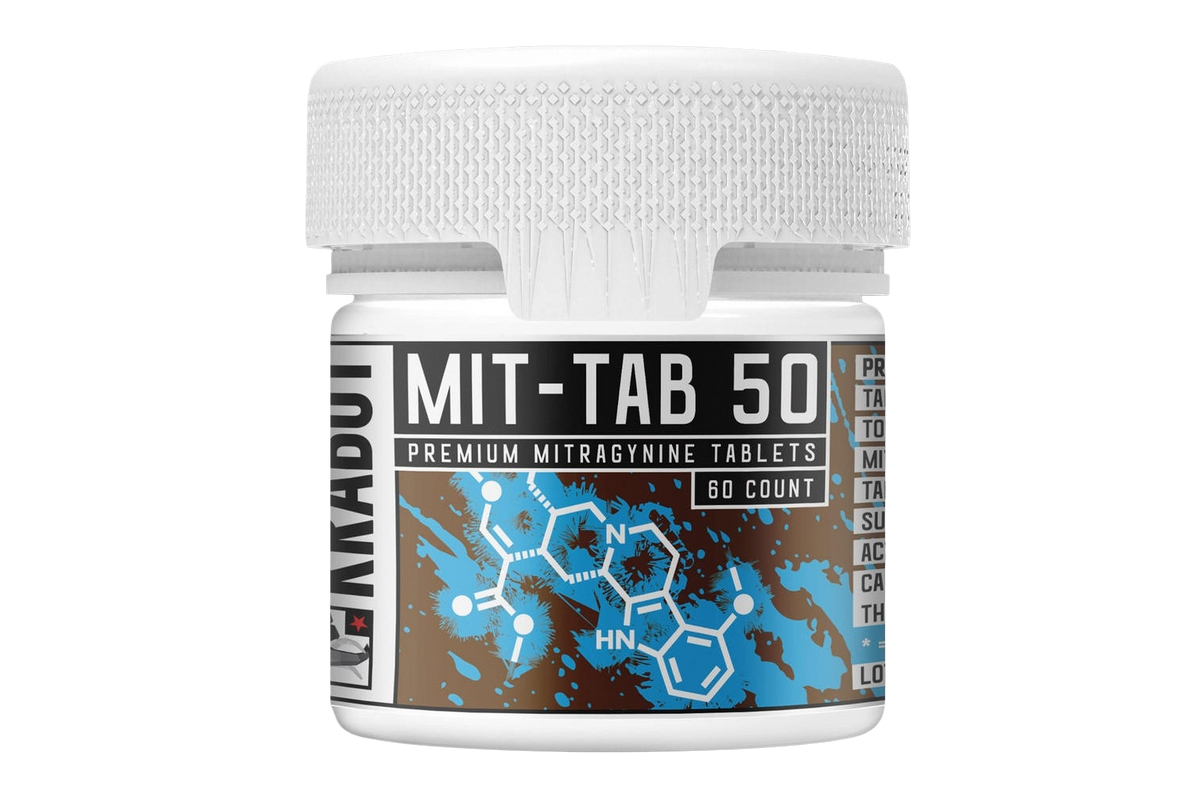
Do MIT Tabs Actually Expire?
We’ve all done it. That familiar rummage through the back of a cabinet, a wellness drawer, or a gym bag, searching for a product we bought with the best of intentions. Our fingers finally land on a half-forgotten bottle, and our first, almost instinctual, action is to search for a date. That tiny stamp on the bottom or side of the package is our universal guide, a small beacon of information that we are conditioned to trust. When this object is a botanical product, a little-understood item from the wide world of wellness, that question of freshness feels even more critical. Do these modern, precisely-crafted tabs, which seem so stable and scientific, actually have a "best-by" date? Are they susceptible to the same forces of time as the food in our pantry? The simple answer is a definitive "yes" but that "yes" is merely the cover of a much deeper, more fascinating book. It’s a story of delicate chemistry, botanical fragility, and the constant, invisible battle against the elements.
The Botanical Heart: What is Kratom Mitragynine?
Before we can ever diagnose the "illness" of expiration, we must first get to know the "patient." What, exactly, is the active compound at the heart of these "MIT" tabs? The answer is a journey deep into the rainforests of Southeast Asia and into the complex, microscopic world of plant-based chemistry. The "MIT" in "MIT Tabs" is an abbreviation for Mitragynine, the most prominent and well-known active compound found in the leaves of the Mitragyna speciosa tree.
Demystifying the Source: Mitragyna speciosa
The Mitragyna speciosa tree is a towering, tropical evergreen, a native member of the coffee family (Rubiaceae). For centuries, perhaps even millennia, it has grown wild in the lush, humid climates of countries like Thailand, Indonesia, Malaysia, Myanmar, and Papua New Guinea. Within the traditional cultures of these regions, the tree's leaves have been a well-known and utilized part of daily life. Laborers and farmers, for example, have a long history of chewing the raw, fresh leaves to help them get through long, arduous days of work.
The leaf itself is unassuming. But contained within its waxy, green structure is a microscopic, veritable "factory" of complex organic compounds. These compounds are the entire reason the plant has captured the attention of the modern world. They are known, as a class, as alkaloids.
The Alkaloid Engine: What is Mitragynine?
Alkaloids are a broad and diverse group of naturally occurring chemical compounds that contain basic nitrogen atoms. This simple definition belies their power and complexity. Many of the world's most famous plants are known for their alkaloids: caffeine from coffee beans, theobromine from cacao, and nicotine from tobacco are all well-known examples.
The Mitragyna speciosa leaf contains more than 40 distinct alkaloids, but one of them stands head and shoulders above the rest in terms of sheer quantity: Mitragynine.
Mitragynine is, by definition, the "principal" alkaloid in the plant, often making up 60% or more of the total alkaloid content in a given leaf sample. It is a large, complex molecule, and its structure is the key to its unique properties. It interacts with various receptors in the human body, which is the entire basis for the effects users seek. The experience of consuming Mitragynine is famously dose-dependent. At lower, more modest levels, it is often associated with uplifting, stimulating, and "get-up-and-go" feelings—a sense of vitality and focus. At higher levels, however, the experience is reported to shift, with users describing a much more "chilled out," "relaxed," and even euphoric or blissful state. This "Janus-faced" nature—being both uplifting and relaxing depending on the amount—is one of the compound's most defining and fascinating characteristics.
The Supporting Cast: A Plant's Full Profile
While Mitragynine is the star of the show, it is not a solo act. To understand the leaf, and thus the tablets made from it, one must appreciate the entire "chemical entourage" that comes with it.
The most famous "supporting" alkaloid is 7-hydroxymitragynine (7-OH). This compound is a close chemical relative of Mitragynine, but it is a "minor" alkaloid in the truest sense of the word. It is present in the raw, dried leaf in extremely small quantities—often less than 2% of the total alkaloid content. However, its small-but-mighty presence is a source of intense study, as it is known to be significantly more potent than Mitragynine itself.
It is also a crucial part of our "expiration" story. 7-hydroxymitragynine is not just a compound that exists in the leaf; it is also a potential byproduct of Mitragynine's degradation. The primary compound, Mitragynine, can, through processes like oxidation (exposure to air) or metabolism, convert into 7-hydroxymitragynine. This chemical transformation is a key factor in the plant's profile.
Beyond these "big two," there are dozens of other alkaloids, such as speciociliatine, paynantheine, and corynanthidine. While present in smaller amounts, proponents of a "full-plant" approach believe in an "entourage effect"—a theory, borrowed from cannabinoid science, which posits that all these compounds work in synergy. In this view, the minor alkaloids and other plant compounds help to "steer" and "modulate" the effects of the primary ones, creating an experience that is greater than the sum of its parts.
The Spectrum of "Strains": How Veins Create Variation
This complex alkaloid profile is not static. It is a living, changing thing, and this variation is the basis for the "strains" you see on the market: Red Vein, Green Vein, and White Vein.
These are not different species of plant, as one might find with wine grapes. They are all, typically, from the same Mitragyna speciosa tree. The difference, according to popular understanding, comes from two factors: the maturity of the leaf and, most importantly, the post-harvest drying and curing process:
- White Vein: Generally, this is thought to be from younger leaves, or processed with a specific indoor-drying technique, intended to preserve a high-Mitragynine, "uplifting" profile.
- Green Vein: This is often seen as the "middle of the road," from more mature leaves, and dried using a different technique to create a "balanced" profile.
- Red Vein: This is where the process becomes crucial. Red Vein is often produced by taking the leaves and subjecting them to an extended drying or "fermentation" process, sometimes in a dark, humid environment or even sealed in bags. This process is designed to do one thing: alter the alkaloid profile. It's a controlled degradation, a deliberate chemical conversion. This process is believed to convert some of the "uplifting" Mitragynine into "relaxing" 7-hydroxymitragynine or other related compounds, which is why Red Vein products are almost universally associated with a "chilled out," "relaxed," and deeply blissful evening experience.
Understanding this is critical: the plant's chemistry is designed to be manipulated by its environment. This "sensitivity" is precisely what makes it a prime candidate for expiration.
The Modern Vessel: What’re Mitragynine-Infused Tablets?
For centuries, the only way to consume these alkaloids was to chew the raw, waxy leaves or to dry, crush, and brew them into a bitter tea. These traditional methods are effective, but they are also messy, inconvenient, and wildly inconsistent. The modern consumer, driven by a desire for precision, convenience, and discretion, demanded a better way. The "MIT Tab" is the technological answer to that demand. It is the evolution of an ancient botanical into a modern, standardized, and accessible format.
The Anatomy of a "MIT Tab": Powder vs. Extract
Not all tablets are created equal. When you see a "MIT Tab," it is crucial to understand what kind of product you are actually looking for. They generally fall into two distinct categories, which have vastly different properties:
- Pressed Powder Tablets: This is the most basic form. It is created by taking the dried, cured Mitragyna speciosa leaves, grinding them into an incredibly fine powder (the consistency of flour or talc), and then using a high-pressure "tablet press" to compact that powder into a solid, pill-like shape. Sometimes, a small, inert "binder" is added to help it hold its form.
- The Profile: This tablet is, by its very nature, full-spectrum. It contains the entire plant material, with all 40+ alkaloids, the plant fibers, the chlorophyll, and everything else.
- The Trade-off: The primary drawback here is bulk. Because the alkaloids are a tiny percentage of the total leaf, a "dose" of raw powder can be several grams. Pressing 3-5 grams of powder into a single, easy-to-swallow tablet is nearly impossible. Therefore, these tablets are often very large, or a user must take 6, 8, or even 10 of them to get the desired effect.
- Infused Extract Tablets: This is the far more common, and technologically advanced, product that most people mean when they say "MIT Tab." This is not just pressed leaf; it is a highly concentrated, infused product.
- The Process: This tablet starts its life with an extraction. Large batches of high-quality leaf powder are steeped in a solvent (like food-grade ethanol, or in some cases, just water or a specific acid). This solvent "pulls" the active alkaloids out of the plant material. The plant fiber is then filtered out and discarded. The remaining liquid, which is now a dark, alkaloid-rich solution, is then gently evaporated.
- The Result: What's left behind is a thick, dark, and incredibly potent resin or "extract." This extract, which is now mostly alkaloids, can be dried into a powder. This extract powder is then mixed with precise, pharmaceutical-grade binders and fillers (like microcrystalline cellulose or magnesium stearate) and then pressed into a tablet.
- The Profile: This tablet is small, clean, and incredibly potent and precise. The manufacturer can test the extract and know exactly how much Mitragynine is in it. This allows them to create a tablet that is guaranteed to contain, for example, 50mg of pure Mitragynine, every single time.
The Purpose of the Press: Why Choose a Tablet?
The monumental effort of this extraction and pressing process is not without reason. The tablet form solves every single problem associated with the raw leaf, which is why it has become so popular:
- The Pillar of Precision: This is, without a doubt, the number one reason. Traditional powder use is a "scoop and guess" method. The potency of raw leaf can vary dramatically from batch to batch, and even from leaf to leaf. An extract tablet, by contrast, is a standardized, consistent, and reliable unit. It allows a user to know, with scientific certainty, the exact amount of the primary alkaloid they are consuming. This is the only way to achieve a truly repeatable, trackable experience.
- The "No-Taste" Advantage: Let's be blunt: the raw powder is notoriously, intensely bitter. The flavor is often compared to a "grassy" or "earthy" mud, and for many, it is an insurmountable barrier. The "toss and wash" method (putting powder in your mouth and chasing it with water) is an unpleasant experience. The tablet, by its very design, completely bypasses the palate. It is swallowed in an instant, delivering the payload without any of the bitter, gag-inducing flavor.
- Ultimate Discretion and Portability: Carrying around a "baggie" of green powder is not practical. It's messy, it invites questions, and it's impossible to use on the go. A tablet, however, is the most "normal" and socially-invisible form in the world. It's indistinguishable from a vitamin. A small, sleek bottle or a "push-through" blister pack can be slipped into a pocket, a purse, or a gym bag, allowing for simple, clean, and private use anywhere, anytime.
The "Plus-One" Factor: Other Ingredients in MIT Tabs
The evolution of the tablet did not stop at simple extraction. As the market matured, formulators began to ask the same question that revolutionized the vitamin and cannabinoid industries: "What if this tablet could do more?" This led to the creation of functional blends, where the Mitragynine extract is used as a base upon-which a more complex, purpose-driven formula is built.
This is a critical, and often overlooked, aspect of the "expiration" question. A tablet is only as stable as its weakest ingredient. Every single botanical, vitamin, or compound added to the mix brings its own shelf life and its own vulnerabilities to the party.
The Original "Other" Ingredients: The Alkaloid Profile
Before we even get to added ingredients, we must remember that in a full-spectrum or pressed powder tablet, the "other ingredients" are the other alkaloids themselves. As we discussed, the full-plant profile includes 7-hydroxymitragynine, speciociliatine, and dozens of others. For the purist, these are not "other ingredients" but essential components of the "entourage." The entire purpose of choosing a full-spectrum tab is to get this complete, natural profile, which is believed to "smooth out" or "enhance" the experience compared to an isolate.
Crafting a Mood: Synergistic Blends
For extract-based tabs, the "functional" possibilities are endless. Formulators can create synergistic blends designed to "steer" the experience toward a specific, desired outcome, often by pairing the MIT with other well-known botanicals:
- For a "Chilled-Out" Vibe: A formulator creating a "relax" or "evening" tablet might start with a Mitragynine base (or even a Red Vein full-spectrum extract) and then add other compounds associated with a sense of calm. You might find L-Theanine, the amino acid from green tea famous for promoting a feeling of "wakeful relaxation" or "calm focus." You could also see classic, calming botanicals like Chamomile extract, Passionflower extract, or Lavender. These ingredients are added to complement and enhance the "chilled out" properties of the primary alkaloids.
- For an "Uplifting" Day: Conversely, a "focus" or "energy" blend would go in the opposite direction. The Mitragynine base (perhaps from a White Vein extract) would be combined with "get-up-and-go" ingredients. The most obvious partner is Caffeine, as the combination of the two is a classic "morning" stack for many. You might also find Taurine (an amino acid popular in energy drinks), or a suite of B-Vitamins like B12 and B6, which are essential for the body's natural energy-production processes. Nootropic or adaptogenic herbs like Rhodiola Rosea or Ginseng could also be included to support stamina and mental clarity.
All of these added ingredients are complex organic molecules. And all of them are vulnerable to expiration. Vitamins, in particular, are notoriously fragile. Vitamin C, for example, will degrade very rapidly when exposed to air and light. The delicate volatile oils in chamomile will evaporate over time. This means that a functional blend has multiple clocks ticking at the same time.
The Ticking Clock: How MIT Tabs Could Expire
We have now established, in deep detail, that a "MIT Tab" is not an inert, timeless object like a piece of glass. It is a highly complex, condensed, and precisely-shaped botanical product. It is a snapshot of delicate plant-based chemistry. And like any other organic product in your pantry—from coffee and tea to spices and vitamins—it is in a constant, slow-motion battle with its environment.
So, to answer the central question: Yes, Mitragynine-infused tablets absolutely expire.
Expiration, in this context, rarely means the product will become acutely "dangerous" (with one major exception we will cover). It's not like spoiled milk or rotten meat. Instead, "expiration" for a MIT tab means degradation. It means the product is no longer what you paid for. It means the 50mg of Mitragynine on the label is no longer 50mg. It means the "chilled-out" Red Vein profile has shifted into something... else. It means the product has lost its potency, its purpose, and its value.
The Mortal Enemies of Botanical Potency
To understand how a tab expires, we must meet the "four villains" that are relentlessly working to break it down. All proper storage protocols are, in effect, a defense against these four forces:
- Oxygen (Oxidation): This is Public Enemy Number One. Air is 21% oxygen, and oxygen is a highly reactive molecule. It "steals" electrons from other molecules, a process called oxidation. This is what rusts metal and what makes a cut avocado turn brown. The complex, delicate alkaloid molecules like Mitragynine are highly susceptible to oxidation. Exposure to the air in a half-empty bottle will, over time, chemically change them, breaking their bonds and robbing them of their intended effect.
- Light (Photodegradation): This is the "high-energy" enemy. Light, especially the UV rays from direct sunlight, is not gentle. It is pure energy. When these light rays strike a complex organic molecule, they act like microscopic hammers, smashing the chemical bonds apart. This process is called photodegradation. A tab left on a sunny windowsill will have its alkaloids "bleached" of their potency in a surprisingly short amount of time.
- Heat (Thermal Degradation): This is the "accelerator." Heat is energy. On a chemical level, all heat does is make molecules vibrate faster. The faster they vibrate, the more likely they are to collide with each other and react. Heat, therefore, acts as a "catalyst" for the other two villains. It makes oxidation and photodegradation happen faster. A bottle of tabs in a hot car (120°F+) will degrade many, many times faster than one in a cool, 70°F pantry.
- Moisture (The Ultimate Destroyer): This is, for a tablet, the most dangerous foe of all. A "tablet" is, by definition, a "dry" product. It is a collection of powders held in a solid shape by pressure and special "binder" ingredients. Moisture wages a two-front war on this stability.
- The Physical War: First, moisture will begin to dissolve the binders. The tablet will lose its "hardness" and integrity. It will become soft, chalky, or crumbly. The tabs will start to stick together, forming a solid, unusable "brick" at the bottom of the bottle.
- The Biological War: This is the one dangerous outcome. Moisture is the key ingredient for life. A damp, dark, and organic environment (like a re-hydrated powder tablet) is the perfect five-star resort for mold, mildew, and bacteria. This is the one scenario where an expired tab is not just less potent, but actively unsafe to consume.
What Happens During Degradation? The Great Alkaloid Shift
This is the most fascinating part. The alkaloids don't just "vanish." They transform. Their chemical structure changes, turning them into new compounds.
As we've discussed, the primary transformation is the degradation of Mitragynine. Over time, as it's attacked by oxygen, heat, and light, its molecular structure will break and change. It can convert into other, related alkaloids (like the aforementioned 7-OH, or into compounds like Mitragynine pseudoindoxyl), or it can simply break down into inert, "broken" molecules that have no effect at all.
This means that a "White Vein" extract tablet, which you bought for its "uplifting" 50mg of Mitragynine, is no longer what the label says. After a year in a bad-storage environment, it might only have 20mg of active Mitragynine left. The "effect" you paid for is gone, replaced by a dull, muted, or non-existent experience.
The profile of a full-spectrum tablet changes even more dramatically. The complex "entourage" of 40+ alkaloids will all degrade at different rates. The "symphony" that the cultivator created through their drying process becomes a "cacophony." The "chilled out" Red Vein tab might lose its relaxing compounds first, or vice-versa. The entire, carefully-crafted experience becomes a roll of the dice.
The Weakest Link: When Binders, Fillers, and Extras Go Bad
A tablet is only as strong as its weakest ingredient. Often, the alkaloids are the most stable part of the equation, especially 7-OH, which is famously resilient:
- The Binders & Fillers: The pharmaceutical-grade binders (like povidone) and fillers (like cellulose) are generally very stable. However, the "flow agents" (like magnesium stearate) and "disintegrants" (which help the tab break down in your stomach) can absorb moisture, leading to that "crumbling" or "clumping" physical failure.
- The Functional Ingredients: This is the real weak link. That Vitamin C in your "uplift" blend? It will be long gone, oxidized into uselessness, months before the Mitragynine even notices. The chamomile extract? Its delicate, volatile aromatic oils will have evaporated, leaving behind little more than inert plant matter. This is why "expiration" is a complex idea for a functional blend: the botanical part might be "fine," but the functional part has been expired for a year.
Signs Your Tabs Have Turned: A Sensory Checklist
So, how can you tell if your tabs are past their prime? Trust your senses as here’s how to go about doing so:
- The "Best By" Date: This is your first and most important guide. A reputable manufacturer has done "stability testing" and this date is their guarantee of potency. Respect it.
- Visual Cues (The Look): Are the tabs crumbling? Are they "sweating" or chalky? Are they stuck together in a giant clump? Do you see any discoloration or "spots" that look fuzzy? Any sign of spots or mold is a 100% "Do Not Consume."
- Physical Cues (The Feel): Do they feel soft, spongy, or "damp" to the touch? A good tab should be rock-hard.
- Olfactory Cues (The Smell): This is a big one for powder-based tabs. They should have a strong, "earthy" or "green-tea" smell. If they smell musty, moldy, or like "damp earth," that's a sign of moisture-based degradation. Conversely, if they used to smell strong and now smell like nothing at all, that's a sign the volatile compounds have all off-gassed, and the alkaloids have likely degraded with them.
- The "Effect" Test (The Final Verdict): This is the ultimate, subjective test. Does your "go-to" 50mg tablet simply... not work anymore? Do you feel next to nothing? If so, the potency is gone. The alkaloids have degraded, and what you have is no longer a "MIT Tab." It's just a bitter, chalky pill.
The Preservation Protocol: Storing Your Tabs for Maximum Freshness
Now that we have identified the "Four Villains"—Heat, Light, Air, and Moisture—we can write the battle plan. You have invested in a high-quality, complex, and potent botanical product. Protecting that investment is an active process, not a passive one. Fortunately, the rules of preservation are incredibly simple and effective.
The Golden Mantra: Cool, Dark, and DRY
This is it. This is the entire strategy. If you can master these three words, you can extend the life of your tablets dramatically:
- COOL: This means "temperature-stable." It does not mean "cold." A cool pantry, a bedroom cabinet, or a wellness drawer is perfect. The ideal range is generally between 60°F and 75°F (15°C - 24°C). The enemy is fluctuation and, most of all, heat. NEVER store your tabs in a car, on top of a microwave, in a cabinet above the stove, or on a sunny windowsill.
- DARK: This is non-negotiable. Light is a molecular assassin. Even if your bottle is opaque, your job is to keep it in a place that is 100% dark, 99.9% of the time. A cabinet or a drawer is the perfect "light-proof" home.
- DRY: This is the most-violated rule, and the most critical for tablets. GET YOUR TABS OUT OF THE BATHROOM. The bathroom "medicine cabinet" is the single worst place in your home for this product. Every time you take a hot shower, you are "steam-cleaning" that room, flooding it with humidity. This moisture is a death sentence for tablets, guaranteeing they will clump, crumble, or grow mold. A bedroom, office, or pantry is infinitely better.
Handling Your Container: A Guide to Packaging
The type of container your tabs come in dictates your storage strategy:
- The Classic Bottle (Plastic or Glass): This is the most common format.
- Pro: It's rigid, protecting the tabs from being crushed. It should always be opaque (amber, blue, or solid white) to block light.
- Con: The "Headspace" problem. A 100-count bottle that is now half-empty is 50% air. Every time you open it, you are "refreshing" the supply of oxygen and (if you're in a humid room) moisture.
- Your Action: Screw the lid on tightly every single time. And that little "Do Not Eat" desiccant packet that came in the bottle? KEEP IT IN THE BOTTLE. It is a "moisture-sucker," a sacrificial hero that is constantly pulling humidity out of the air in the bottle, protecting your tabs.
- The Resealable Pouch ("Mylar" Bag):
- Pro: Excellent at blocking light. Very portable.
- Con: The "zipper" seal is a massive weak point. It's easy to think you've sealed it when you haven't. They are also prone to letting air (and thus oxygen/moisture) in.
- Your Action: Squeeze as much air out of the pouch as possible before you seal it. Then, run your fingers over the zip-seal twice to be absolutely sure it's locked. These are better for short-term (30-day) use than long-term "stockpiling."
- The Vacuum-Sealed Pack:
- Pro: This is "archive-grade" storage. It is 100% light-proof, air-proof, and moisture-proof.
- Con: It's "one-way." Once you open it, it's just a pouch.
- Your Action: This is your "deep storage." If you buy in bulk, keep them in their vacuum-sealed packs in your cool, dark cabinet. Do not open one until the previous one is empty. The clock doesn't start ticking until you hear that psssst of the seal breaking.
- The Blister Pack ("Push-Through" Pack):
- Pro: This is, without question, the gold standard of preservation. Each tablet is individually sealed in its own "miniature" vacuum-sealed, light-proof chamber. It completely solves the "headspace" problem of the bottle. It is 100% protected from air and moisture.
- Con: None, from a freshness perspective.
- Your Action: The last tab in a blister pack will be exactly as fresh, potent, and safe as the first one you took.
To Freeze or Not to Freeze? The Great Storage Debate
This is a common question. If heat is the enemy, isn't the freezer the ultimate savior?
For MIT tabs, the answer is a resounding NO, DO NOT FREEZE THEM.
A freezer is a high-moisture environment. When you take the frozen tabs out into your warmer, room-temperature air, condensation will immediately form on them, coating them in moisture. This is exactly what we've identified as the "ultimate destroyer." The rapid temperature change and the influx of moisture can cause them to crack, crumble, or get "gummy". You are doing far more harm than good.
A cool, dark, dry cabinet is the simple, non-tech, and perfect solution.
Time, the Ultimate Test of All Things
In the end, a Mitragynine-infused tablet is a marvel of modern botanical science. It is a "snapshot," a moment frozen in time where a chaotic, living plant has been tamed, refined, and pressed into a unit of perfect precision and stability. But it is a snapshot, not a diamond. It is still an organic, botanical product, and time is the ultimate, undefeated force that seeks to return all things to a simpler, more chaotic state. That "Best By" date is not a marketing gimmick; it is a scientific admission of that very fact. By understanding the enemies of your product—heat, light, air, and moisture—you move from being a passive consumer to an active "preservationist". Respecting the product means respecting its mortal nature, and with the simple act of using a cool, dark, and dry cabinet, you are ensuring that the experience you paid for is the experience you get. For those who value freshness and quality, the Calm Leaf provides premium products, carefully crafted and stored to maintain their integrity.
Recent Posts
-
How to Actually Determine the Effectiveness of CBD + Melatonin Products
The transition from a high-velocity workday to a state of profound nocturnal tranquility often requi …Mar 24, 2026 -
A New But Simplistic Kratom Decision: Kratom Tablets vs. Kratom Capsules
Modern botanical enthusiasts are increasingly trading the cluttered mess of loose powders for a more …Mar 20, 2026 -
Give Your Drinks & Beverages a Nice Boost with THC Drink/Beverage Enhancers
For many people, there’s a specific kind of anticipation that builds when realizing their favorite m …Mar 17, 2026