
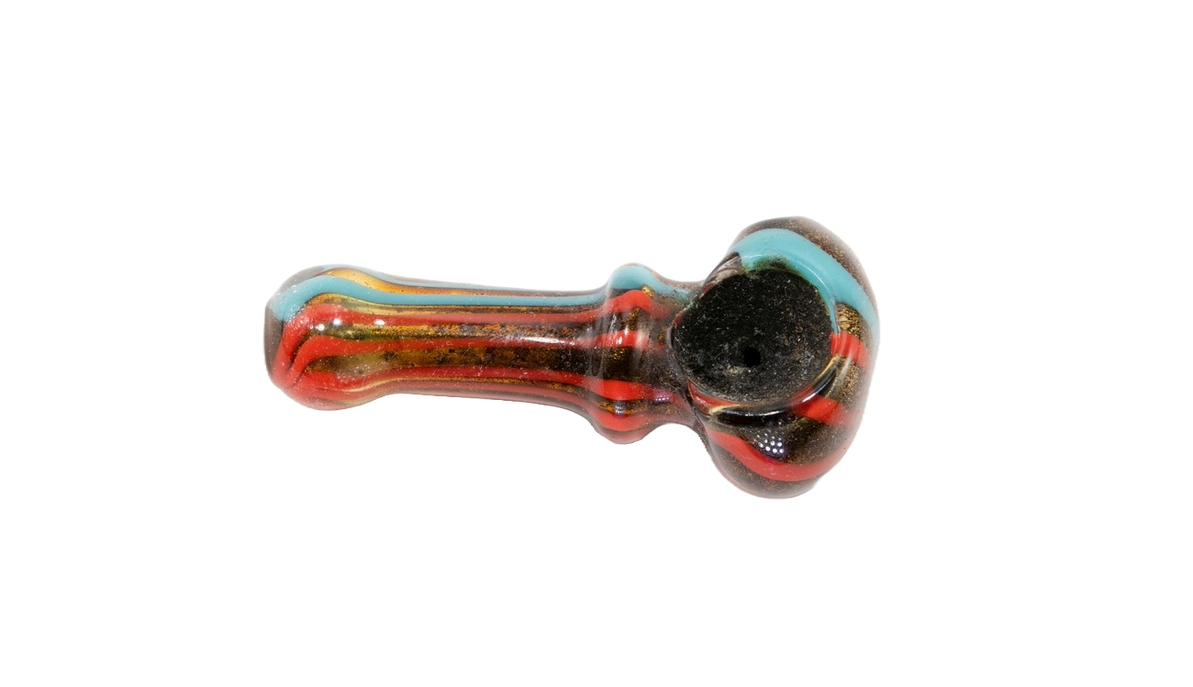
How to Potentially Repair a Cracked or Chipped Glass Spoon Pipe
The distinct, sharp clatter of a glass piece striking a hard surface is a sound that instantly sends a wave of apprehension through any enthusiast. It is a noise that freezes time, suspending you in a split second of disbelief where you hope against all odds that the damage is merely auditory and not physical. You freeze in your tracks and kneel to inspect the aftermath, praying that your favorite spoon pipe has somehow defied the laws of physics and remained intact. Often, these pieces are not just simple tools but trusted companions that have been part of countless blissful evenings and memorable sessions with friends. Finding a crack running down the stem or a jagged chip missing from the mouthpiece can feel like a genuine loss, shifting your mood from anticipation to disappointment. While the initial impulse might be to immediately discard the broken shards, a closer look often reveals that the situation might not be entirely hopeless. Navigating the complex process of glass repair requires a steady hand, a bit of patience, and the right knowledge to determine if a safe restoration is possible.
Understanding the Material: The Nature of Borosilicate Glass
To understand how to repair a spoon pipe, one must first understand what it is made of, as this dictates why standard repair methods often fail. High-quality spoon pipes are crafted from borosilicate glass, a material engineered specifically to resist thermal shock. Unlike the soft glass used in soda bottles or window panes, borosilicate contains boron trioxide, which gives it a very low coefficient of thermal expansion. This means that when you apply a flame to the bowl, the glass expands very little, preventing it from cracking under the rapid temperature change.
However, this strength becomes a complexity when the glass breaks. When a pipe cracks from an impact, the structural integrity that handles that heat distribution is compromised. The internal tension of the glass, which was balanced during the annealing (cooling) process by the glassblower, is now disrupted. A repair job is not just about sticking two pieces back together; it is about trying to bridge a gap in a material that is under constant molecular stress. This is why "filler" glues often fail; they cannot mimic the unique expansion properties of the glass. When you heat a repaired pipe, the glass expands at one rate, and the adhesive expands at another. This mismatch creates a shear force that can pop the repair open or cause the glass to crack further. Therefore, any repair attempt must be approached with a deep respect for the material science at play, acknowledging that we are trying to patch a system designed to handle extreme heat.
The Triage Phase: Detailed Damage Assessment
Before rushing to a solution, you must perform a forensic examination of the breakage. This is the most critical step, as it determines whether proceeding with a repair is a triumph of ingenuity or a safety hazard. You need to inspect the pipe under a bright light, perhaps even using the flashlight on your phone to illuminate the fractures from different angles.
Analyzing the Fracture Zone
The location of the damage is the primary factor in your decision-making process. The heat gradient of a spoon pipe is not uniform; the bowl gets incredibly hot, the neck gets warm, and the mouthpiece stays relatively cool:
- The Combustion Chamber (The Bowl): If the crack is located within the bowl itself, or if the break has separated the bowl from the rest of the piece, the pipe is effectively non-repairable for functional use. The temperatures reached inside the bowl can exceed 400 degrees Fahrenheit. There are virtually no consumer-grade adhesives that are safe to inhale at these temperatures. Even if an epoxy claims to be heat resistant up to 500 degrees, that rating is usually for structural integrity, not for "food safe" inhalation of off-gassing byproducts. A crack in the bowl is a structural failure that creates a direct path for hot ash to fall through or for the glass to shatter further when heated.
- The Airway (The Stem/Neck): This is the most common break point. The stem acts as a lever; when the pipe drops, the heavy bowl hits first, and the stem snaps from the vibration. This area is a "yellow zone." It gets warm, but not scorching. Repairs here are possible because the adhesive will not be in direct contact with the flame. However, the stem also bears the weight of the bowl, so any repair here must be structurally robust enough to handle handling and passing.
- The Interface (The Mouthpiece): This is the safest zone for repairs. The mouthpiece rarely sees temperatures high enough to degrade adhesives or cause thermal shock. The primary danger here is physical injury from sharp edges. A chip on the mouthpiece can cut your lip or tongue, turning a relaxing session into a medical emergency. Repairs in this zone are often about smoothing and reshaping rather than bonding.
The "Clean Break" vs. The "Shatter"
You must also assess the nature of the break itself. A "clean break" creates two or three large, distinct pieces that fit back together like a puzzle with no gaps. The edges are smooth and clearly defined. These are ideal candidates for repair because the surface area for bonding is maximized, and the alignment is easy to maintain.
In contrast, a "shatter" involves multiple small fragments, slivers, and dust. If you look at the floor where the pipe fell and see glittering dust, the glass has pulverized. You cannot repair a shattered section. Attempting to glue together tiny shards will result in a messy, uneven surface that is weak and visually unappealing. More importantly, it is impossible to guarantee that you have removed all the microscopic glass dust from a shattered area. If you see a spiderweb pattern of cracks radiating from an impact point, the internal structure of the glass is destroyed, and the piece should be retired.
The Pre-Requisite: Advanced Cleaning Protocols
You cannot repair a dirty pipe. This is an absolute rule. Resin, tar, and oils are the enemies of adhesion. Adhesives bond to the surface texture of the material; if that surface is coated in a layer of sticky resin, the glue bonds to the resin, not the glass. As soon as the resin warms up, it softens, and the glue slides right off. Before you even buy your repair materials, you must commit to a deep cleaning process that goes beyond a standard rinse.
The Immersion Technique
Since the pipe is broken, you cannot use the standard "shake and salt" method effectively, as shaking a broken pipe will only cause more damage to the delicate edges. You must rely on chemical dissolution:
- High-Purity Solvent: Acquire 99% Isopropyl Alcohol. The standard 70% from the first aid aisle contains too much water, which slows down the breakdown of oils. You need the high concentration to strip the glass down to its bare molecular surface.
- The Soak: Place all the broken pieces into a glass or plastic container and submerge them completely in the alcohol. Let them sit for a minimum of 24 hours. This passive soaking allows the solvent to penetrate the hardened carbon deposits without mechanical agitation.
- Detailed Scrubbing: After the soak, use cotton swabs (Q-tips) and pipe cleaners to gently wipe the fracture surfaces. You need to be incredibly gentle; the edges of broken glass are razor sharp and very fragile. Any pressure could chip the edge further, ruining the fit. Ensure that the actual faces of the break—the areas where glue will be applied—are spotless.
The Drying Phase
Once the resin is gone, you must remove the solvent. Rinse the pieces thoroughly with warm water to wash away the alcohol and dissolved oils. Then, you must let the glass dry completely. Glass is surprisingly porous on a microscopic level, and the rough surface of a fracture can trap moisture. If you apply epoxy to damp glass, the moisture creates a barrier that prevents the chemical bond from forming. Allow the pieces to air dry on a clean towel for another 24 hours, or use a hair dryer on a low heat setting to gently evaporate any lingering moisture from the cracks. The glass must be bone dry and room temperature before you proceed.
Method One: The Structural Bond (Epoxy Resin)
For a clean break in the stem or near the base (away from the bowl), a two-part epoxy is the standard solution. However, the application technique is nuanced and requires precision to avoid creating a toxic mess. You are looking for a clear, high-strength epoxy. Avoid "5-minute" rapid-set epoxies if possible; they tend to be more brittle and yellow over time. A standard cure epoxy (often taking 12-24 hours) usually provides a stronger, more heat-resistant bond.
The Mixing Process
Epoxy works via a chemical reaction between a resin and a hardener. If the ratio is off, the glue will never cure and will remain sticky forever. Squeeze out equal amounts of both components onto a disposable surface, like a piece of cardboard or a paper plate. Use a toothpick or a dedicated mixing stick to blend them together. You must mix thoroughly for at least a full minute. You are looking for a consistent, clear mixture with no streaks. If it looks cloudy or swirled, it is not mixed yet.
The "Toothpick" Application Strategy
Do not apply the glue directly from the tube to the glass. This always results in too much adhesive. Instead, dip the tip of a toothpick into your mixed epoxy and apply a thin, consistent bead to only one side of the fracture. You do not need to coat both sides. The goal is to use just enough glue to wet the surface, but not so much that it squeezes out when you join the pieces.
"Squeeze-out" is the enemy. If glue squeezes out onto the exterior, it looks messy. If it squeezes out into the interior of the pipe, you have created a permanent ridge of plastic in the smoke path. This ridge can trap resin, harbor bacteria, and potentially off-gas if it catches a stray ember. By applying a minimal amount with a toothpick, you control the flow and keep the airway clean.
The Fixturing Challenge
Once the pieces are pressed together, they need to stay perfectly still while the epoxy cures. Since spoon pipes are rounded and organic in shape, standard woodworking clamps will not work. You need to get creative with your fixturing:
- Gravity Jig: Sometimes, you can prop the pipe up in a bowl of dry rice or sand. The rice conforms to the shape of the pipe, holding it at the exact angle needed for gravity to keep the pieces pressed together.
- Tape Tension: Small strips of painter's tape or electrical tape can be used to pull the pieces tight against each other. Apply the tape vertically across the break, pulling it taut to create pressure.
- Modeling Clay: A lump of modeling clay or playdough can be used to build a custom stand that cradles the two pieces in perfect alignment.
Once the pieces are joined and secured, walk away. Do not touch it. Do not check it. Let the chemistry do its work for the full cure time listed on the package. If it says 24 hours, give it 24 hours.
Method Two: The Surface Restoration (Wet Sanding)
Often, the damage isn't a clean break but a sharp chip, usually on the mouthpiece or the side of the bowl. While the pipe is structurally sound, the razor-sharp edge makes it dangerous to handle or put to your lips. In this scenario, adding material (glue) is useless; you need to remove material (glass) to smooth out the defect. This is done through a process called wet sanding.
The Physics of Glass Sanding
You cannot sand glass like you sand wood. Friction generates heat, and heat causes glass to crack. Furthermore, dry sanding glass creates a cloud of silica dust, which is incredibly hazardous to your lungs. Inhaling glass dust can lead to silicosis, a serious respiratory condition. Therefore, all glass sanding must be done wet. The water acts as a lubricant to reduce friction and heat, and it traps the dust, turning it into a harmless slurry.
The Grit Progression
You will need a variety of waterproof sandpaper, commonly found in the automotive section of hardware stores. You need a progression of "grits" to achieve a smooth finish:
- Coarse (100-200 Grit): This is for shaping. It removes glass quickly but leaves deep scratches.
- Medium (400-600 Grit): This removes the deep scratches from the coarse step.
- Fine (800-1000 Grit): This begins to restore smoothness and creates a frosted, sea-glass appearance.
- Ultra-Fine (2000+ Grit): This is for polishing, bringing back some of the shine and transparency.
The Technique
Set up a workstation near a sink or with a bowl of water. Dip the sandpaper and the glass into the water. Hold the sandpaper against a flat, hard surface if you want a flat edge, or hold it in your hand if you are rounding over a curve.
Rub the chipped area against the paper in a circular or figure-eight motion. Apply moderate pressure. You will hear a grinding sound—this is the glass being worn away. Every few seconds, dip the glass back into the water to wash away the slurry and keep it cool. Start with the coarse grit until the sharp, jagged edge is completely gone and the profile of the chip is rounded over.
Once the shape is safe, move to the medium grit. Sand over the same area until the rough scratches from the first step are gone. Repeat this process up through the grits. As you get to the 1000 and 2000 grit levels, the glass will feel incredibly smooth to the touch, similar to the original surface. While it might remain slightly frosted or cloudy compared to the flame-polished original finish, it will be perfectly safe to touch and use.
Method Three: The Emergency Field Fix (Beeswax)
There are times when you don't have access to epoxy or sandpaper—perhaps you are camping, at a festival, or simply stuck at home late at night. If you have a minor crack that is letting air in (disrupting the airflow) but the pipe is not in danger of falling apart, you can use a natural sealant: beeswax.
Beeswax is an excellent temporary solution because it is non-toxic, malleable, and sticky. It creates an airtight seal that can plug a small hole or seal a hairline crack in a "cold zone" of the pipe. Simply take a small piece of beeswax (often found on organic hemp wick spools) and roll it between your fingers to warm it up. Once it is soft, press it firmly into the crack or hole. It will harden as it cools, creating a surprisingly durable seal.
However, the limitations are obvious: beeswax melts. You cannot use this on the bowl or anywhere that gets hot. It is strictly for air leaks in the stem, carb, or base. It is not a structural repair—it won't hold a broken pipe together—but it can patch an air leak to save a session.
Method Four: The High-Tech Fix (UV Curing Glue)
For those who want a more invisible repair, specifically for hairline cracks that haven't separated into two pieces, UV (Ultraviolet) curing glue is a modern marvel. This is the same technology used to fix cracked windshields or attach screen protectors to phones.
UV glue is unique because it remains liquid indefinitely until it is exposed to UV light. This allows you to apply the glue to the crack and let it seep deep into the fissure via capillary action. You don't have to rush. You can wipe away excess glue while it is still liquid, ensuring a perfectly clean finish.
Once the glue has penetrated the crack, you shine a UV flashlight (often included with the glue kit) on the area for 10 to 30 seconds. The glue hardens instantly. This method is excellent for stabilizing stress cracks in the neck of the pipe before they grow into full breaks. However, like epoxy, UV glue is a polymer (plastic) and should not be used in high-heat areas. It is best reserved for structural stabilization of the stem and mouthpiece.
The Health and Safety Reality Check
Throughout this process, we must circle back to the most important element: your health. A repaired pipe is never quite the same as a factory-new one, and there are risks associated with using a modified device.
The Micro-Shard Danger
Even if a repair looks clean, there is always a risk that tiny, microscopic shards of glass were loosened during the break or the repair process. Before using a repaired pipe, you must flush it out with water under high pressure. Then, perform a "dry pull" test. Cover the mouthpiece with a clean white t-shirt or a paper towel. Inhale sharply through the cloth (without lighting anything). Inspect the cloth under a bright light. If you see any speck of glittering dust, the pipe is shedding glass. Do not use it. The risk of inhaling glass dust into your lungs is simply not worth it.
Bacterial Harbors
Cracks and glue lines create surface irregularities. While smooth glass is easy to clean and sanitize, a glued joint has microscopic pores and ridges. These areas can trap moisture and organic matter, becoming breeding grounds for bacteria and mold. A repaired pipe requires more frequent and diligent cleaning than a new one. You cannot let it sit with dirty water or resin for long periods, as the glue line will absorb odors and potentially degrade.
Thermal Degradation
Over time, the heating and cooling cycles of daily use will degrade any adhesive. Epoxy may yellow, become brittle, or lose its bond strength. A repaired pipe should be inspected before every single use. Give it a gentle twist; check for movement. If the repair starts to feel loose, do not try to "re-repair" it over the old glue. At that point, the temporary fix has run its course, and it is time to retire the piece.
Prevention: The Ultimate Solution
The energy required to repair a pipe is significant, and the results are never guaranteed. This highlights the importance of proactive protection. Treating your glass with the same care you would treat a camera lens or a smartphone is the best way to avoid the heartbreak of a break.
The "Lap Rule"
The vast majority of glass breakage occurs due to what is affectionately known as the "Lap Trap." You are sitting on the couch, feeling euphoric and relaxed. You set the pipe on your lap to check your phone or change the channel. A moment later, you stand up, forgetting the pipe is there. Gravity takes over, and the pipe smashes on the floor. Implementing a strict "No Lap" rule—where the pipe is either in your hand or on a stable table—is the single most effective way to preserve your collection.
Protective Gear
The market now offers various protective solutions for glass. Padded carrying cases with hard shells are essential for travel. If you are taking your spoon pipe to a friend's house or out into nature, tossing it in a backpack wrapped in a sock is asking for trouble. A dedicated case protects the glass from crushing forces. Additionally, silicone "skins" or sleeves are available for many standard pipe shapes. These rubberized covers act as shock absorbers, bouncing the pipe harmlessly if it drops. While they may obscure the visual artistry of the glass, they provide a layer of utility that is undeniable.
Repurposing: When Repair is Impossible
Sometimes, despite your best efforts, the assessment reveals that the pipe is unsafe to fix. The bowl is cracked, or the shatter is too complex. However, this doesn't mean the beloved object must go to the landfill. There is a creative joy in repurposing broken glass art.
Terrarium and Garden Decor
Glass is inert and beautiful. A broken spoon pipe, thoroughly cleaned of all resin, can become a stunning abstract sculpture within a terrarium or a potted plant. The colors of the glass—the blues, greens, and ambers—catch the light and contrast beautifully with the organic greens of moss and succulents. You can bury the sharp, broken end in the soil, leaving the colorful bulb or stem exposed as a "mystery artifact" in your miniature garden.
Shadow Box Memorials
If the pipe holds deep sentimental value—perhaps it was a gift from a significant other or bought on a memorable trip—you can preserve it as a visual keepsake. A shadow box is a deep picture frame that allows you to mount 3D objects. You can arrange the pieces of the pipe artistically on a velvet background, perhaps including a photo from the time you acquired it or a small handwritten note about its history. This honors the memories associated with the piece without risking your health by trying to smoke from a compromised vessel.
The Economic Perspective
Finally, one must weigh the cost of repair against the cost of replacement. High-quality epoxy, sandpaper, solvents, and cleaning supplies can easily cost $20 to $30. A standard, production-glass spoon pipe might cost the same amount. From a purely economic standpoint, DIY repair often makes little sense for an average pipe. The effort is only justified by sentimental attachment or if the piece is a high-value, hand-blown artisan work.
If you own a high-end "heady" piece worth hundreds of dollars, DIY repair with super glue is almost an insult to the artwork. In these cases, professional repair is the only viable option. There are glass artists who specialize in repairs, using torches and kilns to actually melt the glass back together, re-annealing it to restore its original strength. This process is expensive but restores the piece to a truly functional state, unlike the patch-job nature of home adhesives.
The Final Verdict on Your Glass Companion
Ultimately, the choice to repair or retire a broken spoon pipe is a personal calculation that blends nostalgia with practical safety. While a successful repair can provide a deep sense of satisfaction and extend the life of a cherished tool, it is imperative to remain realistic about the limitations and risks involved. A mended pipe will never possess the pristine structural integrity of a new one, and it requires a vigilant eye to ensure it remains safe for use over time. However, even if the damage proves fatal, the process of assessing and caring for the piece reinforces the value we place on these instruments of relaxation. Whether you manage to smooth out a chip and keep the sessions going, or you decide to grant your pipe a dignified retirement in a display case, you are honoring the role it played in your blissful moments. In the end, glass is by nature ephemeral, and accepting its fragility allows us to appreciate the tranquil experiences it facilitates even more.
Recent Posts
-
What Could Impact the Size, Shape, Weight, and Density of Pre-Packaged Hemp Flower Buds?
Unwrapping a fresh jar of hemp flower often feels like a sophisticated ritual, where the visual appe …Mar 04, 2026 -

What Should Pet Owners Know About CBG for Pets?
Entering the world of pet wellness today often feels like entering a futuristic apothecary where the …Mar 02, 2026 -

An In-Depth Look at the O.pen Sesh Portable Electric Dab Rig w/510-Thread Cart Compatibility
The culture surrounding concentrates has shifted from heavy, stationary setups to a more streamlined …Feb 27, 2026