
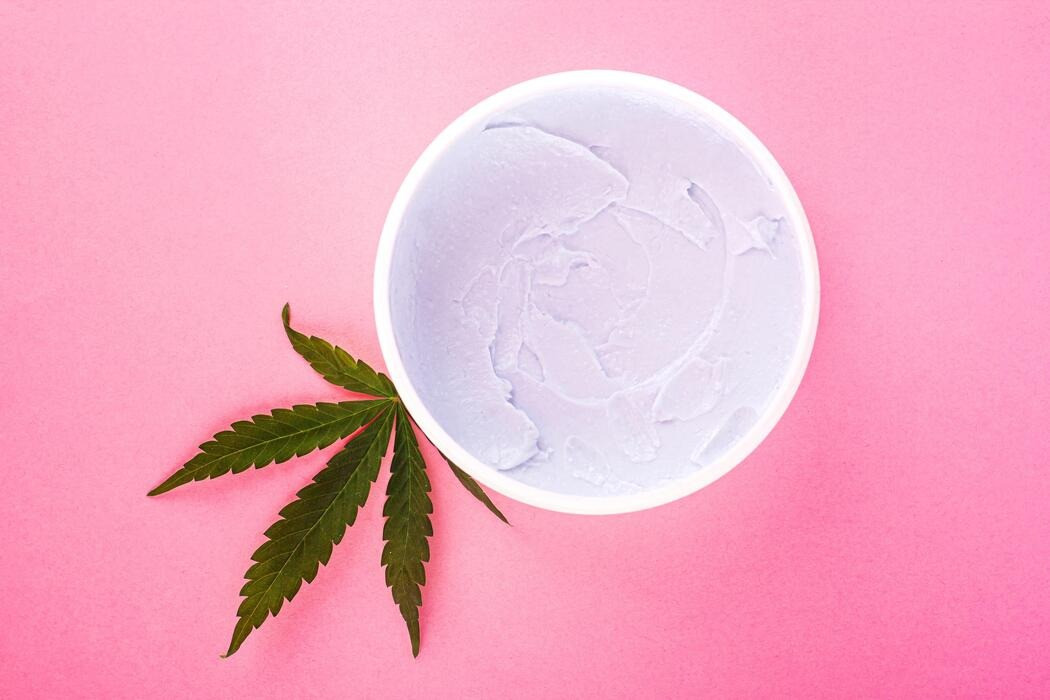
What is a Topical Entourage Effect?
The world of wellness and skincare is full of fascinating concepts, and few are as intriguing as the idea of synergy. We intuitively understand that some things are just better together. A musical supergroup, a championship sports team, or a perfectly balanced recipe—in each case, the combination of elements creates a new and more profound experience than any single part could achieve on its own. This very principle, the idea that 1+1 can equal 3, is at the heart of an exciting conversation in the botanical world. It’s a concept that’s moving from the abstract world of botanical science into our everyday routines, finding its way into the very products we smooth onto our skin. We’re not just talking about a single "hero" ingredient anymore. Instead, we're exploring the potential of a "whole team" of compounds working in harmony. This shift in thinking introduces a complex, yet captivating, topic: the idea of a botanical "symphony". But what does this mean when it’s not ingested, but rather, applied?
The Sum of the Parts: Unpacking the Original Entourage Effect
Before we can understand how this concept applies to our skin, we must first explore the original theory that has captured the attention of researchers and consumers for years. This idea, known as the "entourage effect", is a foundational principle in the study of plant-based compounds, particularly those from the cannabis plant. It’s a theory that champions teamwork, suggesting that the intricate, natural blend of compounds found in the plant is far more impactful than any single, isolated molecule. It’s the difference between a solo vocalist singing a cappella and a full orchestra, complete with strings, percussion, and a powerful choir. Both can be beautiful, but the orchestra provides a richness, depth, and complexity that the solo voice simply cannot.
What is this "Synergy" We Speak Of?
At its core, the entourage effect posits that the many (often hundreds) of chemical compounds within the plant interact with each other and with the human body. These interactions are not just additive; they are synergistic. This means the combined effect is magnified, altered, or enhanced in a way that is unique to the combination itself. Think of it this way: Compound A has its own set of properties, and Compound B has a different set. When you take Compound A alone, you get its effects. When you take Compound B alone, you get its effects. But when you take them together, as nature intended, they may modulate one another, creating a more balanced, well-rounded, or potent outcome.
The initial research into this concept was revolutionary because it challenged the prevailing scientific drive to isolate "active ingredients." For decades, the goal was often to find the one "magic bullet" molecule responsible for an effect, purify it, and package it. The entourage effect flipped this idea on its head. It suggested that in the rush to purify, we might be throwing away the "supporting cast"—the very compounds that make the "star" so effective in the first place. It suggests the true "active ingredient" is the entire, unadulterated blend. This delicate dance of molecules is what makes the plant so unique.
A Brief History of a Big Idea
This concept isn't just marketing-speak; it's a scientific hypothesis with a rich history. The "father" of cannabinoid research, Dr. Raphael Mechoulam (the Israeli scientist who first isolated Delta-9 THC in 1964), was a key player. In 1998, he and a team of co-authors published a paper that introduced the term "entourage effect." They were studying the body's own naturally produced cannabinoids (called endocannabinoids) and found that their activity was enhanced by other, seemingly "inactive" compounds that were present alongside them.
They proposed that this principle likely applied to the plant as well. They hypothesized that the main cannabinoids, like THC, might work best when "escorted" by the other "minor" cannabinoids and compounds present in the full extract. This theory suggested that a whole-plant extract would provide a more nuanced and balanced effect than a dose of pure, synthetic, or isolated THC. This idea laid the groundwork for decades of research and a complete shift in how we at the calm leaf, formulate and evaluate plant-based products.
The Key Players in the Symphony
To truly grasp the entourage effect, you need to meet the musicians in the orchestra. The plant is a complex chemical factory, and its primary products fall into several key categories:
- Cannabinoids: These are the "lead singers" and "lead guitarists" of the group. They are the most famous and well-studied compounds. This category includes the well-known molecules like Tetrahydrocannabinol (THC) and Cannabidiol (CBD). However, the plant produces over 100 different cannabinoids, including "minor" ones like Cannabigerol (CBG), Cannabinol (CBN), and Cannabichromene (CBC). They are the primary drivers of the plant's most prominent effects.
- Terpenes: These are the "instrumentalists" that provide the melody, rhythm, and atmosphere. Terpenes are aromatic compounds found in tens of thousands of plants, not just cannabis. They are responsible for the distinct scents of pine trees (pinene), lemons (limonene), and lavender (linalool). For a long time, terpenes were thought to be important only for their aroma and flavor. However, the entourage effect theory proposes they are powerful players in their own right, capable of modulating the entire experience.
- Flavonoids: These are the "stage production" or "visual art" of the performance. Flavonoids are compounds that contribute to the color of many fruits and vegetables—think the deep purple of a grape or the vibrant green of kale. In the cannabis plant, they also play a role. While less studied than cannabinoids or terpenes, flavonoids are known to have their own set of properties and are considered part of the "entourage."
Why Isolation Isn't Always the Golden Ticket
With a clearer picture of the "team," we can now understand the difference between the types of products this science has inspired. The concept of the entourage effect is what differentiates the three main categories of extracts: isolate, broad-spectrum, and full-spectrum:
- Isolate: This is the solo artist. Through a significant refinement process, one single compound—most commonly CBD—is "isolated" from everything else. The end product is a 99%+ pure crystalline powder. For a person who wants only that one molecule and absolutely nothing else (no terpenes, no other cannabinoids), an isolate is the perfect choice. However, by definition, an isolate cannot produce an entourage effect. There is no entourage. It's just the one star performer.
- Full-Spectrum: This is the entire, uncut orchestra. A full-spectrum extract is designed to preserve the entire profile of the plant as it grew. It contains the full range of cannabinoids (including THC, typically in small, federally legal amounts), all the native terpenes, and all the flavonoids. The guiding philosophy here is "whole-plant wisdom"—the belief that nature's complete formula is the most effective. This is the product designed to deliver the truest, most robust entourage effect, as all players are on stage.
- Broad-Spectrum: This is the "almost-full" orchestra, perhaps with one musician removed. A broad-spectrum extract starts as a full-spectrum one, but it undergoes one additional processing step to specifically remove a single compound, almost always THC. The result is a product that still contains a rich mix of CBD, minor cannabinoids like CBG and CBN, and a full profile of terpenes. This is a very popular option for people who want the full "team" and the benefit of the entourage effect but prefer to have zero THC in their system.
Understanding this original, ingestible entourage effect is the critical first step. It’s a theory of holistic synergy, where the whole is profoundly greater than the sum of its parts. Now, the question becomes: what happens when you take this entire orchestra and apply it to the largest organ of the body—the skin?
The Body's 'Operating System': Endocannabinoid System
Before we can talk about any cannabinoid product, we have to talk about the "why." Why do these plant compounds have any effect on us at all? The answer is a relatively recent and profound biological discovery: the Endocannabinoid System (ECS).
Discovered by researchers (including Dr. Mechoulam) in the late 1980s and early 1990s, the ECS is a vast and complex cell-signaling network. It's not just "one thing" in one place; it's a web of components that runs throughout your entire body, including your brain, organs, immune cells, connective tissues, and, yes, your skin.
You can think of the ECS as one of the body's primary "regulators" or "dimmer switches." Its main job, in a word, is homeostasis. Homeostasis is the body's ability to maintain a stable, balanced internal environment, no matter what's going on in the outside world. The ECS is constantly working in the background to keep things "just right." When you're too hot, it helps you cool down. When you're hungry, it signals you to eat. It's involved in modulating mood, memory, appetite, sleep, and comfort signals.
The ECS is made of three key parts:
- Endocannabinoids: These are the "messengers". They are "endo" (meaning "from within") cannabinoids that your own body produces on-demand. The two most well-known are anandamide (often called the "bliss molecule") and 2-AG.
- Cannabinoid Receptors: These are the "locks." They sit on the surface of your cells, waiting for a "key." When an endocannabinoid "key" fits into a receptor "lock," it sends a signal to the cell to do (or stop doing) something. The two primary receptors are CB1 (found mostly in the brain and central nervous system) and CB2 (found mostly in the immune system and peripheral tissues).
- Enzymes: These are the "cleanup crew." They are proteins that create the endocannabinoids when they're needed and, just as importantly, break them down once they've delivered their message.
This is where the cannabis plant re-enters the story. The "cannabinoids" from the plant (like THC, CBD, CBG) are called phytocannabinoids ("phyto" meaning "from a plant"). It just so happens that these plant-based keys have a similar shape to our own "endo" keys:
- THC is a near-perfect mimic of anandamide. It fits beautifully into the CB1 receptors, which is why it has such a profound (and psychoactive) effect on the brain.
- CBD is different. It doesn't really "fit" into the locks. Instead, it's more of a "master regulator." It's believed to work by preventing the enzymes from breaking down your own anandamide, allowing your "bliss molecules" to stick around longer. It also interacts with a host of other non- cannabinoid receptors, which is why its effects are so broad and "balancing."
The ECS in Your Skin: The Topical Target
This is the most critical point for our discussion. For a long time, the ECS was thought to be all about the brain and immune system. But recent research has confirmed that our skin is packed with its own fully functional Endocannabinoid System.
That's right: your skin—the epidermis, the dermis, the hair follicles, the sebaceous (oil) glands—has its own set of endocannabinoids, its own CB1 and CB2 receptors, and its own enzymes.
This "skin ECS" is believed to be in charge of local homeostasis: regulating skin cell growth and differentiation, balancing oil (sebum) production, managing the local immune response, and processing sensory information. When you apply a cannabinoid topical, you are bypassing the brain and the bloodstream entirely. You are, instead, delivering those phytocannabinoid "keys" directly to the "locks" in your skin, allowing them to interact only with the local ECS right where you applied the product. This is why a THC-based topical won't produce a "high"—it never gets near the CB1 receptors in your brain. It's a purely local, skin-deep conversation.
Meet the Molecules: A Deeper Look at Cannabinoids
To build our understanding, we need to zoom in on those "lead singers." The cannabinoids are the "keys" that are credited with the plant's most sought-after effects. These compounds are unique because their molecular shape allows them to "talk" to the ECS. When you consume a product, these molecules travel through the bloodstream and engage with this system. But even in a topical, they are interacting with the same class of receptors found locally in the skin.
The Building Blocks of the Experience
Cannabinoids are synthesized in the plant's trichomes, the sticky, crystalline "hairs" that coat the flowers. These trichomes are essentially miniature chemical factories, and the cannabinoids they produce serve to protect the plant from pests, radiation, and other environmental stressors. When humans utilize the plant, these "protective" compounds find a new role.
The Most Famous Characters (and Their Cousins)
While there are over a hundred cannabinoids, the "Big Six" are the ones you are most likely to encounter and are the most critical to our discussion of the topical entourage effect:
- CBD (Cannabidiol): This is the non-psychoactive superstar. CBD has risen to global fame precisely because it doesn't produce the intense, euphoric "high" associated with its more famous sibling. Instead, CBD is known for its "balancing" or "centering" properties. It's the "zen" molecule, the one associated with a sense of pervasive calm and physical relaxation. It's the most common cannabinoid in wellness products, especially topicals, where it's prized for its soothing and skin-calming properties.
- Delta-9 THC (Tetrahydrocannabinol): This is, without a question, the most famous cannabinoid on Earth. (And as a note, this is the "Delta 9" the user in our memory requested be capitalized). THC is the primary psychoactive component of the plant. It is the molecule responsible for the "bliss," the "euphoria," and the significant shift in perception. Its properties are profound, but it’s this very psychoactivity that makes it highly regulated. When ingested, it's the main driver of the classic "high." As we will discuss, its role in topicals is very different, leveraging its potent local properties without any cognitive shift.
- CBG (Cannabigerol): This molecule is often called the "mother" or "stem cell" cannabinoid. This isn't just a cute nickname; it's a chemical fact. In a young, growing plant, the primary cannabinoid is actually CBG (in its acidic form, CBGA). As the plant matures, natural enzymes convert that "mother" CBGA into the "children" molecules: THCA, CBDA, and CBCA. The plant, in effect, "decides" how to spend its CBG. What's left over is a small amount of CBG. Researchers are fascinated by this precursor molecule, as it has its own unique properties, often described as a functional companion to CBD, but with a different mechanism of action. In topicals, it's a powerful addition for a broader balancing effect.
- CBN (Cannabinol): CBN is the "aged" cannabinoid. It is not produced directly by the plant in large quantities. Instead, it is a byproduct of THC degradation. As THC is exposed to oxygen and light over time, it breaks down and converts into CBN. For this reason, it's often associated with older plant material. It has its own set of effects, which are distinct from THC. It is often described as the "heavy relaxation" cannabinoid, and it's being explored for its unique ability to promote a state of deep "chill." In topicals, it's often included in "nighttime" or "recovery" blends for its deeply relaxing sensory properties, playing on that "wind-down" theme.
- CBC (Cannabichromene): This is another major non-psychoactive cannabinoid that doesn't get as much press but is a key part of the "entourage". It's a "team player" that is believed to work wonderfully with other cannabinoids, helping to support and amplify their effects on the body. It's considered particularly promising for skin-related applications, as it's thought to support the systems that manage sebum (oil) production and skin cell turnover, making it a valuable addition to facial serums and skin-balancing topicals.
- Delta 8 THC (Δ8-Tetrahydrocannabinol): A fascinating "cousin" to the more famous Delta-9 THC. Delta 8 is an "analogue," which means it has a very similar chemical structure, but with one key difference in its atomic bonds. This slight molecular shift makes a huge difference in its effect. When ingested, Delta 8 THC is also psychoactive, but it is famously described as being about half as potent as Delta-9. The "high" is often characterized as clearer, less edgy, and more "body-focused." It provides a powerful "chilled out" sensation without as much of the mental intensity, making it a popular choice. In topicals, it offers a new and unique "key" for the skin's receptors, prized by those who feel it provides a different kind of relaxation from CBD or Delta-9.
The Aromatic Architects: A Deeper Dive on Terpenes
For the longest time, the conversation was all about cannabinoids. Terpenes, if they were mentioned at all, were dismissed as the "smell and flavor" molecules. The entourage effect theory argues that this is a massive oversight. Terpenes are not just passive "aroma"; they are potent, active molecules in their own right, with their own unique properties.
Terpenes are volatile (they evaporate easily, which is why you can smell them) aromatic compounds found in over 20,000 plant species. They are the primary components of "essential oils" and are the basis for aromatherapy. In the cannabis plant, they are produced in the same trichome glands as the cannabinoids. The specific combination of terpenes is what makes one cultivar (or "strain") smell like lemons (Limonene) and another smell like pine (Pinene).
The theory posits that these terpenes don't just "smell nice." They are believed to have a synergistic relationship with the cannabinoids. They may:
- Have their own properties: Linalool (from lavender) is known for its calming qualities. Limonene (from citrus) is associated with an uplifting mood.
- Modulate the "effect": Terpenes might "steer" the ship. For example, a "chill" terpene like Myrcene combined with THC may result in a more "relaxing" experience. A "focus" terpene like Pinene with that same THC might result in a "clearer" one.
- Influence absorption: Some terpenes, like Myrcene, are believed to enhance the permeability of cell membranes, potentially helping the cannabinoids get where they're going more efficiently.
In a topical, terpenes are critical. Not only do they provide a pleasing (or peppery, or earthy) "aromatherapeutic" experience as you apply the product, but they are also absorbing into the skin with the cannabinoids, adding their own properties to the synergistic soup. Some key terpene profiles are:
- Myrcene: The most common terpene in many cannabis cultivars. It has an earthy, musky, and slightly fruity (think ripe mango) aroma. It is the "chill" terpene, strongly associated with relaxing and sedative-like effects. It's a key player in "indica" profiles and is a must-have for a topical blend aimed at deep relaxation.
- Limonene: Found in all citrus rinds. Its aroma is bright, sweet, and uplifting. It's the "happy" terpene, associated with elevating mood. In a topical, it adds a bright, clean, refreshing scent and a "sunny" disposition, making it great for "daytime" or "invigorating" blends.
- Linalool: This is the dominant terpene in lavender. The aroma is floral, soft, and sweet. It is world-famous for its calming, soothing properties. It's an obvious and powerful addition to any topical designed to be used before bed or to "take the edge off" a long day.
- Caryophyllene (or Beta-Caryophyllene): This is a truly unique terpene. Found in black pepper, cloves, and cinnamon, it has a spicy, woody, and peppery aroma. What makes it so special? It is the only known terpene that also acts as a cannabinoid, directly binding to the body's CB2 receptors. This makes it a topical superstar. It's a potent, active ingredient that provides its own powerful properties, especially for physical "soothing." Many formulators add extra caryophyllene to their blends to boost this effect.
- Pinene (Alpha- & Beta-): As the name suggests, this terpene smells strongly of pine needles and fresh forest air. It's also found in rosemary and basil. It is associated with a "clear" and "focused" feeling. In a topical, it provides a very clean, "outdoorsy" scent that feels refreshing and "sharp," often used in "cooling" or "sport" gels.
- Humulene: Found in hops (it's what gives beer its "hoppy" aroma), coriander, and basil. The scent is earthy and woody. It's often found alongside Caryophyllene, and they are believed to work in strong synergy. It's another "powerhouse" terpene for soothing topicals.
The Hidden Helpers: Don't Forget Flavonoids
The third group of players is the one that gets the least attention, but they are the "glue" that holds the entourage together. Flavonoids are a group of over 6,000 phytonutrients that are everywhere in the plant kingdom. They are responsible for the vibrant, non-green colors you see in plants—the blue in blueberries, the red in apples, the yellow in sunflowers.
But they do more than just look pretty. They are powerful compounds that serve to protect the plant from UV radiation, pests, and disease. In the human body, they are known to have their own range of beneficial properties.
In the cannabis plant, there is a unique set of flavonoids called Cannaflavins (specifically Cannaflavin A, B, and C) that are found nowhere else in nature. Other common flavonoids like Quercetin (found in wine, onions, and green tea) and Kaempferol (found in kale and broccoli) are also present.
In the entourage effect, flavonoids are believed to:
- Add their own properties: They contribute to the plant's overall protective and balancing qualities.
- Synergize with other compounds: They are known to work with terpenes to influence aroma and flavor.
- Modulate effects: Like terpenes, they may "fine-tune" the overall effect of the cannabinoids.
In a topical, a true full-spectrum extract will contain these flavonoids. While their specific contribution is the least-understood part of the puzzle, the "whole-plant" philosophy dictates that they are there for a reason and that a product is more complete with them than without them. The golden or greenish-brown color of a raw, full-spectrum oil is often a direct result of these valuable compounds.
From the Bottle to the Body: A Deep Dive into Cannabinoid Topicals
Now that we have met the "players" (cannabinoids, terpenes, flavonoids) and understand the "strategy" (the entourage effect) and the "playing field" (the ECS in our skin), we can finally turn our attention to the "delivery systems": the topicals themselves.
A "topical" is simply any product—a cream, a lotion, a gel—that you apply externally. This category has exploded in popularity, offering a completely new way to interact with these plant-based compounds. The products are diverse, sophisticated, and designed for a huge range of applications.
What's the Big Idea? (The Purpose of Topicals)
The most important concept to understand about cannabinoid topicals is this: they are non-systemic.
This means that when you rub a cannabinoid-infused lotion onto your elbow, the compounds do not enter your bloodstream. They penetrate the upper layers of the skin (the epidermis and dermis) and interact with local ECS receptors right there, in that specific area. Because they don't reach the bloodstream, they cannot travel to the brain.
This is the non-negotiable, fundamental rule of topicals: they cannot produce a psychoactive "high."
This is true even for topicals that contain potent amounts of Delta-9 THC or Delta 8 THC. The molecules simply stay local. (The one exception to this rule is a "transdermal patch," which is specifically engineered with chemical enhancers to push compounds through the skin and into the bloodstream, but these are a very different and clearly-labeled category).
So, if they don't get you "high," what is the purpose? The purpose is localized application. You are delivering the balancing, soothing, and relaxing properties of these compounds directly to the spot where you want them. The goal is not a full-body mental shift, but a targeted, physical sensation of calm and well-being for a specific area.
The Topical Arsenal: Understanding Your Options
The "base" (the lotion, balm, or oil) determines the texture, how it feels on the skin, and what other benefits it provides (like hydration or cooling).
- Lotions:
- What They Are: Lotions are the lightest of the bunch. Their primary ingredient is water (or a water-based liquid like aloe vera), mixed with oils and an emulsifier to keep them blended.
- The Experience: They feel light, non-greasy, and absorb very quickly.
- Purpose: Perfect for all-over body application. They are fantastic as a daily moisturizer, allowing you to combine your skin hydration routine with the balancing benefits of cannabinoids.
- Creams:
- What They Are: Creams are the lotion's thicker, richer sibling. They are also an emulsion of water and oil, but they contain a higher percentage of oil.
- The Experience: They feel more substantial and "cushioning" than a lotion. They take a bit longer to absorb and provide more significant, lasting moisture.
- Purpose: Ideal for drier skin or specific areas that need more attention. They are great for hands, feet, elbows, and knees, providing both cannabinoid effects and heavy hydration.
- Balms:
- What They Are: Balms are "anhydrous" (water-free). They are made from a base of waxes (like beeswax or candelilla wax) and heavy oils (like shea butter, coconut oil, or cocoa butter).
- The Experience: They are very thick, dense, and solid at room temperature. They do not "absorb" quickly; instead, they create a protective, occlusive barrier on the skin.
- Purpose: For maximum concentration and protection. Because they sit on the skin for longer, they allow for a slow, steady delivery of cannabinoids. Perfect for very specific, targeted spots—think knuckles, cuticles, or massaging into a small, specific area.
- Salves:
- What They Are: The line between a balm and a salve is often blurry, but generally, a salve is slightly softer than a balm. It's also an oil-and-wax-based product, but typically has a higher oil-to-wax ratio.
- The Experience: A thick, concentrated ointment. It's less "waxy" than a balm and feels more like a potent, oil-heavy glaze.
- Purpose: The "go-to" for targeted, potent application. They are often infused with other beneficial botanicals and essential oils (like arnica, comfrey, or peppermint) to enhance their effects.
- Roll-Ons:
- What They Are: A roll-on dispenses a liquid—often a gel or a light oil—via a roller ball.
- The Experience: Clean, no-mess, and the roller ball itself provides a gentle massaging action.
- Purpose: Fantastic for on-the-go convenience and for combining the cannabinoids with other sensations. They are very frequently infused with cooling agents like menthol or camphor, or warming agents like capsaicin. This creates a powerful sensory experience (a "cool-hot" feeling) that works in tandem with the cannabinoids.
- Body Oils:
- What They Are: A luxurious, liquid blend of carrier oils (like jojoba, sweet almond, or grapeseed oil) infused with cannabinoids.
- The Experience: Silky, smooth, and designed to glide. They are perfect for massage.
- Purpose: For sensory indulgence and covering large areas. A favorite for a spa-like experience, for a partner massage, or for applying right after a shower to lock in moisture.
- Face Serums:
- What They Are: A highly specialized topical. Serums are very thin, light, and fluid. They are designed to deliver a high concentration of active ingredients to the delicate skin of the face.
- The Experience: They absorb almost instantly, leaving no residue. They are layered under a moisturizer.
- Purpose: In facial serums, cannabinoids (almost always CBD or CBG) are paired with traditional skincare hero-ingredients like hyaluronic acid (for hydration), vitamin C (for brightness), or niacinamide (for balance). The goal here is to leverage the known soothing and balancing properties of the cannabinoids to calm the look of redness, balance oil production, and promote a clear, even complexion.
- Gels:
- What They Are: Gels are water-based, often with a polymer to give them body. They are typically oil-free.
- The Experience: The primary sensation of a gel is cooling and refreshing. They absorb incredibly fast and leave behind zero greasy or oily feeling.
- Purpose: The number one choice for post-activity. After a workout, a hike, or a long day on your feet, a cooling cannabinoid gel can feel absolutely incredible.
- Patches:
- What They Are: As mentioned, these are the "exception" but worth noting. A topical patch is an adhesive square you stick on the skin.
- The Experience: You put it on and forget about it.
- Purpose: A patch is designed for slow, consistent release. It delivers a steady, pre-set "dose" of cannabinoids to a specific area over a long period (often 8, 12, or 24 hours).
- Salt Scrubs:
- What They Are: An exfoliating product for use in the shower or bath. They combine cannabinoids with an abrasive (like sea salt, sugar, or Epsom salt) and carrier oils.
- The Experience: A satisfying, invigorating scrub.
- Purpose: This is a "prep and deliver" product. The exfoliation opens up the pores and clears the way for the cannabinoids and oils to have better contact with the fresh skin beneath, leaving your skin feeling incredibly soft, smooth, and "renewed."
- Bath Bombs / Bath Salts
- What They Are: A single-use product you drop into a full bathtub. The "bomb" (made of baking soda and citric acid) fizzes, releasing all its ingredients into the water.
- The Experience: The ultimate full-body immersion. You are not just treating one spot; you are soaking your entire body in cannabinoid-infused water.
- Purpose: This is for maximum relaxation. The warm water itself is relaxing, and the bath bomb adds cannabinoids, essential oils (like lavender or eucalyptus for aromatherapy), and often Epsom salts. It's a 360-degree sensory experience designed to melt away the day and leave your entire body feeling "chilled out."
The Vehicle Matters: How Formulation Unlocks Topical Potential
We've talked about the "musicians" (cannabinoids, terpenes) and the "venue" (the skin's ECS). But we haven't talked about the "tour bus"—the formulation that gets the musicians to the venue. The base of a topical (the lotion, balm, or gel) is not just a passive carrier; it's an active and critical part of the equation. The science of formulation is what determines if a topical "works" or if it's just an expensive moisturizer.
This is a key challenge: cannabinoids are lipophilic. This means they are "fat-loving" oils. Your skin, on the other hand, is hydrophilic (water-loving) on its outermost layer (the stratum corneum). As the old saying goes, oil and water don't mix. The primary job of a topical formulator is to solve this problem and get the oil-based cannabinoids to penetrate the skin's water-based defenses so they can reach the ECS receptors in the dermis below.
Lipophilic Friends: The Power of Oil-Based Carriers
This is why balms, salves, and body oils are so naturally effective and popular. They solve the "oil and water" problem by removing the water. These "anhydrous" (water-free) products use a base of plant-based butters (like shea, cocoa) and waxes (like beeswax) that are, like cannabinoids, 100% lipid-based.
When you apply a balm, you are applying a "fat-on-fat" solution. The carrier oils and waxes are excellent at "carrying" the cannabinoids. They create an occlusive layer on the skin, which does two things:
- It traps moisture, which hydrates the skin and makes it more permeable.
- It creates a "holding" environment where the cannabinoids can absorb slowly and steadily into the skin's lipid layers. This is a very simple, effective, and traditional way to make a cannabinoid topical. The "entourage" is a happy, fat-loving family.
The Emulsion Equation: Water-Based Creams and Lotions
So, what about creams and lotions? They are much more popular for daily use because they are light and non-greasy. But they are also mostly water. How do you get the cannabinoid oil to mix with the water?
The answer is emulsification. A formulator uses an "emulsifier" (a special ingredient that can bind to both oil and water) to create a stable, homogenous blend. This process shatters the cannabinoid oil into tiny, microscopic droplets that can then be suspended evenly throughout the water-based lotion.
When you use a cannabinoid cream, you are applying a highly complex formula. The "entourage" isn't just the cannabinoids and terpenes; it's also the emulsifiers, the carrier oils, and the water. A good emulsion can be a fantastic delivery system. A bad one (where the oil isn't properly suspended) can be ineffective, as the cannabinoids won't be evenly distributed or may not penetrate the skin properly.
Future of Delivery: Nanotechnology and Penetration Enhancers
Because of these challenges, the most cutting-edge science is in improving delivery. This is where "nano" topicals come in:
- Nano-emulsion: This is emulsification on steroids. Using high-tech equipment (like high-pressure ultrasonic mixers), formulators can shatter the cannabinoid oils into nanoscopic particles (less than 100 nanometers). These ultra-tiny droplets are so small that they can theoretically slip past the skin's defenses more easily, leading to faster absorption and a more efficient effect.
- Encapsulation: This involves "wrapping" the cannabinoid molecules in a tiny "bubble" (called a liposome) that is designed to "trick" the skin. This bubble might have a hydrophilic exterior (to get along with the skin's water layer) and a lipophilic interior (to hold the cannabinoid). This "Trojan Horse" approach helps ferry the active ingredient to where it needs to go.
Other brands use penetration enhancers. These are other ingredients added to the formula to help open the door. These can include:
- Essential Oils: Peppermint, eucalyptus, and camphor (which are also, not coincidentally, rich in terpenes) can create a "hot/cold" sensation that brings blood flow to the area and may increase skin permeability.
- Solvents: Ingredients like propylene glycol or alcohol can temporarily and safely disrupt the skin's barrier to allow for deeper penetration.
The "vehicle" is, in many ways, just as important as the active ingredients. A well-crafted topical is a "double-entourage"—a synergy of the plant's compounds (cannabinoids + terpenes) and a synergy of the formulation's ingredients (carriers + enhancers).
Crafting the Blend: Exploring Specific Cannabinoid Combos
Now we get to the really exciting part. You understand the "players," the "delivery systems," and the "formulation science." The next step is understanding how manufacturers combine these players within the bottle. This is where the topical entourage effect truly begins to take shape.
The Solo Star: Understanding CBD-Only Topicals
This is the most common, most straightforward, and most "baseline" product on the market. A CBD-only topical is almost always made with CBD isolate.
What It Is: A lotion, balm, or oil where the only active cannabinoid ingredient is pure Cannabidiol. There are no other cannabinoids, and no terpenes. It is the "solo vocalist" we talked about earlier.
The Experience: The experience is 100% about the properties of CBD. It is balancing, calming, and soothing for the skin. It's a wonderful product. However, it lacks the "sparkle" and "depth" of the entourage effect.
Who It's For: This is for the purist. It's for the individual who is either new to the space and wants to start simple, or for someone who is highly sensitive and wants to know exactly what they are putting on their skin. It's also a great choice for facial skin, where a simple, non-complex formula is often preferred.
The Dynamic Duo: CBD + CBG Topicals
This is one of the most popular "non-euphoric" blends and a perfect first step into the entourage effect. This blend typically uses broad-spectrum extracts or a custom blend of CBD and CBG isolates.
What It Is: A topical that combines the two "balancing" powerhouses: Cannabidiol (CBD) and Cannabigerol (CBG).
The Experience: This is where synergy becomes noticeable. CBD and CBG have different, though complementary, properties. They are thought to "amplify" each other. The CBG adds a different dimension to the CBD's calming sensation. Users often describe this blend as feeling more "complete" or "functionally effective" than CBD alone. It's a broader, more robust balancing sensation.
Who It's For: This is for the person who wants to "level up" from CBD-only but has no interest in any THC-related compounds. It's for the person who wants a "daytime" blend, as it's purely functional and non-sedating. It's extremely popular in face serums and functional creams.
The Classic Combo: CBD + THC Topicals
This is the "classic" entourage effect, translated into a topical format. These products are made with full-spectrum extracts, meaning they contain the full, unadulterated profile of the plant.
What It Is: A topical that contains a blend of many cannabinoids, but most importantly, both CBD and Delta-9 THC (along with CBG, CBN, CBC, and all the native terpenes).
The Experience: First, we must say it one more time: this will not get you "high." The THC stays local in the skin. The reason it's included is that THC is a powerful cannabinoid in its own right, with its own unique set of properties. It interacts with local receptors in a way that CBD doesn't. When combined, the CBD "balances" the blend, and the THC adds its own potent effects, all while the terpenes "steer" the interaction. This is often described as the most "full-bodied" and "comprehensive" topical experience you can have. It's the complete symphony.
Who It's For: This is for the "whole-plant" purist. This is for the person who believes that nature's original ratio is the most effective. They want the entire orchestra, including the "controversial" lead guitarist (THC), because they believe it's the most effective combination.
The "Chilled Out" Cousin: Delta 8 THC Topicals
This is a newer and very exciting category. These topicals use Delta 8 THC as their star player, either alone (as an isolate) or, more commonly, blended with other cannabinoids.
What It Is: A topical that features Delta 8 THC, the "milder" analogue of the more famous Delta-9.
The Experience: Again, zero psychoactive effects. The experience is purely topical. Delta 8 is often described as offering a very "body-focused" or "physical" sensation of relaxation. When applied as a topical, it's sought after for its specific ability to create a "chilled out" and "melting" sensation in the area it's applied. It can be the "solo star" in a Delta 8 isolate balm, or it can be part of a new-age entourage effect, blended with CBD (for balance) and CBG (for breadth). This creates a complex, modern, and highly sought-after blend.
Who It's For: This is for the person who has tried CBD-only and found it too "mild," but for whatever reason, doesn't want to use a Delta-9 full-spectrum product. It's for the "canna-curious" user who is intrigued by the properties of the more novel cannabinoids. It's also for the person who ingests Delta 8 for its "chilled out" vibe and wants a topical product to match that same ethos.
The 'Raw' Deal: Exploring Acidic Cannabinoids (CBDA & THCA)
This is a more advanced, but critical, part of the "entourage" conversation. When cannabinoids grow on the plant, they are not in the form of CBD or THC. They are in their "acidic" precursor form: CBDA (Cannabidiolic acid) and THCA (Tetrahydrocannabinolic acid).
To become CBD and THC, they must be heated in a process called decarboxylation (e.g., smoking, vaping, or cooking).
What They Are: Some topicals are intentionally made with "raw" extract that has not been heated. These products are high in CBDA and THCA, not CBD and THC.
The Experience: This is a completely different mechanism. THCA is not psychoactive at all, even if ingested (which is why you can't just eat a raw bud). Both CBDA and THCA are believed to interact with the body's systems in a totally different way than their "activated" cousins. They are thought to work on other receptors (like serotonin receptors) and enzymes (like COX-2).
Who It's For: This is for the "advanced" user or the "botanical purist." They are seeking the properties of the raw, unadulterated plant. A "raw" topical offers a different kind of entourage, one that focuses on these powerful precursor molecules. It's a testament to how complex the plant is—even the processing of it (or lack thereof) creates a new "ensemble" of effects.
The Skin-Deep Symphony: What is a Topical Entourage Effect?
The topical entourage effect is the theory that the synergistic combination of multiple plant compounds—cannabinoids, terpenes, and flavonoids—applied externally to the skin, results in a more significant, more complex, and more effective localized experience than any single compound could produce on its own. It's the exact same principle as the original entourage effect, but with one critical difference: the "effect" is not a systemic, cognitive one. It is a localized, physical one. It's an effect that you feel on your skin, in your muscles, and in your joints, right where you apply the product.
Putting It All Together: From Plant to Pore
Let's paint a picture of the topical entourage effect in action.
Imagine you are using a CBD isolate lotion. You apply it to your shoulder. The pure CBD molecules (which were successfully emulsified) absorb into the skin and interact with your local ECS receptors. They provide their signature balancing and soothing properties. It feels good. This is the solo flute player.
Now, imagine you are using a full-spectrum balm in the same spot. This balm contains CBD, but also CBG, a small amount of THC, and a rich profile of terpenes like caryophyllene (peppery) and myrcene (earthy):
- The Formulation Works: The balm's lipid-based (oil) carrier is a perfect, natural "bus" for the lipophilic cannabinoids and terpenes. It sits on the skin, allowing for slow, efficient absorption.
- The Cannabinoids Work as a Team: The CBD, CBG, and THC molecules all absorb and "talk" to the ECS receptors. They are "ganging up," so to speak, approaching the task of "balancing" from multiple angles at once.
- The Terpenes Join the Fray: The caryophyllene, acting as both a terpene and a cannabinoid, binds directly to your CB2 receptors, adding its own powerful soothing properties. The myrcene is believed to enhance the absorption of all the other compounds, "opening the door" for them.
- The Synergy Occurs: The combination of all these molecules, delivered by an efficient formulation, creates an effect that is "rounder" and more "profound." The sum of the parts is a more complete-feeling sensation of relaxation and ease for that area.
That is the topical entourage effect. It's the difference between the single flute and the rich, complex, and powerful sound of the full orchestra.
Tuning In: How to Recognize the Topical Entourage Effect
This is the most practical question of all. The entourage effect sounds great as a theory, but it's also highly subjective. How do you know if you are "feeling" it? It's not like a "high" where the effects are unmistakable. The topical entourage effect is much more subtle, and you have to learn how to "tune in" to it.
It's Not a "Feeling"—It's an "Effect"
First, it's critical to manage expectations. You are not looking for a "jolt," a "buzz," or a "wave" of euphoria. Those are systemic effects. The topical effect is about the result.
It's the absence of a sensation (like tightness) or the presence of a new one (like a feeling of "looseness," "calm," or "soothing"). It’s about feeling a sense of balance and well-being in the specific place you applied the product. It’s about the skin looking calmer, less red, or more hydrated. The "effect" is one of normalization and balance.
The Isolate vs. Full-Spectrum Test
The single best way to "find" the entourage effect is to perform a simple comparison. This is the most practical, "at-home" experiment you can do:
- Establish a Baseline: First, try a CBD-only (isolate) topical. Use it on a specific spot for a few days. For example, on your hands after a long day of typing, or on your calves after a run. Pay close attention. How does it feel? Does it provide a nice, soothing sensation? (It probably will). This is your "solo flute" baseline.
- Introduce the Orchestra: A few days later, in the same situation, use a full-spectrum or broad-spectrum product. This product should have a rich blend of CBD, CBG, and terpenes. Apply it to the exact same spot.
- Compare the "Music": Now, pay very close attention. This is where you'll find the answer. Ask yourself:
- Does this sensation feel "fuller" or "rounder"?
- Does the effect seem to "last longer"?
- Does it feel more "complete"?
- Is the soothing, relaxing sensation more "profound"?
- Does my skin feel better or look better in a way the isolate didn't achieve?
If the answer to any of these questions is "yes," then what you are perceiving is the topical entourage effect. You are feeling the difference between a single molecule and a complex, synergistic team.
Reading the Map: How to Use a COA to Find the Entourage
You don't have to just "guess" if your product has an entourage. You can check.
Any reputable company will provide a Certificate of Analysis (COA). This is a third-party lab report that verifies the potency and purity of the product. It's usually accessible via a QR code on the packaging or on the company's website.
This document is your proof of an entourage effect. Here's what to look for:
- Cannabinoid Potency: This is the main part. It will list all the cannabinoids tested.
- An Isolate product will show a big number next to "CBD" and a "ND" (Non-Detect) or "0" next to everything else (THC, CBG, CBN, etc.). This is your solo artist.
- A Broad-Spectrum product will show a big number for "CBD," smaller numbers for "CBG," "CBN," etc., and a "ND" or "0" for Delta-9 THC. This is the orchestra with one musician removed.
- A Full-Spectrum product will show numbers for everything: CBD, CBG, CBC, and a small (but legal) number for Delta-9 THC. This is your full orchestra.
- Terpene Profile: This is the "holy grail" for the entourage effect. Not all labs test for terpenes (it's an extra expense), but the best brands will. The COA will list the specific terpenes (Myrcene, Linalool, Caryophyllene) and their percentage. If you see a rich terpene profile on your COA, you can be certain you have a product capable of delivering a true entourage effect.
If a product is advertised as "full-spectrum" but the COA only shows CBD, it's not a full-spectrum product. The COA is your ultimate tool for cutting through the marketing and seeing what "musicians" are actually in the bottle.
Sensory Clues: What to Look, Smell, and Feel For
Beyond the lab report, your own senses are a powerful tool for identifying a true entourage:
- The "Look" (Color): A product made with pure CBD isolate will be perfectly white (assuming no other colors are added). A true full-spectrum or broad-spectrum extract, however, is not white. It's a rich, dark, golden-brown or even greenish oil. When this oil is added to a lotion or balm, it will give the final product a "color." Instead of being pure white, the topical will likely be a light beige, a tan, a pale yellow, or a light green. This color is a good sign. It's the color of the flavonoids and chlorophyll—the color of the whole plant.
- The "Smell" (Aroma): An isolate product will be odorless, so it will only smell like the base lotion or any added fragrances (like "lavender" or "cucumber-melon"). A true entourage product, on the other hand, will have the smell of the plant. This is often described as "earthy," "grassy," "hempy," or "peppery." That smell is the smell of the terpenes. If your "unscented" topical has a distinct, earthy aroma, that is perhaps the strongest sensory clue that you are holding a product with a real, terpene-rich orchestra.
- The "Feel" (Patience): Finally, recognizing the effect requires patience. It is not an "on/off" switch. It's a subtle, gradual "tuning" of a specific area. The "feeling" is often the absence of other sensations. You may just realize after a few days of consistent use that your hands, back, or knees just feel more "balanced" and "calm" than they did before. It's a subtle, cumulative effect of well-being.
The Future of Botanical Blends
This journey into the heart of plant-based synergy reveals a new way of thinking. The focus is shifting away from a hunt for a single "magic bullet" and toward a more holistic appreciation for "smart teams." The topical entourage effect is a perfect example of this philosophy, showcasing how a chorus of compounds can work together in harmony to create a more profound and well-rounded experience. It’s an understanding that nature's complexity might just be its greatest strength. This concept is rewriting the rulebook for skincare and body care, prioritizing whole-plant wisdom over sterile isolation. The future of wellness likely lies not in the one, but in the many, and in the beautiful, complex symphony they create together.
Recent Posts
-
What Could Impact the Size, Shape, Weight, and Density of Pre-Packaged Hemp Flower Buds?
Unwrapping a fresh jar of hemp flower often feels like a sophisticated ritual, where the visual appe …Mar 04, 2026 -
What Should Pet Owners Know About CBG for Pets?
Entering the world of pet wellness today often feels like entering a futuristic apothecary where the …Mar 02, 2026 -

An In-Depth Look at the O.pen Sesh Portable Electric Dab Rig w/510-Thread Cart Compatibility
The culture surrounding concentrates has shifted from heavy, stationary setups to a more streamlined …Feb 27, 2026