
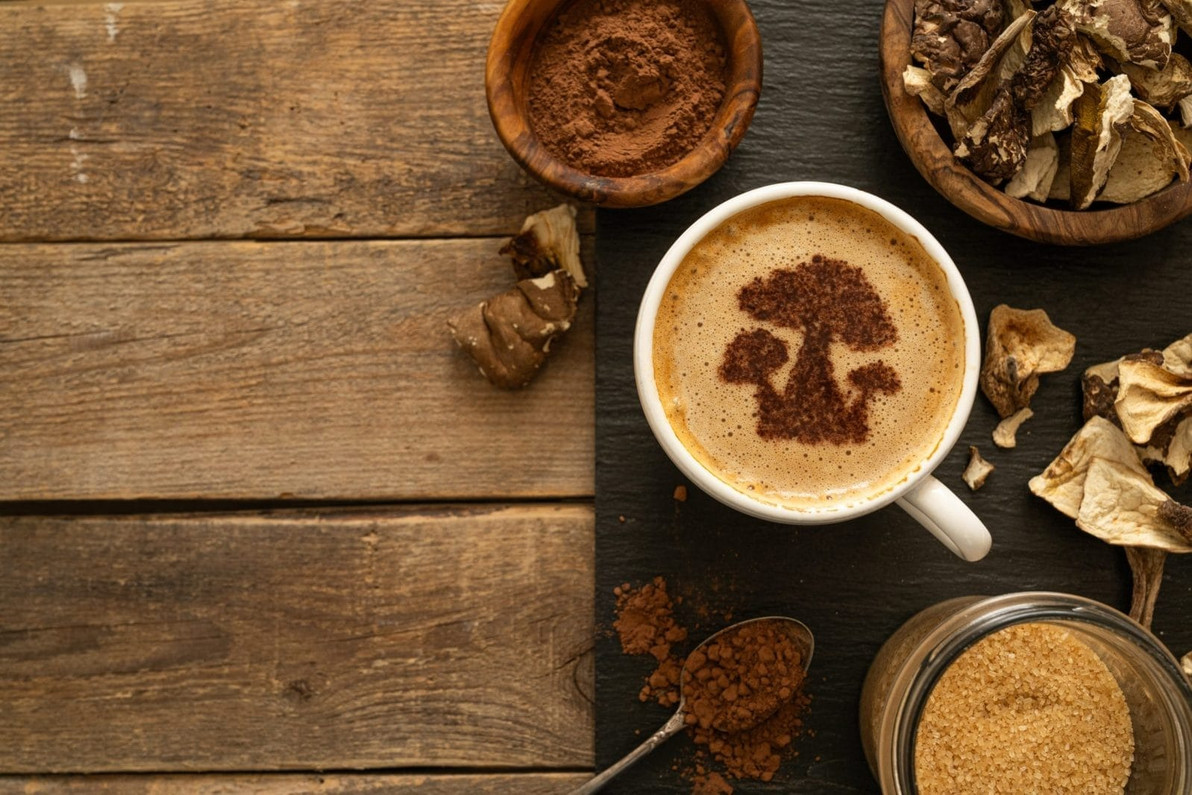
A Mushroom Consumption Question: Which Mushroom Drink/Beverage is Right for Me?
The subtle, earthy aroma of fungi has wafted through human history for millennia, long before it was captured in a can or brewed into a morning cup. These unique organisms, existing in a kingdom all their own, have been everything from a vital food source to a sacred key for unlocking different states of consciousness. Today, this ancient and storied relationship is finding a new expression on beverage shelves around the world. We’re witnessing a renaissance of fungi, presented in polished, palatable, and convenient forms like sparkling seltzers, rich cocoas, and robust coffee blends. This sudden emergence from the forest floor to the mainstream aisle has left many people intrigued but understandably perplexed. With such a vast array of new products, each featuring different mushroom names and promising different experiences, the central question for the curious consumer is no longer if they should try one, but how to even begin choosing. It's a landscape that demands a new kind of literacy—one based on understanding not just the marketing, but the mushrooms themselves.
The Fungal Kingdom: A Detailed Primer on Core Ingredients
Before you can confidently select a mushroom beverage, it is absolutely essential to understand what you are consuming. The term "mushroom" is incredibly broad, and the fungi used in these drinks are not the same as the button mushrooms on your pizza. They are selected for their unique histories, chemical compositions, and specific properties. A failure to understand the profound differences between these categories is the number one reason a consumer might have an experience they did not expect. The following is a detailed breakdown of the primary types of mushrooms you will encounter in modern beverages.
A Deep-Rooted History: Our Ancient Fungal Relationship
Human fascination with fungi is not a recent wellness trend; it is a primal connection that stretches back to the dawn of our species. Archaeological and anthropological evidence suggests mushrooms have been part of our diet and culture for tens of thousands of years. Ötzi the Iceman, a 5,300-year-old mummy found preserved in the Alps, was carrying two types of polypore mushrooms—one, a tinder fungus (Fomes fomentarius), for starting fires, and another, a birch polypore (Piptoporus betulinus), which has a history of use in folk practices. This demonstrates a sophisticated, practical knowledge of fungi in Neolithic Europe.
In ancient China, mushrooms like Reishi (Ganoderma lucidum) were revered and documented in the earliest texts of traditional practices, such as the Shen Nong Ben Cao Jing (circa 200 A.D.). This foundational text cataloged hundreds of herbs and substances, and it placed Reishi in the highest "superior" category—substances believed to be balancing and safe for long-term use. Reishi was known as the "Mushroom of Immortality" and was so prized that it was typically reserved for royalty, a symbol of longevity and spiritual potency.
Similarly, in ancient Siberian and Northern European cultures, the striking red-and-white Amanita muscaria mushroom was a central part of shamanic rituals, particularly among peoples like the Koryak and the Sámi. It was seen as a sacred vehicle, used by spiritual leaders to enter trance-like states, communicate with spirits, and navigate other realms. This use is deeply woven into the folklore and mythology of the region, with some scholars even postulating a connection between the mushroom's appearance, its association with birch and pine trees, and the modern-day imagery of Santa Claus.
Across the globe in Mesoamerica, statues and stone carvings dating back to 1000 B.C. depict mushroom figures, alluding to the sacred role of certain fungi in the spiritual ceremonies of civilizations like the Maya and Aztec. These were the psilocybin-containing mushrooms, which they referred to as teonanácatl, or "flesh of the gods." These were not used casually; they were consumed in highly structured ceremonies, often at night, under the guidance of a shaman (or curandero), for divination, communion, and healing.
This long, complex, and often sacred history forms the bedrock upon which the modern mushroom beverage industry is built. Today's drinks are a direct descendant of these ancient practices, albeit translated through modern science, formulation, and marketing.
The Essential Categories: A Detailed Mushroom Dossier
Your request for "very detailed bullet points" is critical, as this is the most important section for an informed consumer. Here are the distinct categories of mushrooms used in beverages, explained in the significant detail they deserve.
Functional Mushrooms (or "Medicinal Mushrooms")
This is the most common category you will find in wellness-focused drinks. The term "functional" simply means these mushrooms are believed to offer properties that go beyond their basic nutritional content (which, in extract form, is minimal). They are not psychoactive; they will not cause a "high," euphoria, or any altered state of consciousness. They are used in a manner similar to other herbal ingredients like turmeric or ginseng—as a supplemental addition to one's daily routine. These mushrooms have been staples in traditional Eastern practices for centuries and are now the subject of modern scientific inquiry.
- Common Examples:
- Reishi (Ganoderma lucidum):
- Appearance & Habitat: Often called the "chill mushroom," Reishi is a visually stunning polypore fungus. This means it releases spores from tiny pores on its underside, not gills. It's a "shelf fungus" that grows on hardwood trees, particularly dead or dying ones. It has a kidney-shaped, shiny, varnished-looking cap that ranges from a deep reddish-orange to a dark, almost-black brown.
- History & Use: As mentioned, it was the "Mushroom of Immortality" in Traditional Chinese Medicine (TCM). It was never a culinary mushroom due to its incredibly tough, woody texture (like a piece of lacquered wood) and its intensely bitter, "medicinal" taste. It was traditionally sliced thin, dried, and simmered in water for hours to make a strong "tea" or decoction.
- Active Compounds: Its bitterness is a clue to its unique compounds. Reishi contains two primary classes of actives: beta-glucans (complex polysaccharides, which are water-soluble) and a unique group of triterpenes called ganoderic acids (which are alcohol-soluble). These ganoderic acids are responsible for the bitter taste and are a key marker of a quality Reishi extract.
- Beverage Use: Because of its traditional association with calmness, relaxation, and a balanced spirit, Reishi is the undisputed king of evening beverages. It is the star ingredient in "unwind" blends, relaxation cocoas, and caffeine-free evening teas.
- Chaga (Inonotus obliquus):
- Appearance & Habitat: Chaga is an outlier; it looks nothing like a typical mushroom. It is not a fruiting body but a sclerotium—a hard, woody mass of fungal mycelium. It grows primarily on birch trees in cold northern climates like Siberia, Canada, and Northern Europe. On the outside, it looks like a black, crusty, sterile mass of burnt charcoal, but the interior reveals a rich, rusty-orange color.
- History & Use: It has a long history of use as a folk tonic in Russia and Scandinavia, where it was grated into a powder and brewed as a tea. It was famously mentioned in Aleksandr Solzhenitsyn's 1967 novel, Cancer Ward, which introduced it to a wider Western audience.
- Active Compounds: Chaga is known for its extremely high concentration of antioxidants, particularly the pigment melanin (found in the black outer crust). It also contains betulinic acid, which it derives from the birch trees it grows on.
- Beverage Use: It has a much milder, earthier flavor than Reishi, with subtle, pleasant notes of vanilla. This makes it a fantastic and popular base for coffee and tea blends. It's often included in "daily wellness" or "support" formulas.
- Turkey Tail (Trametes versicolor):
- Appearance & Habitat: Named for its beautiful, fanned-out, multi-colored rings that resemble the tail feathers of a wild turkey, this is one of the most common and easily recognizable fungi in the world. It is a thin, leathery polypore that grows in dense, shelf-like clusters on dead logs and stumps in forests everywhere.
- History & Use: It has been used in TCM for centuries. In Japan, it became the subject of intense modern research starting in the 1970s.
- Active Compounds: Its claim to fame is its extremely high content of protein-bound polysaccharides, specifically two unique complexes: Polysaccharide-K (PSK) and Polysaccharide-P (PSP). These compounds have been the subject of extensive scientific study.
- Beverage Use: Like Reishi, it's not a culinary mushroom due to its tough texture. In beverages, it is a powerhouse ingredient for "daily support" or "wellness" blends, often combined with Chaga and Reishi.
- Cordyceps (Cordyceps sinensis & Cordyceps militaris):
- Appearance & Habitat: This is perhaps the most fascinating of the group. Wild Cordyceps sinensis is a parasitic fungus that grows on the larvae of ghost moths in the high-altitude regions of the Himalayas and the Tibetan plateau. It is a bizarre-looking organism, consisting of the mummified caterpillar body from which a thin, dark fungal fruiting body emerges. It is incredibly rare and astronomically expensive, costing more per ounce than gold.
- History & Use: It was famously brought to international attention in 1993 when Chinese female runners broke multiple world records at the track-and-field world championships, and their coach attributed their success, in part, to a Cordyceps-based tonic.
- Modern Cultivation: Because wild C. sinensis is so rare and expensive, virtually all Cordyceps in commercial products is one of two lab-grown alternatives: 1) A cultivated C. sinensis mycelial strain (grown in a liquid fermentation vat), or 2) Cultivated Cordyceps militaris fruiting bodies (a closely related species that can be commercially grown, often on a substrate of rice or other grains, and does produce a bright orange, finger-like fruiting body).
- Active Compounds: The key active compound associated with Cordyceps is cordycepin.
- Beverage Use: Due to its traditional association with vitality, stamina, and physical energy, Cordyceps is the go-to mushroom for "energy" blends, morning coffees, and pre-workout drinks.
Nootropic Mushrooms
This category often overlaps with functional mushrooms, but it has a much more specific focus. The term "nootropic" refers to substances that are associated with cognitive functions like focus, memory, and mental clarity. This category is almost entirely dominated by one superstar mushroom: Lion's Mane. Like functional mushrooms, it is not psychoactive.
- The Prime Example: Lion's Mane (Hericium erinaceus)
- Appearance & Habitat: Lion's Mane is a visually unique "toothed fungus" that grows on dead or dying hardwood trees like oak and beech. It appears as a large, white, shaggy mass of cascading, icicle-like spines, resembling a lion's mane, a waterfall, or a pom-pom.
- History & Use: Unlike the woody functional mushrooms, Lion's Mane is a choice edible mushroom, prized by chefs for its delicate texture and flavor, which is often compared to crab or lobster. It has a history of use in TCM for supporting digestion, but its modern reputation is built entirely on its nootropic associations.
- Active Compounds: This is where it gets specific. Lion's Mane contains two unique groups of compounds that are not found in other mushrooms: hericenones (found primarily in the mushroom's fruiting body) and erinacines (found primarily in its root-like mycelium). Both compounds are the focus of scientific research. This has created a significant debate in the industry about whether a "fruiting body only" extract or a "mycelium" extract (or a blend of both) is superior.
- Beverage Use: It has become the definitive ingredient for "focus" blends, "brainy" coffees, and workday beverages. It is marketed as a way to support a feeling of mental engagement, clarity, and "clean" focus without the use of traditional stimulants.
Amanita Mushrooms (Amanita Muscaria & Amanita Pantherina)
This is a critically important category to understand, as it is fundamentally different from all others. These mushrooms are psychoactive, but not in the way most people assume. They do not contain psilocybin.
- The Fungi: Amanita muscaria is the iconic red-and-white (or sometimes yellow/orange) "toadstool" of fairy tales, video games, and folklore. Amanita pantherina, or "Panther Cap," is its less-famous but more-potent relative, which is typically brown with white spots. Both have a rich history of use in shamanic rituals, particularly in Siberia.
- The Active Compounds: Their primary active compounds are ibotenic acid and muscimol. Ibotenic acid, which is more plentiful in the raw mushroom, is a neuro-excitant. Through a process of careful drying and preparation (a chemical reaction called decarboxylation), the ibotenic acid is converted into muscimol (it loses a carboxyl group, CO2). Muscimol is the compound responsible for the desired effects. It is a potent psychoactive compound that acts as an agonist for the GABA-A receptors in the brain.
- The Experience: Because it works on the GABA system—the brain's primary inhibitory neurotransmitter system—the experience is completely different from a classic psychedelic. The GABA system is the same one that alcohol and many anti-anxiety medications interact with. The experience is not known for introspection or kaleidoscopic visuals. Instead, it is generally described as being sedative, relaxing, and oneiric (dream-like). At lower, controlled doses (as found in beverages), it is intended to produce a state of bliss, euphoria, relaxation, a "buzzy" social feeling, and a sense of "loosening up," which is why it is so heavily marketed as an alcohol alternative.
- The Importance of Preparation: Improperly prepared Amanita extracts that are high in ibotenic acid can cause unpleasant effects like agitation, confusion, muscle twitches, and general discomfort. Reputable beverage companies will only use extracts that have been professionally decarboxylated and lab-tested to ensure a high-muscimol, low-ibotenic-acid final product.
- In Beverages: These are the "euphoric seltzers". They are formulated to provide a very specific, measured, and low dose of muscimol. The goal is a manageable, pleasant mood lift, not an overwhelming shamanic experience.
Proprietary Mushroom Blends
Many, if not most, of the drinks on the market will not feature just one mushroom. They will use a "proprietary blend." This is a custom recipe created by the beverage company. The philosophy behind this is "stacking"—combining multiple types of mushrooms (and often other botanicals, called "adaptogens") to achieve a synergistic or well-rounded effect.
- Common Stacks:
- "Morning Focus Blend": Might combine Lion's Mane (for focus) with Cordyceps (for energy) and a bit of Chaga (as a base).
- "Evening Calm Blend": Will almost certainly feature Reishi (for relaxation) and may be stacked with other calming herbal ingredients like L-theanine (an amino acid from green tea), ashwagandha, chamomile, or lavender.
- "Daily Support Blend": Often features a "big three" of Turkey Tail, Chaga, and Reishi, selected for their broad range of compounds.
- The Challenge: The challenge with proprietary blends is often a lack of transparency. The label might just say "1000mg Proprietary Blend," leaving you to guess how much of that 1000mg is the expensive Lion's Mane and how much is a less expensive filler or a less potent mushroom. Better brands will list the exact milligram amount of each mushroom in the blend, even if it's a "proprietary" recipe.
Other Psychedelic Mushrooms (Psilocybin-Containing)
This is the category most people think of when they hear the term "magic mushrooms." These are fungi from the Psilocybe genus (e.g., Psilocybe cubensis, Psilocybe semilanceata), and their active compounds are psilocybin and psilocin.
- The Experience: These compounds interact primarily with the brain's serotonin 2A (5-HT2A) receptors, producing the classic psychedelic experience. This can include profound shifts in perception, deep personal and spiritual insights, sensory enhancement (brighter colors, richer sounds), a dissolving of one's sense of self (ego), and visual/auditory phenomena.
- Legality and Availability: This is the most crucial point for consumers to understand: Psilocybin is a Schedule I controlled substance at the federal level in the United States and is illegal in most countries. While some cities (like Denver, CO, and Oakland, CA) have decriminalized possession of small amounts, and some states (like Oregon and Colorado) have legalized it only for therapeutic, supervised use in licensed facilities, it is not a commercial ingredient. You will not find psilocybin in any beverage sold online or in a regular retail store. Any "psychoactive" or "euphoric" mushroom drink available for widespread commercial purchase is using Amanita (muscimol) extracts, which occupy a different and more complex legal gray area.
The Modern Elixir: Deconstructing the Mushroom Beverage
Now that we understand the raw ingredients in painstaking detail, let's look at how they are transformed from a woody fungus or a shaggy pom-pom into the palatable, convenient, and shelf-stable liquid in your hand.
At its core, a mushroom drink/beverage is any drinkable product that uses mushroom extracts as its primary active ingredient. These products are designed to serve a purpose, whether it's replacing a morning coffee, offering a non-alcoholic evening wind-down, or providing a "functional" boost to your day. The taste of the mushrooms themselves (which can range from pleasantly earthy to intensely bitter) is almost always masked by other, more familiar and powerful flavors.
The category has exploded with variety, but most products fall into one of these formats:
- Mushroom Coffees: These are typically powdered blends that combine instant coffee, ground coffee, or a coffee alternative (like chicory or roasted barley) with mushroom extracts. The most common additions are Lion's Mane and Cordyceps. The goal is to provide the ritual and focus of coffee but with less caffeine, aiming to deliver a "cleaner" energy without the jitters or subsequent crash. The earthy notes of the mushrooms (especially Chaga) often pair surprisingly well with the roastiness of coffee.
- Mushroom Teas & Tisanes: These are often caffeine-free and packaged in tea bags, as loose powders, or as liquid concentrates. Reishi is the star player here, frequently paired with other relaxing botanicals like chamomile, lavender, peppermint, or ginger. These are squarely aimed at the evening relaxation market, offering a warm, comforting ritual.
- Mushroom Cocoas & Lattes: These leverage the rich, strong, and slightly bitter flavors of dark chocolate, cocoa, or chai spices (cinnamon, cardamom, clove) to complement the mushrooms' earthiness. They offer a comforting, indulgent-feeling delivery system and often contain Reishi (for a calming "nightcap") or Lion's Mane (for a cozy, focused afternoon "pick-me-up").
- Ready-to-Drink (RTD) Cans & Bottles: This is the fastest-growing and most diverse segment, grabbing the most consumer attention.
- Functional Seltzers: Lightly flavored sparkling water infused with extracts like Lion's Mane or a blend of functional mushrooms. These are often zero-sugar and positioned as a healthy alternative to sugary sodas.
- Euphoric Seltzers: This is the main format for Amanita extracts. These are the beverages most directly positioned as alcohol alternatives. They come in sophisticated flavors (e.g., Blood Orange & Ginger, Rosemary & Grapefruit), often with zero sugar and zero alcohol, and a clear promise of a "social buzz" or "euphoria."
- Mushroom Kombuchas: Fermented teas (kombucha) that have mushroom extracts added either during or after the fermentation process, creating a tangy, bubbly, and complex functional drink.
- Functional "Juices" & "Milks": These are often thicker, blended drinks, like a "golden milk" with turmeric and Reishi, or a "green juice" with Lion's Mane.
- Mushroom "Shots": These are small, 2-3 ounce bottles containing a highly concentrated dose of extracts. You'll find "Energy Shots" (with Cordyceps and B-vitamins), "Focus Shots" (with Lion's Mane), and potent "Euphoric Shots" (with a concentrated dose of Amanita).
The Science of Formulation: From Fungus to Fluid
You cannot just grind up a raw Reishi mushroom, put it in water, and expect to get its benefits. The "good stuff"—the active compounds—are locked inside its tough cell walls, which are made of a substance called chitin. The human digestive system cannot effectively break down chitin (it's the same material that makes up insect exoskeletons). Therefore, extraction is the single most important process in creating a bioavailable and effective mushroom beverage.
Hot Water Extraction
This is the most traditional, ancient, and common method. It's essentially making a very, very strong, industrial-scale tea. The raw, dried, and powdered mushrooms are simmered in large vats of hot water for many hours. This process dissolves the water-soluble compounds, breaking them free from the chitin matrix. The most famous water-soluble compounds in functional mushrooms are beta-glucans, which are complex polysaccharides. The resulting liquid "tea" is then strained, and this liquid extract is spray-dried into a fine, dissolvable powder.
Alcohol (Ethanol) Extraction
While hot water is great for beta-glucans, it leaves other important compounds behind. Certain compounds are not soluble in water but are soluble in alcohol (ethanol). The classic examples are the triterpenes in Reishi (like the ganoderic acids that make it bitter) and the hericenones in Lion's Mane. To get these, the mushroom material is soaked in food-grade alcohol for several weeks or months. This alcohol tincture is then strained and either sold as-is or processed further.
The "Dual Extract"
A "dual extract" is considered the high-quality standard for mushrooms like Reishi, Lion's Mane, and Chaga. It is a two-stage process designed to get all the compounds. A manufacturer will first perform one extraction (e.g., alcohol), and then take the same mushroom solids and perform the second extraction (e.g., hot water). Finally, the two liquid extracts are combined (the alcohol is often evaporated off) and then dehydrated into a single, comprehensive powder. This "full-spectrum" extract contains both the water-soluble (beta-glucans) and alcohol-soluble (triterpenes) compounds.
From Extract to Drink: The Art of Formulation
Once the potent extract powder is created, food scientists and beverage formulators take over. This is a delicate balancing act.
- Formulation & Dosing: They carefully measure the dose of the extract (e.g., 500mg of Lion's Mane extract per serving) to ensure a consistent product.
- Flavor Masking: This is the true art. Mushrooms are earthy, and some (like Reishi) are intensely bitter. Formulators must mask this without loading the drink with sugar.
- Sweeteners: They use non-sugar sweeteners like monk fruit, stevia, or allulose which provide sweetness without calories.
- Acids: Citric acid (from citrus), malic acid (from apples), and other acids are used to add "brightness" and "crispness," which cuts through the earthy, musty notes, especially in seltzers.
- Flavors: Strong, complex "natural flavors" (like ginger, blood orange, dark chocolate, rosemary, or chai spices) are used to complement and overpower the fungal taste.
- Mouthfeel: This is crucial, especially for seltzers and lattes.
- Gums & Binders: Small, safe amounts of things like xanthan gum or acacia fiber might be used to give a seltzer a tiny bit more "body" so it doesn't feel like thin, mushroomy water.
- Creamers: For lattes and cocoas, oat milk powder or coconut milk powder are added to create a rich, creamy, and satisfying texture.
- Functional Stacking: This is where they add other complementary ingredients to enhance the desired effect. For a "Calm" drink with Reishi, they might add L-theanine or magnesium. For a "Focus" drink with Lion's Mane, they might add Rhodiola or B-vitamins.
- Preservation & Stability: For canned and bottled RTDs, the product must be made shelf-stable. This involves processes like pasteurization (heating) or High-Pressure Processing (HPP), combined with the natural preservative effects of the acids, to ensure it remains safe to drink for months.
The Surge in Popularity: Why are These Drinks Everywhere?
The mushroom beverage boom isn't a random event. It's a perfect storm of several major cultural shifts happening at once, creating a massive new market:
- The "Sober Curious" and "Mindful Drinking" Movements: This is arguably the biggest driver. A significant and growing demographic, particularly younger consumers, is actively looking to reduce or eliminate alcohol consumption. They are tired of hgangovers, empty calories, and the negative effects of alcohol. Euphoric mushroom drinks (specifically Amanita-based seltzers) have stepped directly into this void. They offer a sophisticated, adult beverage that "does something"—it provides a social buzz, helps you relax, and lifts your mood—all with zero alcohol and (often) zero sugar. It's a product that solves a huge modern problem.
- The Coffee Backlash and Bio-Hacking Culture: Many people have a love-hate relationship with coffee. They love the ritual and the focus, but they hate the side effects: the jitters, the anxiety, the afternoon energy crash, and the digestive discomfort. Mushroom coffee blends are the perfect solution for this consumer. By cutting the caffeine in half and adding Lion's Mane (for focus) and Cordyceps (for energy), they promise a smoother, "cleaner" experience that provides "sustained focus without the crash." This appeals directly to the "bio-hacker" mindset of optimizing one's day.
- The Rise of the "Functional" Consumer: We no longer just buy drinks for hydration or flavor. We buy them for a purpose. The functional beverage aisle is the fastest-growing category in the supermarket. We want drinks that "do" something for us: "Help me focus," "Help me sleep," "Support my body." Mushrooms, with their deep history of use in wellness traditions, fit perfectly into this "food as function" narrative. Consumers are willing to pay a premium for a drink that offers a tangible benefit.
- Podcast and Influencer Culture: The rise of these beverages maps perfectly onto the rise of wellness podcasts and social media influencers. Respected health and wellness figures have spent years discussing the benefits of Lion's Mane, Reishi, and Chaga, priming an audience to be receptive. When these ingredients finally became available in a delicious, convenient, ready-to-drink format, the market was already educated and eager to buy.
- Mainstream Curiosity and Flavor Adventure: As a culture, we are more adventurous eaters and drinkers than ever. The novelty of a "mushroom seltzer" is, in itself, a draw. It's new, it's exotic, and it carries an air of ancient, earthy mystery. A $5 canned beverage is a low-risk, easy way for the average person to try it for themselves and see what all the fuss is about.
The Informed Consumer: What to Look for in a Mushroom Drink
The mushroom beverage market is new, exciting, and in many ways, the "Wild West." It is largely unregulated, which means the quality, potency, and honesty of products can vary dramatically. Being an informed consumer is not just helpful; it is your primary defense against a bad experience or a wasted purchase. Here is your detailed checklist for decoding any mushroom beverage label.
The Great Debate: Fruiting Body vs. Mycelium
This is one of the most technical but most important distinctions you need to know:
- Fruiting Body: This is the part of the mushroom you typically see—the cap and the stem. It is the reproductive structure of the fungus, which emerges to spread its spores. For centuries, this is the part that was harvested and used in traditional practices. The fruiting body is known to be rich in certain compounds, most notably beta-glucans.
- Mycelium: This is the "root system" of the fungus. It's a vast, thread-like network of filaments (hyphae) that grows underground or, in a lab, throughout a substrate.
- Mycelium on Grain (MOG): Here is the problem. Many (often cheaper) products use what is called "mycelium on grain" (MOG). This is a process where the mycelium is grown out on a substrate of sterilized grain (like oats or rice). When it's time to harvest, the entire block of grain and mycelium is dried and ground into a powder. The issue? This resulting powder is mostly unfermented grain starch, with very little of the active mycelial compounds. It's a cheap filler. If a label says "Lion's Mane" but the ingredients list "myceliated rice" or "myceliated oats," you are likely buying a product that is more starch than mushroom.
- The Exception: Lion's Mane: As mentioned, modern science has complicated this. We now know that the erinacines (the compounds most associated with its nootropic properties) are found almost exclusively in the mycelium. This has led a few high-quality companies to develop methods to grow pure mycelium in liquid fermentation tanks (without the grain substrate) and extract it.
- What to Look For:
- For Reishi, Turkey Tail, Chaga, Cordyceps: Look for "100% Fruiting Body Extract." This ensures you are getting a potent product rich in beta-glucans and not a starchy grain powder.
- For Lion's Mane: The ideal product would be a "Dual Extract of both Fruiting Body and Mycelium." This would give you both the hericenones (from the fruit) and the erinacines (from the mycelium). If that's not available, "Fruiting Body Extract" is the next best and most common high-quality standard. Be very wary of MOG.
Extraction Method: Is It on the Label?
As discussed, extraction is everything. A product that is just "ground mushroom powder" (not an extract) will have very low bioavailability. A transparent company will be proud of its extraction method and will state it on the label.
- Look for terms like: "Hot Water Extract," "Alcohol Extract," or the gold standard, "Dual Extract."
- Also look for extract ratios, like "8:1" or "10:1". An "8:1 extract" means that it took 8 pounds of raw mushroom to create 1 pound of the extract powder. This indicates a high level of concentration.
- If the label just says "Mushroom Powder," you are likely not getting a potent or bioavailable product.
Potency and Dosing: How Much is Actually In There?
"Proprietary Blend" can be a massive red flag if it's used to hide low doses.
- Look for specific milligram (mg) amounts for each mushroom extract. (e.g., "500mg Lion's Mane Extract, 250mg Reishi Extract"). A "functional dose" is generally considered to be in the 250mg-500mg (or higher) range per extract.
- Check for Active Compound Percentages: This is the best sign of a high-quality product, as it's a verifiable, scientific measure of potency.
- Example: "Reishi Fruiting Body Extract (standardized to 30% Beta-Glucans, 2% Triterpenes)"
- Example: "Lion's Mane Extract (standardized to 1% Hericenones)"
- For Amanita Drinks: This is the most critical one. The dose will be (and must be) listed in terms of "muscimol (mg)" or "total Amanita extract (mg)." You also want to see the "ibotenic acid" content, which should be "non-detect" or "trace" (<1mg), proving it has been safely decarboxylated.
Third-Party Lab Testing: The Non-Negotiable
Mushrooms are bio-accumulators. This means they act like sponges, absorbing whatever is in their environment—which can include heavy metals (like lead, arsenic, and mercury) and pesticides from the soil, water, or substrate they grow on.
- A reputable company will pay an independent, third-party lab to test every single batch of its product.
- This lab report is called a Certificate of Analysis (CoA). The best companies make these CoAs easily available on their website, often via a QR code on the can or box.
- A CoA should check for four key things:
- Potency & Identity: Does it actually contain the mushroom it claims? And does it meet the claimed milligram dose and the active compound percentage?
- Heavy Metals: Does it pass safety limits for lead, arsenic, cadmium, and mercury?
- Microbials: Is it free from harmful microbes like E. coli, Salmonella, and mold?
- Pesticides: Does it pass a panel for common agricultural pesticides?
Note: If you cannot find a lab test, you cannot be sure of what you are drinking. This is especially true for Amanita products, where the lab test is your only guarantee of safety and a non-detectable ibotenic acid level.
Other Ingredients: Fillers, Sugars, and Flavors
Finally, read the rest of the ingredients.
- The Good List: Look for other functional botanicals ("adaptogens") that complement the blend, like L-theanine, ashwagandha, rhodiola, chamomile, or ginger. Look for high-quality, zero-calorie sweeteners like monk fruit, stevia, or allulose.
- The Bad List: Be wary of drinks loaded with sugar, high-fructose corn syrup, or sucralose/aspartame. These can negate the "wellness" aspect. Also, be mindful of "natural flavors"—while not inherently bad, it's a vague term. A drink with "Natural Blood Orange Flavor" is less transparent than one with "Blood Orange Juice Concentrate and Ginger Oil."
The Personal Equation: Choosing the Right Drink for You
With all that technical knowledge, the final decision comes down to a simple, personal question: "What am I looking for?" There is no single "best" mushroom drink. The "right" one is the one that safely and effectively aligns with your personal goals, your lifestyle, and your curiosity.
Step 1: Define Your "Why"
Start with a moment of introspection. Why are you drawn to these beverages?
- Goal A: "I want a better morning ritual." You like coffee but want less caffeine and more sustained, jitter-free focus for your workday.
- Goal B: "I want to relax in the evening." You are "sober curious," or you simply want a sophisticated, non-alcoholic way to unwind, de-compress, and transition from "work mode" to "relax mode."
- Goal C: "I want a social buzz." You are going to a party, a concert, or a social gathering and want an alcohol alternative that helps you feel more relaxed, bubbly, and euphoric without the hangover.
- Goal D: "I want to support my overall wellness." You are less concerned with an immediate feeling and more interested in the long-term, cumulative use of functional ingredients as part of your daily routine.
- Goal E: "I want a pre-activity boost." You are about to go to the gym, on a hike, or engage in a creative project and want a clean-feeling energy lift.
Step 2: Use the Chart to Match Your "Why" to a Product
Now, you can use your "why" to navigate the categories we've defined. The chart below is designed to be a comprehensive tool. It connects your "need" to the mushrooms, the effects, and—most importantly—what to look for on the label to ensure you're getting a quality product.
|
Beverage Goal / Need |
Key Mushroom Category |
Specific Mushroom Example(s) |
Potential Feeling/Effect |
Psychoactive? |
Key Label Terms to Look For |
Common Beverage Formats |
|---|---|---|---|---|---|---|
|
Morning Focus / Mental Clarity (Goal A) |
Nootropic |
Lion's Mane (Hericium erinaceus) |
Alert, "in the zone," engaged, clear-headed (a non-caffeinated feeling of focus) |
No |
"Dual Extract," "Fruiting Body & Mycelium," "Erinacines," "Hericenones," "8:1 Extract," "Standardized to X% Polysaccharides," "500mg" |
Mushroom Coffee, Focus Shots, Teas, Powders, Functional Seltzers |
|
Physical Energy / Pre-Activity (Goal E) |
Functional (Energizing) |
Cordyceps (C. militaris or C. sinensis) |
Vitality, "get-up-and-go," physical readiness, stamina support (a clean, non-jittery energy) |
No |
"100% Fruiting Body Extract," "Standardized to X% Cordycepin," "Hot Water Extract," "10:1 Extract," "400mg" |
Coffee Blends, Pre-Workout Drinks, Energy Shots, Powders |
|
Evening Relaxation / Unwind (Goal B) |
Functional (Calming) |
Reishi (Ganoderma lucidum) |
Calm, chilled out, relaxed, sense of peace, aids transition to sleep (a gentle, non-sedating calm) |
No |
"Dual Extract," "100% Fruiting Body Extract," "Standardized to X% Triterpenes," "Standardized to X% Beta-Glucans" |
Caffeine-Free Teas, Cocoas, Lattes, Powders |
|
Daily Foundational Support (Goal D) |
Functional (General) |
Chaga, Turkey Tail, Maitake, Shiitake |
General wellness (not an acute feeling; intended for long-term, cumulative use) |
No |
"Hot Water Extract," "Beta-Glucan %," "100% Fruiting Body Extract," "Wild-Harvested" (for Chaga), "Dual Extract" |
Teas, Coffee Blends, Wellness Powders, Kombuchas, Broths |
|
Social Mood Lift / Alcohol Alt. (Goal C) |
Amanita |
Amanita muscaria, Amanita pantherina |
Bliss, euphoria, relaxed, giggly, "buzzy," body-centered, dream-like state, "taking the edge off" |
Yes (Muscimol-based, not psilocybin) |
"Muscimol (mg)" (most important!), "Ibotenic Acid (non-detect or <1mg)," "Total Extract (mg)," "Decarboxylated," "Lab-Tested" |
Canned Seltzers, "Euphoric" Shots & Tonics |
|
Proprietary "Wellness" Stack |
Proprietary Blend |
(Varies - e.g., Lion's Mane + Cordyceps + Reishi) |
A balanced, "all-in-one" effect (e.g., "calm focus" or "steady energy") |
No |
"Proprietary Blend (mg)." Better labels will list mg of each mushroom in the blend. "Full Spectrum." |
All formats (Coffees, Powders, RTDs, Juices) |
What Else Should People Know? Navigating the New Frontier
You are now armed with the knowledge to read a label and match a product to your goals. But before you buy, there are a few final, crucial considerations to keep in mind for a safe and positive experience.
Legality is Nuanced, Evolving, and Your Responsibility
This is paramount because:
- Functional/Nootropic Mushrooms: Lion's Mane, Reishi, Chaga, Cordyceps, and Turkey Tail are all classified as food or dietary supplements. They are federally legal in the United States and most of the world. You can buy and consume them without legal concern.
- Psilocybin Mushrooms: As stated before, these are federally illegal (Schedule I) in the United States. You will not find these in commercial beverages.
- Amanita muscaria: This is the complex one. Because it does not contain psilocybin, it is not federally scheduled. This places it in a legal gray area. As of late 2024, it is legal to buy, possess, and sell in 49 states. The one major exception is Louisiana, which has a state-level law making it illegal to cultivate, sell, or possess. This legal landscape is changing very rapidly. Other states or municipalities may introduce their own restrictions at any time. It is your responsibility to check the laws in your specific state and city before making a purchase.
Start Low and Go Slow
This is the golden rule for any new supplement or active beverage, but it is especially true for Amanita products.
- Do not chug the entire can on your first try, even if it's marketed as a "seltzer." The effects are not like alcohol, and they can take much longer to set in.
- Follow the manufacturer's serving size. It is often "half a can" or even "a quarter of a can" to start.
- Consume the serving and wait. See how you feel after a full hour, or even 90 minutes. The effects can have a slow, creeping onset. You can always have more later, but you can never have less.
- This also applies to functional mushrooms. While not psychoactive, some people can be sensitive to them. Start with one serving a day to see how your body responds before making it a part of your daily, multi-dose routine.
"Set and Setting" Still Matter
The concept of "set and setting" (your mindset and your physical environment) is usually discussed in the context of strong psychedelics, but it is highly relevant for Amanita beverages as well. Because they alter your perception and can induce a dream-like state, your environment matters. Do not try one for the first time right before a stressful work meeting, while driving, or while operating heavy machinery. Consume it in a safe, comfortable, and relaxing environment where you are free of major responsibilities—much as you would (or should) a strong alcoholic cocktail. Your mindset (the "set") is also important; if you are feeling particularly agitated, an Amanita beverage might not be the relaxing experience you hope for.
Tolerance, Especially with Amanita
This is a key differentiator from alcohol especially when it comes to:
- Functional Mushrooms: Generally, you do not build a "tolerance" to functional mushrooms in the same way. They are meant to be taken consistently as part of a daily routine.
- Amanita (Muscimol): Muscimol is known to build tolerance very rapidly. If you consume an Amanita beverage one night, you will likely find that the same dose has a significantly diminished effect (or no effect at all) the next night. For this reason, these are not "everyday" drinks. Most users report needing to take several days or even a week off between uses to reset their tolerance.
Listen to Your Body (Allergies and Sensitivities)
Ultimately, your body is the final arbiter as it pertains to:
- Allergies: Fungi are a major allergen group. If you have known allergies to mold or other mushrooms (like the ones you eat), exercise extreme caution.
- Sensitivities: Some people find that certain mushrooms, even functional ones, can cause mild digestive upset at first. This is another reason to "start low and go slow."
- Interactions: This is a new field. If you are pregnant, nursing, or on any medication (especially medications that affect the brain, like anti-anxiety meds or antidepressants), you must talk to your healthcare professional before experimenting with any of these active beverages, especially Amanita.
The Future of Fungi and Your Personal Voyage
Choosing a mushroom beverage is a journey of personal discovery, one that sits at the intersection of ancient traditions, modern science, and your own individual preferences. The path from a curious consumer to an informed one involves moving past the flashy marketing and learning to read the map—the ingredient labels, the extraction methods, and the all-important distinctions between the fungal categories. There is no single magic elixir, but by clearly defining your own goals—whether for focus, for relaxation, for a social alternative, or for general wellness—you can find a product that is perfectly aligned with your intentions. This evolving world of functional and euphoric drinks offers exciting new ways to enhance our daily rituals, but it does so with a 'buyer beware' caveat. As you explore, do so with curiosity, respect, and a healthy, well-researched dose of discerning wisdom.
Recent Posts
-
A Newly Sensational Shrooms Edibles Decision: Mushroom Gummies vs. Mushroom Hard Candies vs. Mushroom Chocolate
The landscape of botanical indulgence has shifted dramatically in recent years, moving away from sim …Mar 26, 2026 -
How to Actually Determine the Effectiveness of CBD + Melatonin Products
The transition from a high-velocity workday to a state of profound nocturnal tranquility often requi …Mar 24, 2026 -
A New But Simplistic Kratom Decision: Kratom Tablets vs. Kratom Capsules
Modern botanical enthusiasts are increasingly trading the cluttered mess of loose powders for a more …Mar 20, 2026