
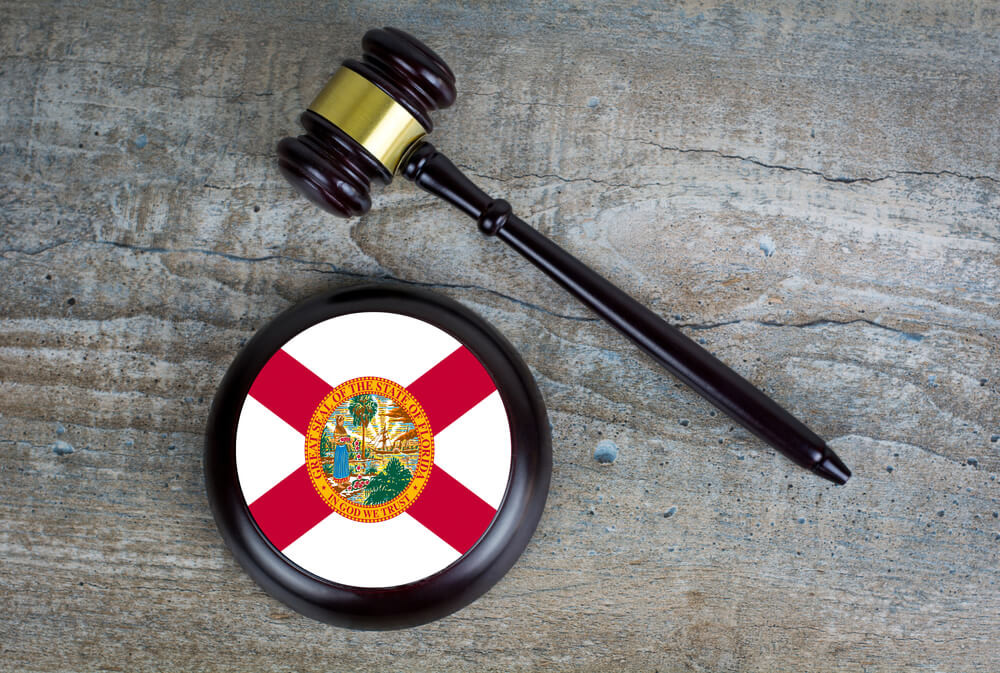
What’s Going on with Kratom in The Sunshine State? Is Kratom Legal in Florida?
Florida has long carved out a reputation as a region where individual lifestyle choices meet a heavily scrutinized regulatory landscape. From the coastal trade hubs to the rural interior, the retail market for botanical products constantly shifts under the watchful eyes of state legislators and local municipalities alike. At the center of this evolving landscape sits Kratom – a tropical tree derivative that has sparked intense debate over how consumer access should be balanced with public oversight. For anyone attempting to parse the current state statutes, the rules can look like a patchwork of statewide age limits mixed with strict emergency decrees and isolated county prohibitions. Unraveling the legal status of Kratom requires looking past the neon signs of local specialty shops and examining the actual statutory language coming out of Tallahassee, in order to finally answer the question of “Is Kratom Legal in Florida?”.
The Current Legal Baseline Across Florida
To get a clear view of where things stand, one must look at the overarching state policy that dictates the availability of these products. At the state level, the sale, possession, and purchase of standard Kratom leaf and traditional powder formulations are entirely legal for adults. This means that if you are driving through the vast majority of Florida’s 67 counties, you will encounter these products openly displayed in specialty smoke shops, herbal dispensaries, kava bars, and conventional convenience stores. The state has chosen a path of regulation rather than a sweeping, statewide ban, distinguishing itself from a handful of other states that enacted total prohibitions years ago.
This state-level legality creates a sprawling marketplace that serves hundreds of thousands of consumers. From Pensacola down to the Florida Keys, independent retailers and major distribution networks move substantial volumes of botanical material every single month. Because the federal government has not implemented a uniform regulatory scheme for the product, Florida has had to act as its own referee, setting up parameters that dictate who can buy it, where it can be sold, and what forms the product can take when it hits commercial shelves.
The availability of the raw botanical material exists within a broader framework of commerce that is subject to sudden shifts based on administrative findings. State agencies maintain the authority to inspect retail spaces, review invoices, and verify that the commodities being offered to the public do not run afoul of basic consumer safety expectations. While the plant material itself enjoys a protected status under current state guidelines, the methods used to market, process, and package it are subject to continuous revision by state watchdogs.
This environment means that while an adult can walk into a storefront and make a purchase without fear of state-level criminal penalties, the transaction itself is highly controlled. The freedom to participate in this market is directly tethered to compliance with a set of evolving operational standards. For businesses operating in this space, keeping up with these baseline legal requirements is a full-time operational necessity rather than a passive consideration.
Deconstructing the Framework of the Florida Kratom Consumer Protection Act
The true turning point for the state’s botanical marketplace arrived when the legislature decided to step in and codify specific rules for the industry. Rather than leaving the market completely unchecked, lawmakers sought to introduce a structural foundation that would eliminate bad actors while preserving access for responsible adults. This legislative effort culminated in a comprehensive set of statutes designed to bring order to a rapidly expanding retail sector.
Establishing Age Thresholds for Retail Transactions
The most immediate change brought about by the implementation of the Florida Kratom Consumer Protection Act was the establishment of a strict statewide age floor. Under this statutory framework, it is a criminal violation to sell, deliver, barter, furnish, or give any kratom product to an individual under twenty-one years of age. This alignment with the legal age for tobacco and alcohol sales was a deliberate move by lawmakers to ensure that the product remained exclusively in the hands of mature consumers.
For retail operators, this requirement changed the daily dynamics of point-of-sale interactions. Clerks are legally obligated to verify the identification of anyone attempting to purchase these items, matching the rigorous compliance standards seen in traditional regulated spaces. Retailers who fail to uphold this boundary face immediate legal consequences, starting as second-degree misdemeanors for initial infractions and escalating significantly for subsequent violations within a 12-month period. This progressive penalty structure demonstrates that the state views age verification as a cornerstone of market normalization.
By enforcing an age limit of twenty-one, the state managed to placate critics who were concerned about juvenile access to specialty retail items. It also provided a predictable standard for business owners who had previously been operating in a gray area without explicit state guidance on consumer demographics. The introduction of this clear age threshold successfully shifted the conversation away from prohibition and toward standard, age-restricted retail compliance.
Manufacturing Standards and Purity Thresholds
Beyond simply regulating who can purchase the product, the act introduced critical boundaries regarding what can actually go into the packages sold to the public. The statutory language explicitly targets product adulteration, making it illegal for processors to distribute any item that is mixed or packed with non-botanical substances that alter the quality or strength of the material to an injurious degree. This provision was designed to combat the dangerous practice of spiking natural powders with synthetic chemicals or industrial contaminants to artificially enhance potency.
Under these guidelines, the Florida Department of Agriculture and Consumer Services receives the authority to oversee manufacturing practices and enforce compliance. Processors must verify that their products are free from dangerous levels of heavy metals, pesticides, and microbiological contaminants like salmonella or E. coli. The law requires that the botanical material remain pure, reflecting the natural composition of the plant rather than a chemically manipulated variation.
Furthermore, the act laid down specific rules regarding the natural alkaloid profile of the plant. It explicitly prohibits the distribution of products where the natural concentrations of the active botanical compounds are altered through artificial synthesis. By creating these purity baselines, the state sought to provide a transparent marketplace where consumers can verify that what they are buying matches the biological reality of the traditional leaf, effectively squeezing out manufacturers who rely on substandard processing methods or deceptive formulations.
The 2025 and 2026 Emergency Directives on Concentrated Alkaloids
While the 2023 legislation established the structural foundation for the traditional market, the rapid evolution of product manufacturing soon outpaced the original statutory language. By late 2025 and moving swiftly into the summer here of 2026, FL authorities noticed a massive influx of highly isolated, hyper-concentrated extract products flooding convenience stores and gas stations. These items were vastly distinct from traditional leaf powders, featuring heavily manipulated balances of specific minor alkaloids that raised immediate alarms within state administrative offices.
In response to this shifting market landscape, Attorney General James Uthmeier, working in tandem with Agriculture Commissioner Wilton Simpson and Surgeon General Dr. Joseph Ladapo, executed a series of aggressive emergency administrative rules. These actions specifically targeted isolated forms of 7-Hydroxymitragynine (7-OH), alongside a list of newly identified synthetic and semi-synthetic derivatives that manufacturers were using to bypass earlier restrictions. The state leadership acted under emergency powers, declaring these hyper-concentrated formulations an imminent hazard to public safety.
The specifics of the 2026 emergency rules established a strict mathematical cap on product composition, completely reshaping the extract sector of the industry. Under the current directives, no retail product sold in Florida may contain more than one milligram of 7-Hydroxymitragynine or its related compounds per gram of solid material or per milliliter of liquid. To prevent manufacturers from simply selling tiny, ultra-potent doses, the state implemented a mandatory mass-balance ratio: any product containing any trace of these specific minor alkaloids must also contain at least 100x more standard Mitragynine by mass.
This ratio requirement effectively banned the standalone sale of isolated alkaloid tablets, shots, and chemically altered gummies that had previously occupied significant shelf space under various brand names. The emergency rule placed these hyper-concentrated variations onto the state's Schedule I controlled substance list, turning the unauthorized manufacture, distribution, and sale of these specific extracts into a felony-level offense. This administrative move allowed state law enforcement and inspectors from the Department of Agriculture and Consumer Services to launch statewide sweeps, removing tens of thousands of non-compliant packages from retail networks.
The enforcement strategy distinguishes between the traditional botanical industry and these newly engineered chemical concentrates. While standard leaf powder, raw materials, and low-potency traditional extracts remain protected under the Consumer Protection Act framework, the state has drawn a hard line against isolated chemistry. For consumers and retailers in the state, this means the extract market is under an unprecedented level of restriction, requiring immediate adaptation to avoid severe criminal liability.
The Disconnect Between State Policy and Sarasota County
One of the most complex aspects of the Florida legal landscape is the friction between statewide statutes and local municipal autonomy. While the state capital establishes the baseline framework for the territory, local governments occasionally retain historical codes that create geographical exceptions to the general rule. This dynamic is perfectly illustrated by the unique legal environment within Sarasota County, which stands as a stark contrast to the rest of the region.
To understand why a single county can completely derail a traveler’s compliance strategy, one must look back to 2014. Long before the state legislature ever debated the Consumer Protection Act, the Sarasota County Commission was actively responding to the rise of synthetic cannabinoids and various designer substances appearing in local smoke shops. In their effort to protect the community from unrated synthetic compounds, local lawmakers drafted a sweeping ordinance that cast an exceptionally wide net over a variety of botanical and chemical products.
The 2014 Sarasota ordinance explicitly listed the active botanical compounds of the kratom tree alongside illicit synthetic items, classifying the entire plant as a designer drug. The local commission determined that the availability of the material posed a localized risk, choosing to implement a total ban on the sale, possession, and distribution of the substance within the boundaries of the county. This ordinance made possession a code violation and a executable misdemeanor offense, backed by local law enforcement structures.
When the state eventually passed its statewide regulatory framework years later, it did not include an explicit preemption clause that retroactively dismantled preexisting local county ordinances regarding this specific material. As a result, Sarasota's local ban remained completely intact. This created a legal reality where an item that is perfectly legal to buy and possess on one side of a county line becomes an explicit contraband item the moment a person crosses the geographic boundary.
Compliance Strategies for Travelers and Consumer Awareness
This geographical fragmentation requires an immense amount of localized awareness for anyone moving through the central Gulf Coast of the state. A consumer can purchase a legal, compliant bottle of powder in Manatee County or Charlotte County, but if they drive across the border into Sarasota County with that product in their vehicle, they are technically in possession of an illegal substance under local law. Local law enforcement officers within Sarasota County maintain the authority to issue citations, confiscate the material, and initiate misdemeanor proceedings based on the 2014 code.
For national distributors and regional businesses, this localized ban means that shipping logistics must be carefully managed. E-commerce platforms must use zip-code filtering software to block shipments heading to destinations within Sarasota County, preventing inadvertent violations of local municipal distribution laws. Physical delivery networks and courier services moving retail goods must also bypass the county when transporting non-bulk quantities of the material to ensure they do not run afoul of local enforcement priorities.
This regional discrepancy serves as a persistent reminder that state-level legality is not always absolute. Consumers must treat county lines with the same level of care that they would treat state lines when carrying botanical items. Understanding these micro-jurisdictional rules is vital for avoiding unexpected legal complications in an otherwise accessible state market.
Evolving Market Dynamics and Future Legislative Oversight
As the marketplace adjusts to the combination of the Consumer Protection Act and the strict emergency decrees regarding extracts, the long-term future of the industry points toward even greater institutional control. Lawmakers in Tallahassee have continuously signaled that they are not finished refining the rules governing these products. Recent legislative sessions have seen the introduction of several companion bills aimed at transitioning temporary administrative rules into permanent, non-negotiable statutory laws.
One of the key areas of focus for upcoming regulatory expansions is the formalization of third-party laboratory verification infrastructure. Future legislative proposals, such as variations of House Bill 1489, seek to mandate that every single product batch distributed within the state undergo analysis by an independent testing facility certified directly by the Department of Agriculture and Consumer Services. This would eliminate the current practice of self-regulation, replacing it with a centralized state verification system where only approved laboratories can issue the compliance documentation required for retail sales.
Additionally, the state is looking to implement advanced consumer transparency mandates that leverage modern digital tracking tools. Plans are underway to require all retail packaging to feature prominent, scannable quick response codes that connect consumers directly to a verified Certificate of Analysis. These digital links will be required to display precise alkaloid percentages, complete contaminant screenings, and specific batch processing numbers, along with clear expiration dates that prevent ancient or degraded material from lingering on retail shelves.
The geographic boundaries of retail operations are also being reexamined by state planning committees. Future statutes are expected to introduce zoning restrictions that prohibit the sale or consumption of these products within specific distances of elementary, middle, or secondary school properties, mirroring the strict spatial boundaries applied to medical cannabis facilities and adult entertainment venues. Furthermore, lawmakers are moving to restrict the sale of these commodities at transient public venues like county fairs, farmers markets, and pop-up flea markets, confining the industry entirely to permanent, permitted brick-and-mortar commercial spaces.
These impending adjustments represent a clear maturation of the local botanical industry. The era of unregulated, wild-west style distribution has drawn to a complete close in Florida, replaced by a highly structured corporate compliance model. While these rules introduce significant operational overhead for small-scale manufacturers, they provide a highly predictable, stable environment for major enterprises that possess the capital and infrastructure to meet the state's rigorous regulatory benchmarks.
The Evolving Equilibrium of Botanical Regulation
As Florida continues to refine its stance on Kratom commerce, the state has established a clear precedent of substituting outright prohibition with vigorous state-level oversight and chemical boundaries. This dual approach balances the preservation of adult consumer access with aggressive enforcement against synthetic manipulation and concentrated compounds. The unfolding landscape serves as a complex case study in how regional autonomy can coexist with centralized consumer protection standards in a highly dynamic market. For consumers and industry participants alike, remaining informed on these shifting statutory borders is the only certain method to preserve full alignment within the state's ever-watchful legal system.
Recent Posts
-
A Kratom Usage Question: How Long After Taking Suboxone Can I Take Kratom?
People who use Suboxone may wonder how long they should wait before taking Kratom. The most accurate …Sep 14, 2026 -

What's Going on with Kratom in The Wolverine State? Is Kratom Legal in Michigan?
Specialty storefronts and neighborhood herbal markets across The Great Lakes region showcase a diver …Sep 13, 2026 -

Does Narcan Work on Kratom?
When emergency response tools enter mainstream public awareness, curiosity naturally spreads to how …Sep 10, 2026