
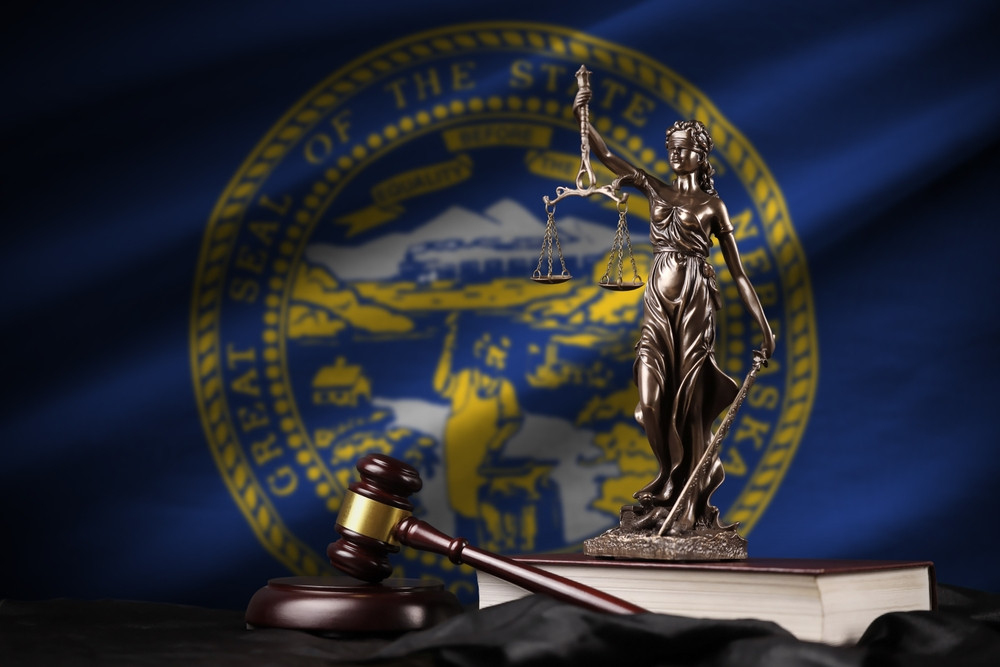
What's Going on with THCA in The Cornhusker State? Is THCA Legal in Nebraska?
Nebraska has maintained a reputation for strict cannabis policies, yet specialty retail storefronts throughout Omaha, Lincoln, and Grand Island currently showcase glass jars filled with aromatic THCA hemp flower. Tetrahydrocannabinolic acid is the raw, naturally occurring acidic cannabinoid found in the living cannabis plant prior to the application of heat. When Congress passed the 2018 Farm Bill, legal hemp was defined strictly by its post-harvest Delta-9 THC concentration on a dry-weight basis, creating a distinct commercial pathway for unheated plant material. That technical legal distinction gave rise to an expansive retail marketplace, putting store owners directly at odds with state officials who view high-potency hemp items as illicit intoxicants. Unpacking the current status of THCA across the Cornhusker State requires exploring how foundational agricultural codes, statewide consumer protection lawsuits, and sweeping federal statutory changes converge on retail shelves.
The Statutory Clash: How the 2018 Farm Bill Opened the Door
The modern commercial hemp sector traces its statutory origins to the federal Agricultural Improvement Act of 2018. That landmark piece of federal legislation formally removed industrial hemp from the Controlled Substances Act by establishing a definitive chemical boundary. Under the federal definition, any part of the Cannabis sativa L. plant containing no more than 0.3 percent Delta-9 tetrahydrocannabinol on a dry-weight basis qualifies as legal hemp rather than controlled marijuana. Following this federal reform, the Nebraska Legislature enacted Legislative Bill 657, known as the Nebraska Hemp Farming Act, to establish a state-regulated agricultural hemp program overseen by the Nebraska Department of Agriculture while aligning state definitions with federal guidelines.
The focal point of the ongoing legal discussion involves tetrahydrocannabinolic acid, commonly abbreviated as THCA. Within raw, living cannabis flora, the plant synthesizes cannabinoids in their carboxylic acid forms. In this unheated state, THCA possesses a molecular shape that prevents it from binding directly to human cannabinoid receptors, rendering it non-intoxicating until subjected to combustion, vaporization, or prolonged heat. Because the statutory text of both the 2018 Farm Bill and Nebraska’s LB 657 measured legal compliance exclusively through Delta-9 THC content, raw agricultural botanical material with high THCA concentrations and minimal Delta-9 THC easily satisfied the literal requirements of the law.
Agronomists and commercial breeders quickly learned how to cultivate hemp varieties that produce substantial quantities of acidic cannabinoids while keeping Delta-9 THC levels below the statutory 0.3 percent limit prior to processing. This legal opening fostered a rapidly expanding supply chain across the United States. In Nebraska, independent business owners looked at the plain language of LB 657 and recognized an opportunity to stock compliant raw flower, concentrates, and formulated goods on retail shelves. However, this statutory harmony proved fragile, as state prosecutors and agricultural officials increasingly viewed the sale of raw botanical products that convert into psychoactive Delta-9 THC upon consumer use as a direct circumvention of Nebraska’s longstanding criminal statutes.
State Enforcement in the Heartland: Courtroom Clashes and Lab Realities
State authorities in Lincoln have responded to the expanding hemp marketplace with vigorous regulatory and judicial actions. Rather than waiting for legislative sessions to enact statutory revisions, the Nebraska Attorney General launched comprehensive legal initiatives against retail operators across the state. These enforcement measures utilize existing consumer protection standards and agricultural codes to challenge the retail distribution of intoxicating hemp derivatives. This aggressive posture has placed independent retail businesses under immense legal and financial strain.
Consumer Protection Lawsuits and Deceptive Trade Practice Claims
Nebraska Attorney General Mike Hilgers initiated a sweeping enforcement campaign aimed directly at halting the sale of psychoactive hemp-derived products. Rather than relying solely on traditional criminal narcotics charges, the Attorney General’s Office filed numerous civil lawsuits against specialty shops in counties across the state. These lawsuits were brought under the Nebraska Consumer Protection Act and the Uniform Deceptive Trade Practices Act, alleging that retailers engaged in deceptive conduct by selling potent, intoxicating substances marketed under the benign label of industrial hemp.
To build these cases, state investigators conducted undercover purchasing operations, acquiring a broad range of hemp products from retail shelves for formal chemical analysis in state laboratories. The state subsequently alleged that many tested products exhibited substantial discrepancies between the potency figures displayed on their product packaging and the actual chemical concentrations discovered during laboratory evaluations. Furthermore, the state asserted that selling unregulated, intoxicating items constitutes a public nuisance and violates the Nebraska Pure Food Act by distributing adulterated consumer goods.
The financial and operational ramifications of these legal filings have been severe for local business owners. Retailers named in civil lawsuits faced potential injunctions, product seizures, and civil monetary penalties that could reach tens of thousands of dollars per statutory violation. While some business operators chose to contest the state’s claims in district courts, arguing that their inventory complied with the written definitions of the Nebraska Hemp Farming Act, many others agreed to voluntary compliance stipulations, removing disputed product lines from their storefronts to avoid ruinous litigation expenses.
Decarboxylation Dynamics and Forensic Gas Chromatography
The central technical disagreement between specialty retailers and law enforcement agencies centers on how laboratories test and calculate THC concentrations. When raw THCA flower is exposed to heat during smoking, baking, or vaporization, a thermal reaction called decarboxylation occurs. Heat detaches a carboxyl group from the THCA molecule, converting it into active Delta-9 THC at a theoretical efficiency rate of approximately 87.7 percent. While federal rules established by the United States Department of Agriculture require pre-harvest crops to undergo total-THC testing before harvest, the statutory definition for post-harvest commercial goods historically referenced only Delta-9 THC on a dry-weight basis.
Retailers maintain that finished goods should be evaluated strictly based on the chemical compounds present at the exact time of retail transaction. Under this framework, raw flower containing high percentages of THCA and less than 0.3 percent Delta-9 THC remains lawful hemp until the consumer chooses to apply heat. State law enforcement agencies and county prosecutors reject this interpretation, arguing that any consumer product destined for combustion must be evaluated by its post-decarboxylation potency.
This dispute creates significant practical danger for consumers and merchants when products are subjected to official forensic screening. Many state and local crime laboratories utilize gas chromatography to evaluate seized plant material. Because gas chromatography relies on elevated temperatures inside the testing instrument, the process naturally heats the sample, converting THCA into Delta-9 THC during the testing procedure itself. Consequently, a batch of raw flower that passed third-party high-performance liquid chromatography testing prior to sale will often produce an illicit marijuana reading on a police forensic report, leading to potential criminal possession charges despite the retailer’s third-party documentation.
Beyond Dispensaries: The Footprint in Nebraska's Specialty Shops
Because Nebraska has not established an adult-use cannabis framework or a commercial medical dispensary system, the distribution of hemp-derived products exists entirely within specialized retail establishments. Consumers interested in purchasing THCA goods visit dedicated CBD boutique stores and independent vape shops operating in shopping centers, downtown districts, and commercial corridors across the state. These specialty businesses have developed focused retail environments, offering curated selections of hemp merchandise alongside hardware, glassware, and related accessories.
Operating a specialty hemp retail storefront in Nebraska requires a commitment to commercial standards and self-regulation. Professional CBD retailers and vape shop operators enforce strict age-verification protocols, requiring valid state-issued photographic identification to confirm that every customer is at least twenty-one years of age before entering or completing a transaction. Moreover, reputable merchants require comprehensive Certificates of Analysis from accredited, independent testing facilities for every wholesale product batch. These laboratory documents verify that the merchandise satisfies dry-weight Delta-9 THC thresholds while confirming the absence of residual solvents, heavy metals, microbials, and agricultural pesticides.
Despite adhering to rigorous quality standards, running a specialty storefront involves unique operational hurdles. Retailers in this sector frequently encounter resistance from commercial financial institutions, resulting in sudden merchant processing cancellations and limited access to commercial banking services. Furthermore, shifting municipal guidelines and persistent scrutiny from state regulators require store owners to continuously review their inventory, adjusting their product offerings to maintain compliance and protect their retail investments.
Formulations on Display: From Raw Botanicals to Modern Preparations
Modern extraction and processing techniques have expanded hemp-derived THCA far beyond raw botanical harvests. Manufacturers develop diverse product categories designed to meet varying consumer preferences in specialized retail environments. Dedicated CBD outlets and vape boutiques curate these inventories with an emphasis on precise formulation and third-party laboratory verification. Exploring these diverse formats illustrates the wide reach of the contemporary hemp sector.
Inhalable Formats: Loose Buds, Pre-Rolls, and Vapes
Inhalable goods remain the most recognizable and widely requested items in specialty retail shops. Loose flower tops this category, consisting of carefully trimmed, cured botanical buds that showcase rich aromatic profiles derived from natural plant terpenes. Retailers display loose flower in airtight glass jars or sealed mylar packaging engineered to prevent oxidation and moisture loss. For added consumer convenience, specialty shops also stock pre-rolled joints, which offer measured single-serve portions crafted from ground raw flower without requiring rolling papers or specialized preparation tools.
Vaporization hardware represents a major portion of the modern inhalable marketplace. Specialty vape shops and CBD boutiques carry THCA vape cartridges and disposable all-in-one electronic devices filled with concentrated hemp extracts. Producing stable vape formulations requires precise temperature management during extraction to avoid premature thermal decarboxylation before the consumer activates the device. These devices utilize advanced ceramic heating elements to provide smooth aerosolization, appealing to adult patrons looking for compact, portable options. Responsible manufacturers package these items in child-resistant containers featuring scannable QR codes that connect consumers directly to verified batch testing results.
Ingestible and Topical Options: Edibles, Tinctures, Capsules, Tablets, and Balms
Beyond inhalable products, specialty storefronts offer a broad range of non-combustible preparations formulated for oral ingestion and topical application. Edible formulations, particularly gelatin and pectin fruit gummies, deliver pre-measured servings in a wide assortment of flavors. Formulating genuine THCA edibles requires strict low-temperature blending processes, ensuring that the acidic cannabinoid remains intact rather than converting into Delta-9 THC during culinary production. Liquid tinctures, which combine hemp extracts with carrier oils such as medium-chain triglyceride oil or cold-pressed hemp seed oil, provide an unheated liquid option administered via calibrated droppers.
For consumers seeking uniform, unflavored routines, solid oral formats like encapsulated powders and pressed tablets have become common retail staples. These solid formulations provide exact unit dosing without the sugars or artificial flavorings found in confectionary edibles. In addition to ingestible items, topical preparations represent a steady retail category on CBD store shelves. Formulators infuse unheated hemp extracts into soothing body lotions, concentrated salves, and firm balms enriched with ingredients like beeswax, cocoa butter, and botanical essential oils. These topicals are applied directly to the skin surface, providing an external delivery method that avoids systemic ingestion while utilizing the unique properties of raw hemp compounds.
The Federal Reckoning: Section 781 and the Nationwide Total-THC Cap
The regulatory conversation surrounding THCA in Nebraska is being radically reshaped by decisive federal legislative action that alters the national hemp landscape. In November 2025, Congress passed and the President enacted the Continuing Appropriations and Extensions Act, 2026 (Public Law 119-37). Embedded within this federal statute is Section 781, a transformative provision that directly closes the post-harvest loophole established under the 2018 Farm Bill by replacing the original Delta-9 THC standard with a strict, overarching total-THC framework.
Under Section 781 of P.L. 119-37, the federal definition of legal industrial hemp has been fundamentally rewritten. The statute establishes a restrictive federal cap of just 0.4 milligrams of total THC per container on all finished, consumer-facing hemp-derived goods. Crucially, this total-THC standard mandates the mathematical combination of Delta-9 THC and all structural isomers, derivatives, and acidic precursors—explicitly including tetrahydrocannabinolic acid (THCA)—into the final compliance calculation. Any commercial item exceeding this 0.4-milligram limit per package is stripped of its legal hemp classification, causing it to revert to the status of a federally controlled Schedule I substance under the Controlled Substances Act.
The implementation timeline for Section 781 was established with a one-year transition period, setting the federal enforcement deadline for late 2026. Industry legal analysts estimate that this 0.4-milligram restriction will render approximately 95 percent of all currently marketed hemp-derived cannabinoid products federally unlawful. Because raw THCA flower naturally contains significant percentages of potential THC by weight, loose buds, pre-rolls, vape cartridges, and full-strength ingestibles will be impossible to sell legally under the amended federal definition once the statute takes full effect.
This imminent federal restriction directly converges with Nebraska's aggressive state-level initiatives. In Lincoln, state regulators and lawmakers have pursued parallel measures, including proposed administrative rules from the Nebraska Department of Agriculture under the Nebraska Pure Food Act that categorize consumable hemp items with detectable cannabinoids as adulterated products. Furthermore, legislative proposals in the Nebraska Unicameral have sought to mirror total-THC container limits at the state level. Even if local retailers were to successfully challenge individual state consumer protection lawsuits in district court, the nationwide implementation of Section 781 eliminates the underlying legal premise that allowed THCA products to move through interstate commerce and appear on store shelves.
A Final Outlook Across Nebraska's Shifting Horizon
Nebraska stands at a historic crossroad as the temporary statutory pathways that enabled the growth of THCA commerce face imminent closure from both state and federal authorities. While specialty CBD shops and vape retailers continue to provide compliant flower, ingestible tablets, and topical balms, impending regulations will fundamentally alter retail shelves. The arrival of the federal 0.4-milligram total-THC cap alongside state administrative actions eliminates the regulatory gaps that previously supported commercial distribution. For retailers and consumers across The Cornhusker State, adapting to these comprehensive legal transformations will define the next era of the hemp landscape.
Recent Posts
-

A THCA Smoking Question: How Should THCA Smoke Look and Smell?
The moment a bright orange ember catches the edge of a fresh bowl or rolled cone, you're immediately …Oct 13, 2026 -
What's Going on with Kratom in The Pine Tree State? Is Kratom Legal in Maine?
Maine's fiercely independent character often sets it apart from the rest of the country, especially …Oct 12, 2026 -
Kava vs. CBGA: How Do They Measure Up Against One Another?
Exploring the world of natural wellness often brings people face to face with fascinating botanicals …Oct 11, 2026