
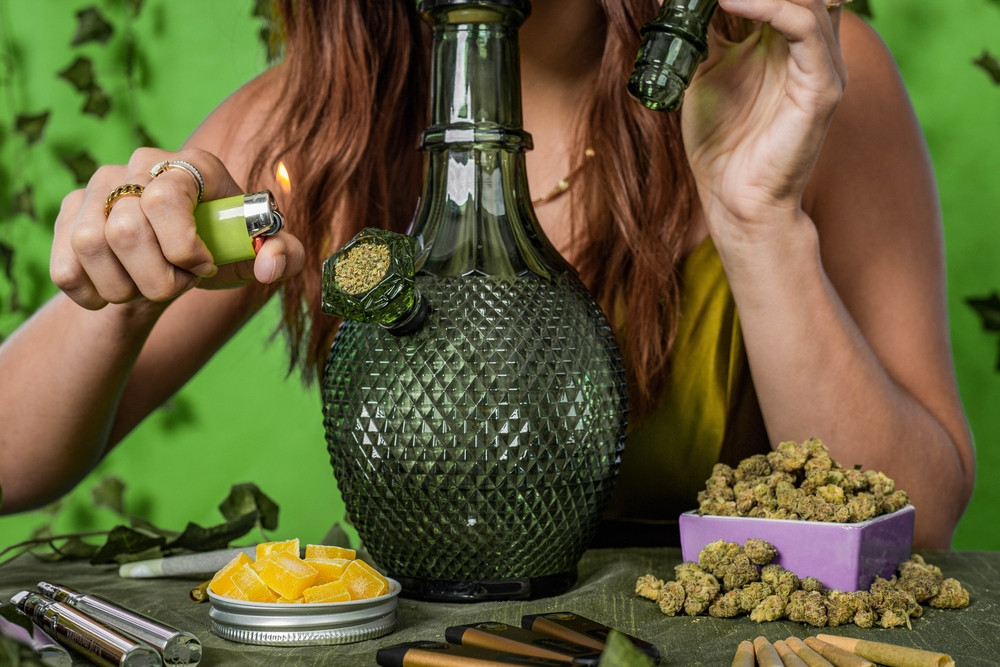
A THCA Smoking Question: How Should THCA Smoke Look and Smell?
The moment a bright orange ember catches the edge of a fresh bowl or rolled cone, you're immediately treated to an unfolding show of rising plumes and rich botanical scents. It's completely natural to wonder what that freshly sparked cloud ought to look like under the light, especially when you're inspecting the thickness of the stream or the subtle blue cast near the cherry. At the same time, the aroma tells its own immediate story, shifting from the sharp, raw zest of crushed plant trichomes to a warm, full-bodied herbal fragrance as heat does its work. Factors like cure consistency, resin gland density, and burn temperature all leave a distinct mark on the color of your ash and the character of the smoke hanging in the room. Getting familiar with these visual milestones and aromatic traits gives you a dependable way to appreciate quality THCA flower every single time you strike a flame.
The Core Chemistry: Breaking Down THCA Before the Spark
To get a real sense of what floats into the air when you spark a bowl, you've got to look straight at the crystalline acid coating the cured flower bracts. Before any flame enters the picture, fresh and cured buds don't carry significant amounts of Delta-9 THC. Instead, the bulbous glandular trichomes covering the surface of the calyxes are packed with Tetrahydrocannabinolic acid (THCA). At a molecular level, this acidic precursor features an extra carboxyl ring (-COOH) bound securely to its carbon chain. That small cluster of carbon, hydrogen, and oxygen atoms adds physical bulk to the molecule, which is why raw flower won't produce psychoactive effects if eaten without being heated first. It's a stable, crystalline compound that sits locked inside the resin heads, waiting for an external energy source to trigger a dramatic transformation.
The second an open flame touches that dried plant matter, everything shifts in a fraction of a heartbeat. Lighter flames and burning hemp wicks easily push temperatures between 600F and well over 1000F right at the core of the glowing cherry. That intense thermal energy instantly kicks off decarboxylation, snapping the fragile carboxyl bond clean off the THCA molecule. As that bond breaks, it releases carbon dioxide gas, leaving behind converted Delta-9 THC. Because the cherry burns well above the boiling points of cannabinoids, which sit roughly between 315F and 390F, this newly formed compound doesn't stay a liquid for long. It flashes almost instantaneously into tiny airborne oil droplets right along the edge of the burning plant tissue.
What makes smoking completely distinct from pure vaporization is that this decarboxylation happens alongside full-scale combustion. When you ignite cured flower, you aren't just gently boiling off cannabinoids; you're also burning raw plant materials like cellulose, hemicellulose, lignin, and trace chlorophyll. This dual reaction produces a complex particulate suspension. The smoke isn't a pure chemical vapor; it's an aerosol cloud carrying microscopic droplets of converted cannabinoid oil, volatilized terpenes, and tiny carbon ash particles from combusted botanical fibers. Right ahead of the glowing coal sits a tiny vaporization zone where heat vaporizes delicate terpenes before the plant matter actually catches fire. That blend of aerosolized resin oil and burned plant carbon is what gives smoking its physical body, thick visual density, and lingering room presence.
This immediate thermal breakdown also lays the groundwork for how the smoke behaves in the air the moment it leaves the cherry. Right at the tip of the burning ember, where heat is highest and oxygen feeds the flame, the smoke often streams off as a delicate, pale-blue ribbon. That bluish tint happens because microscopic carbon particulates scatter shorter wavelengths of light as they rise into the room. Once that smoke travels through a pipe or paper, cools down, mixes with ambient moisture from your breath, and exits on the exhale, the particulate size expands rapidly. The result is a much thicker, creamy white plume that carries the signature scent of both combusted resin and toasted botanical matter, establishing the baseline for everything your senses pick up during a session.
THCA Flower in Plain Terms: The Botanical Basics
Stripping away the regulatory jargon reveals a simple truth: THCA flower is genuine, seedless female cannabis flower grown, harvested, and cured to retain its native acidic cannabinoid profile. If you set a high-THCA hemp bud next to a traditional cured flower from an adult-use market, you wouldn't be able to tell them apart with the naked eye, a jeweler's loupe, or your nose. They share the exact same botanical architecture, built around clusters of swollen floral bracts, sugar leaves, and vibrant pistils. The real engine of the bud lives in the thousands of tiny, mushroom-shaped structures blanketing the surface: capitate-stalked glandular trichomes. These microscopic resin glands act as natural production factories where the plant synthesizes raw cannabinoids alongside fragrant aromatic oils.
A grower's harvesting timeline directly impacts the density and quality of those trichome heads. Cultivators monitor the resin glands closely with magnification, waiting for the clear, glassy spheres to turn milky white with a scattering of amber. That cloudy appearance signals that the trichome heads are completely swollen with cannabinoids and unoxidized terpenes. Once the plants get chopped, the slow drying and curing phase takes center stage. Hanging whole branches in a cool, dark room at roughly sixty degrees and sixty percent relative humidity over ten to fourteen days gives internal enzymes time to break down residual starches and green chlorophyll. Skipping or rushing this cure leaves too much moisture and bitter plant pigments trapped in the bracts, guaranteeing a harsh, coughing smoke that tastes like burnt lawn clippings regardless of how frosty the buds look.
This brings up an important sensory divide that trips up a lot of smokers: the contrast between raw jar appeal and the actual scent of burning smoke. When you crack open an airtight jar of top-shelf cured flower, you're greeted by a rush of volatile organic compounds that evaporate at room temperature. Fresh monoterpenes like sharp limonene, floral linalool, and herbal myrcene hit your nose in their purest, unheated state, often accompanied by volatile sulfur compounds that produce that signature skunky, fuel-drenched funk. That raw fragrance is lively, bright, and deeply complex, giving you a sneak peek into the plant's genetic pedigree before fire enters the equation.
The second flame touches those cured bracts, the olfactory rules change completely. Combustion pyrolyzes those delicate aromatic oils, meaning extreme heat chemically transforms the terpenes before they reach your nose. While a fair portion of the terpene profile aerosolizes ahead of the ember and carries that strain-specific flavor onto your palate, the smoke itself is a product of burning plant tissue, vaporized resins, and toasted waxes. The crisp lemon or sweet berry notes you caught in the raw jar combine with warm, woodsy, toasted carbon aromas and deep, heavy skunk on the exhale. A properly cured bud strikes a clean harmony between those two worlds, letting the genuine botanical character shine through the smoke without being drowned out by bitter, burnt cellulose.
The Combustion Blueprint: How Quality THCA Smoke Should Look and Smell
When striking a lighter to pull heat through cured flower, you set off a rapid physical and chemical transformation that completely defines the character of your session. Evaluating the quality of that burn doesn't require complex laboratory instruments, because your own eyes and nose pick up on the critical details right away. Everything from how the plant was cultivated and trimmed to the specific smoking apparatus, additive blends, and storage conditions leaves an unmistakable mark on the rising plume. A pristine cure and high resin content will always display clean visual markers and rich aromatic notes that set top-tier flower apart from rushed, dry plant matter. Taking a closer look at these distinct cultivation, hardware, and environmental variables reveals exactly what shapes the look and smell of every single hit you take:
- Where THCA Flower is Grown: The physical environment where a plant matures dictates its resin-to-vegetative ratio, which directly influences how the cured bud combusts under flame. THCA flower can be found in the following:
- Indoor Flower: This is cultivated in tightly sealed, climate-controlled rooms where temperature, humidity, and light spectrums are dialed in with precision, encouraging the plant to produce swollen, densely packed trichome heads with very thin cellular walls. When ignited, indoor flower yields a light, pale-blue ribbon of smoke at the cherry that blossoms into a thick, milky-white plume on the exhale, accompanied by an intensely pungent, pure terpene aroma that completely dominates the room.
- Outdoor Flower: Sun-grown crops develop under natural solar radiation, fluctuating winds, and shifting weather, thus prompting the plant to construct thicker, sturdier cell walls, heavier fibrous stems, and broader protective leaves. That extra plant matter means outdoor buds burn with a slightly darker, heavier smoke plume, leaving behind a darker gray ash and releasing a rustic, deep fragrance that pairs natural botanical funk with warm, woody, and earthy forest aromas. Light-deprivation greenhouse setups combine the raw power of natural sunlight with the environmental controls of an indoor facility, striking a harmonious middle path.
- Greenhouse Flower: Produces a balanced, velvety white smoke that disperses cleanly, releasing vibrant, cultivar-specific citrus and diesel notes without the heavier vegetative undertones common to fully outdoor harvests.
- Type of THCA Flower: THCA flower can be found in the following:
- Regular THCA Flower: Standard commercially trimmed buds represent the market benchmark for everyday combustion, delivering a dependable balance between floral calyxes, sugar leaves, and resin glands. When sparked, regular flower establishes a steady orange cherry that burns evenly across the bowl or cone, sending up a medium-bodied white plume that disperses into the air within ten to fifteen seconds. The ash burns down to a respectable, uniform gray, while the aroma produces a pleasant, authentic bouquet of toasted herbs, mild pine, and classic skunky plant musk that feels familiar and balanced.
- THCA Flower Smalls: Often referred to on dispensary floors as popcorn buds, smalls are harvested from the lower canopy branches of the plant where light penetration is slightly reduced. Because these smaller clusters have a marginally higher proportion of outer sugar leaves and tiny internal stems relative to their overall mass, they combust at a slightly faster pace than large, dense colas. The smoke emerges as a slightly thinner, crisper plume that scatters quickly, delivering bright, focused terpene flavors on the tongue while producing a lighter, less suffocating room aroma that clears out without lingering heavily on clothing.
- THCA Flower Shake: Consisting of loosened trichomes, broken calyx fragments, and trimmed sugar leaves collected at the bottom of curing bins, shake presents a much higher surface area with significantly less internal moisture. When flame touches shake, it ignites almost instantly, creating an aggressive, hot cherry that crackles as dry plant fibers burn down fast. The resulting smoke is noticeably thinner, hotter, and harsher on the palate, carrying a darker gray cast and a distinctly papery, dry-hay aroma that lacks the rich, sweet resin depth found in whole, intact buds.
- Exotic THCA Flower: Representing boutique genetics and elite small-batch cultivation, exotic flower features exceptionally high trichome coverage that coats every crevice of the bracts like a thick layer of frost. The intense concentration of glandular heads creates a very slow, oily burn where heat melts the resin before the underlying plant tissue catches fire, resulting in a thick, wet resin ring behind the ember. The smoke pours out as a dense, creamy, pure-white cloud that hangs suspended in the room like morning fog, releasing an overwhelming, multi-layered aroma of sour fuel, exotic fruit, and pungent skunk that stays trapped in enclosed spaces for hours.
- AA Exotic THCA Flower: Operating as the introductory tier within the exotic category, AA flower displays decent visual frost and moderate trichome development, though its resin density doesn't quite reach the heavy saturation of top-shelf grades. It ignites cleanly, maintaining an even burn line that produces a soft gray ash with minor flecks of darker carbon along the edges. The smoke appears medium-thick and semi-opaque, delivering a mild, pleasant combination of fresh pine, cracked black pepper, and subtle citrus that creates an agreeable aroma without completely saturating the room.
- AAA Exotic THCA Flower: This upper-tier craft flower carries substantial resin coverage, tight nug density, and a rich, terpene-heavy cure that makes the dried buds feel sticky rather than dry. When rolled or packed, the cherry burns with a steady, sizzling hiss, establishing an unmistakable oil ring and leaving behind a soft, pale silver-gray ash. The exhaled smoke is plush, velvety, and brilliantly white, carrying an expansive room presence loaded with bold notes of pungent gas, sweet candied berries, and rich, dank musk that announces its quality immediately.
- 4-A Exotic THCA Flower: Standing at the absolute summit of flower grading, quadruple-A flower features massive, intact, amber-tinted trichome heads that burst with cannabinoids and volatile aromatic oils. Under a flame, the ember burns with total uniformity, producing a continuous, glistening bead of oil that drips right behind the cherry while leaving behind a fluffy, stark-white mineral ash that falls away effortlessly. The smoke is extraordinarily dense, cool, and milky, filling the lungs smoothly and billowing into an opaque white fog that blankets the air with an intoxicating, hyper-pungent symphony of pure sour diesel, rotten fruit funk, and sweet floral nectar.
- THCA Snow Caps/Snowballs: This specialty product takes cured, high-grade buds and coats them in a thick, uniform blanket of pure, pulverized THCA isolate crystals until they look like frosted pinecones. Because pure isolate has a much higher melting point and zero plant fiber, the white powder crust acts as a thermal shield that slows the combustion rate down significantly. As the flame heats the surface, the outer crystals melt into a bubbling, clear liquid shield before the interior flower catches fire, generating chalk-white, ultra-dense clouds with incredible visual weight. Aromatically, the smoke pairs the clean, neutral, warm vapor profile of melting isolate with the rich, deep botanical terpenes of the underlying cured bud, producing a remarkably smooth, sweet, and unique room aroma.
- THCA Moonrocks: Moonrocks are crafted through an intensive triple-layer process, dipping dense cured buds into warm hash oil or liquid extract before rolling them generously in fine, dry-sift kief. This heavy saturation transforms the bud into a dense, solid nugget that cannot be shredded in a traditional grinder and requires persistent, steady flame to initiate combustion. Once ignited, moonrocks sizzle and crackle as the oil layer boils, producing massive, billowing, fog-like clouds of heavy white smoke that roll across the ceiling. The aroma is intensely rich, roasted, and decadent, combining the deep, woody, incense-like tones of toasted kief with the sharp, concentrated fuel notes of melted extract and smoldering flower.
- THCA Pre-Rolls: Factory-produced pre-rolls pack ground flower into thin paper cones, introducing the physics of paper combustion and airflow dynamics into the sensory equation. The smoke's appearance and smell depend heavily on whether the tube was filled with whole-ground bud or dry trim, as well as how uniformly the machine compacted the mixture. A well-packed pre-roll burns with an even, round cherry that creates a steady stream of white smoke, though the aroma carries subtle toasted notes from the combusting wood-pulp or rice rolling paper alongside the plant's native terpenes. If the pre-roll is packed too tightly, airflow chokes, resulting in thin, wispy draws; if packed too loosely, it forms air pockets that cause the paper to run down one side, producing a harsher, papery-smelling smoke.
- THCA Pre-Blunts: Rolled using tobacco leaves, pressed hemp wraps, or exotic botanical leaves like lotus or palm, pre-blunts offer a dramatically slower burn rate and a much heavier smoke profile than paper cones. The thick, substantial wrapper acts as an insulator, cooling the cherry's core and allowing the internal flower to vaporize gently ahead of the ember. This produces voluminous, room-filling white clouds that linger in the air like thick fog, while the exterior wrapper adds its own bold olfactory character. If wrapped in natural hemp, the smoke smells earthy, rich, and sweet; if rolled in cured tobacco leaf, it introduces a deep, spicy, cigar-like cedar and leather fragrance that intertwines with the pungent skunk of the burning THCA resin.
- THCA Flower Rolled & Smoked by Hand: Grinding cured flower yourself and rolling it into your own custom joint or blunt gives you total mechanical control over packing density and draw resistance. When you craft a roll with even tension from tip to filter, air channels distribute heat smoothly across the entire diameter of the ember, maximizing the formation of that coveted golden resin ring. The resulting smoke streams off the cherry as a clean, pale-blue ribbon that transforms into a silky, expansive white plume on the exhale, completely free from the chemical binders or uneven airflow often found in mass-manufactured cones. This unfiltered, manual method delivers the purest expression of the flower's genuine aroma, letting every subtle botanical note of sour diesel, sweet pine, and cured earth hit your senses without interference.
- THCA Flower Smoked in a Pipe: Packing ground flower into a dry glass, ceramic, or metal pipe strips away combustible rolling papers entirely, providing a direct, unmediated window into how the plant matter burns on its own. Because dry pipes feature a very short airway that doesn't cool the smoke or filter out particulates, the smoke enters your mouth warm, concentrated, and potent. Visually, the plume rising from the open glass bowl looks light and slightly wispy until you pull it through the stem, where it condenses into a tight, focused white stream. Aromatically, pipe hits highlight the deeper, roasted, and toasted-woodsy base notes of the flower, giving you an immediate, upfront blast of pungent skunk and earthy spice right at the front of your palate.
- THCA Flower Smoked in a Bong: Water filtration fundamentally alters the temperature, hydration, and visual presentation of flower smoke through fluid physics. As you pull flame into the packed slide, smoke rushes down the stem and shatters into thousands of water bubbles, which scrub out heavy carbon particulates, cool the temperature by hundreds of degrees, and hydrate the aerosol droplets. Inside the clear glass chamber, the smoke stacks into an immense, swirling, milk-white column that turns nearly opaque before you pull the slide to clear it. Because the water cools the smoke and drops out harsh water-soluble plant compounds, the exhale feels remarkably smooth and crisp, releasing an authentic, highly defined terpene fragrance that fills the room with clean pine, sharp lemon, and sweet gas.
- THCA by Itself: Smoking pure, unadulterated flower that hasn't been augmented with isolate powders, liquid distillates, or reintroduced botanical oils gives you the true baseline of botanical combustion. The smoke behaves with total organic balance: the ember burns at a steady, natural pace, leaving behind clean gray-white mineral ash that reflects the soil and nutrients fed to the living roots. Visually, the clouds are medium-dense, softly textured, and naturally buoyant, drifting across the ceiling before dissolving into the air within twenty to thirty seconds. The scent is completely authentic and unforced, carrying the unadulterated fragrance of cured cannabis with zero synthetic perfume sharpness, chemical solvent undertones, or heavy artificial sweetness.
- THCA Combinations: There are numerous types of one or more THCA combinations for flower, depending upon who the manufacturer/grower is and the THCA smokable type, such as:
- THCA + CBD or CBG: Blending non-psychoactive cannabinoids with THCA flower changes the smoke's thermal behavior and aromatic texture in two distinct ways. Adding CBD-rich flower to the mix tempers the burn temperature, smoothing out the inhale and generating a dense, pillowy white smoke that rolls smoothly off the tongue. Aromatically, CBD introduces rustic, dry-hemp base notes reminiscent of freshly harvested alfalfa, warm tea leaves, and sun-baked cedar that soften sharp skunk aromas. On the other hand, incorporating CBG introduces a cannabinoid with a more rigid crystalline structure that encourages a remarkably cool, steady burn with pristine pale-gray ash. CBG-infused smoke looks slightly lighter and cleaner in direct light, carrying a mild, delicate aroma of chamomile blossoms, sweet white sage, and damp earth that rounds out pungent THC profiles with refined herbal balance.
- THCA + THC-P: Infusing cured flower with highly viscous, potent trace cannabinoids like THC-P creates a noticeably heavier, oilier combustion dynamic. Because this synthetic or semi-synthetic distillate is sprayed or drizzled onto the exterior of the bud, it forms a sticky outer coating that bubbles and crackles when the flame touches the bowl. The smoke emerges with extraordinary visual density, forming thick, chalky, milk-white clouds that hang suspended in the room like heavy fog for well over thirty seconds. Olfactory notes take on a warm, concentrated, faintly sweet distillate undertone that weaves into the flower's natural skunk, giving the smoke a rich, throat-coating aroma that feels noticeably heavier and more intense than raw flower alone.
- THCA Combined with Strains: Specific strain classifications dictate the exact hydrocarbon chemistry of the terpenes burning alongside the cannabinoids, creating three unique sensory experiences. Indica-dominant flower, packed with heavy concentrations of beta-caryophyllene, myrcene, and humulene, burns with a slow, smoldering ember that produces thick, velvety, room-filling white clouds. Its aroma is deeply musky, earthy, and pungent, saturating the space with the heavy scent of damp forest soil, crushed peppercorns, dark roasted coffee, and rich skunk. Sativa-dominant flower features high levels of limonene, alpha-pinene, and terpinolene, resulting in a lighter, crisper smoke plume that moves quickly on the draft. The scent is sharp, vibrant, and electrifying, bursting with sour diesel fuel, fresh pine needles, zesty lemon cleaner, and tangy tropical fruit. Hybrid strains balance these two chemical spectrums, generating medium-density, bright white plumes that deliver a complex, sweet-and-sour profile where upfront berry sweetness finishes with a savory, funky, and gassy herbal punch.
- THCA + Diamonds: Crowning a bowl of flower with crushed or whole THCA diamonds supercharges the combustion zone with pure, concentrated crystalline acid. As the flame approaches, these ultra-pure crystals melt into a sizzling, water-clear liquid pool that coats the smoldering plant fibers below, creating a brilliant, glowing cherry with an intensely thick resin ring. The resulting smoke is blindingly white, exceptionally dense, and heavily concentrated, rolling out in massive, slow-moving plumes that hold their shape against the ceiling. The aroma marries the best of both worlds: the clean, hot-stone, neutral vapor character of melting diamonds amplifies the underlying flower's terpenes, producing a pristine, high-octane smoke that smells like a freshly dropped dab combined with sweet, fragrant herb.
- How the THCA Flower is Stored: The storage environment directly dictates the moisture content, water activity, and physical integrity of the cured bud, which heavily influences how it burns. Storing flower in cheap plastic baggies or non-airtight containers lets ambient air siphon away delicate moisture and volatile monoterpenes, leaving the buds brittle, pale, and dry as dust. When you spark bone-dry flower, it flares up violently, burning scorching hot and fast while producing a thin, harsh, acrid smoke that leaves behind dark, crusty ash and a foul smell of burnt paper and toasted hay. In contrast, keeping flower sealed in airtight glass mason jars with two-way humidity packs holding sixty percent relative humidity keeps the internal cure pristine. Properly stored buds burn slowly and evenly, forming a gentle orange cherry that yields thick, luxurious white clouds and preserves the sweet, pungent, and fruity terpene bouquet in all its glory.
- How Long the THCA Flower Was Sitting on a Shelf or Warehouse Prior to Purchase: Shelf latency is a quiet, steady process of chemical breakdown that dulls both the visual appeal and the fragrance of cured flower. When a jar sits in a warm warehouse or retail backroom for six to twelve months, ambient oxygen and light slowly oxidize the surface trichomes, turning bright crystalline heads into dark amber globes while degrading THCA into CBN. Chlorophyll within the calyxes breaks down unevenly, and the most volatile top-note terpenes evaporate into the headspace of the container. When you finally smoke aged inventory, the bud burns with a hotter, harsher cherry that creates a darker gray, slightly yellower smoke plume with poor structural retention. The once-bright aromas of fresh citrus, pine, and diesel fade into a flat, stale, peppery, and musty smell that feels tired and lacks the sparkling vitality of a fresh harvest.
- How You Take a Hit: Your personal draw mechanics and lighter technique directly regulate the thermal physics of the burning ember. If you bury a roaring butane lighter flame straight into the center of the bowl, you superheat the plant material past one thousand degrees, incinerating fragile terpenes before they can aerosolize and generating an unnecessarily hot, harsh, and singed-tasting smoke. Conversely, gently cornering the bowl with a low-temperature hemp wick allows the edges to ignite slowly, preserving the delicate monoterpenes ahead of the burn line and yielding a silky, sweet, and wonderfully aromatic first draw. Taking fast, aggressive, high-pressure pulls rushes excess oxygen into the ember, causing the cherry to flare hot and creating a denser, harsher smoke stream; taking slow, measured, gentle draws allows the cherry to smolder at a lower temperature, producing cool, velvety plumes that showcase the flower's genuine flavor profile.
- Your Overall Sensory Experience: What your eyes and nose ultimately register is shaped just as much by ambient room dynamics and human biology as it is by the weed itself. In a brightly lit room with direct sunlight, smoke plumes appear lighter, thinner, and somewhat transparent, whereas dim lighting or strong side-lighting catches the micro-particulates, making the exact same cloud look remarkably dense, thick, and bright white. Cool, humid indoor air causes aerosol droplets to condense rapidly, creating heavy plumes that linger, while warm, dry drafts sweep smoke away before you can fully inspect it. On top of that, taking continuous back-to-back hits triggers rapid olfactory fatigue, commonly known as smoker's nose, where your nasal receptors become saturated with dominant hydrocarbon notes. After several consecutive draws, you might barely smell the skunky fuel in the room, even while someone stepping in from outdoors catches an immediate, eye-widening wall of pungent herbal aroma.
What the THCA Ember Leaves Behind
Watching that slow-burning cherry produce a clean, silvery ash and a rich resin ring tells you far more about your flower than any fancy packaging ever could. Authentic smoke shouldn't fight your throat or hide behind an acrid, singed burn; it should roll out in full, velvety white plumes that let deep pine, fuel, and sweet earth speak for themselves. The moment a harsh, chemical odor or dark, stubborn ember creeps in, you'll immediately know that rushed curing or poor storage stepped in and compromised the harvest. Once your senses learn how to read the plume rising from the bowl, recognizing top-tier flower becomes an effortless reflex that guides every flame you strike.
Recent Posts
-
A THCA Smoking Question: How Should THCA Smoke Look and Smell?
The moment a bright orange ember catches the edge of a fresh bowl or rolled cone, you're immediately …Oct 13, 2026 -
What's Going on with Kratom in The Pine Tree State? Is Kratom Legal in Maine?
Maine's fiercely independent character often sets it apart from the rest of the country, especially …Oct 12, 2026 -
Kava vs. CBGA: How Do They Measure Up Against One Another?
Exploring the world of natural wellness often brings people face to face with fascinating botanicals …Oct 11, 2026