
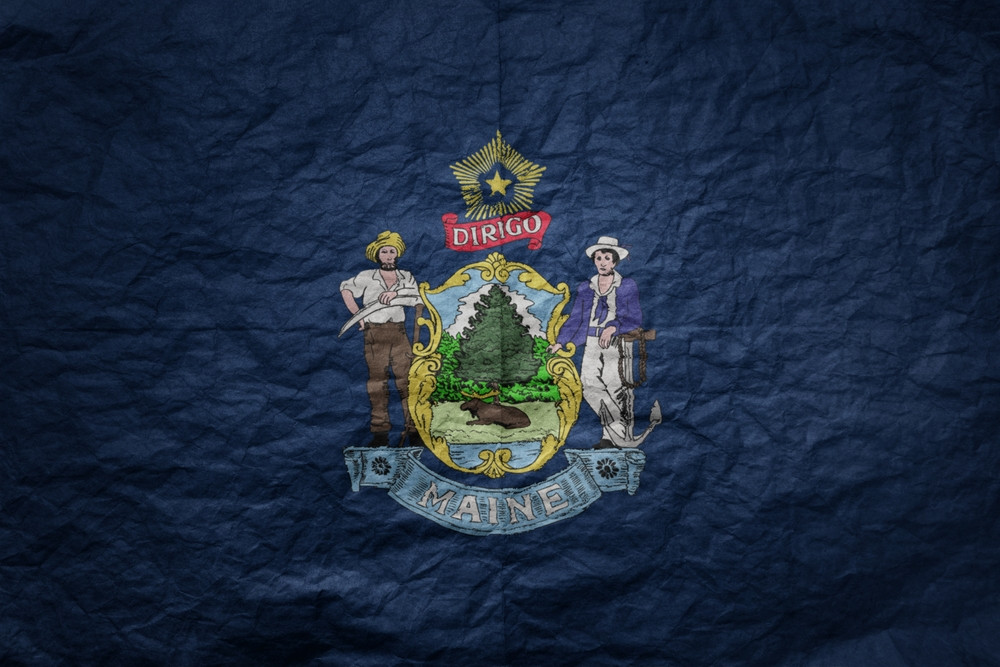
What's Going on with Kratom in The Pine Tree State? Is Kratom Legal in Maine?
Maine's fiercely independent character often sets it apart from the rest of the country, especially when state leaders weigh in on modern consumer debates. That self-reliant perspective shapes daily life from coastal harbors to inland mill towns, giving local discussions a distinct flavor you won't find anywhere else. Lately, conversations across New England have turned toward a tropical tree leaf from Southeast Asia known scientifically as Mitragyna speciosa. While several neighboring jurisdictions debate strict bans or build complicated bureaucratic systems, folks in The Pine Tree State wonder how local statutes treat Kratom. The basic answer is refreshingly straightforward, yet the story behind its lawful status reveals a thoughtful balance between personal autonomy and public policy.
The Current Legal Baseline Across Maine
If you're looking for a simple, direct answer to whether Kratom is legal in Maine, it's an unequivocal yes—the botanical remains lawful for adult purchase and possession statewide. Adults across the state can legally buy, hold, and transport the leaf without running afoul of state statutes. Unlike several jurisdictions across the United States that have placed strict scheduling tags on the plant, Maine doesn't classify kratom or its native alkaloids as controlled substances. That means you won't face criminal penalties, misdemeanor citations, or property confiscation simply for having raw leaf powder or crushed leaf tea in your possession.
What makes Maine’s legal environment particularly notable is its uniform application from town to town. In many states where state-level lawmakers haven't established an overarching regulatory code, individual municipalities often step in to pass local bans or zoning restrictions. You don't see that happening here. Whether you're walking through the historic Old Port district in Portland, driving past the quiet blueberry barrens of Down East, or heading up into the timber country of Aroostook County, the legal framework remains consistent across all sixteen counties. Local town councils haven't created a fractured patchwork of regional ordinances, which spares residents and visitors from guessing what's permitted as they travel between municipal borders.
Simultaneously, it's crucial to recognize what Maine’s open policy actually entails. While possession remains fully lawful, the state currently operates without a dedicated regulatory apparatus overseeing commercial distribution. There aren't state-mandated age thresholds codified into law, nor are there specialized agency licenses required specifically for carrying botanical tree leaves. This hands-off posture leaves the marketplace operating under standard commercial trade laws, placing the burden of product scrutiny directly on buyers and responsible distributors.
Tracing the Legislative Footprint in Augusta
Lawmakers in Augusta haven't ignored the botanical conversation over the past decade while other states rushed into action. Committee rooms inside the State Capitol have hosted spirited hearings whenever drug scheduling bills or market standards appeared on the legislative docket. Rather than leaning on hasty prohibitions, Maine’s elected officials took time to examine scientific testimony and listen to public feedback. That measured posture led to decisive legislative choices that preserved the plant’s lawful status while framing future policy discussions.
The 2017 Turning Point Over LD 1546
The most critical test for Kratom’s legal standing in Maine arrived during the spring of 2017. Lawmakers introduced Legislative Document 1546, formally titled "An Act To Clarify the Language Defining Schedule W Drugs and To Add Drugs to the List of Schedule W Drugs". Sponsored by state leadership to modernize criminal drug codes, the original bill draft contained language that would've classified Mitragynine (the primary natural alkaloid found in Mitragyna speciosa) as a Schedule W controlled substance. Under Maine law, Schedule W includes potent narcotics and controlled pharmaceuticals, meaning that passing the measure in its initial form would've criminalized the plant overnight, turning ordinary possession into a serious criminal offense.
The proposal didn't slide through quietly, however. When LD 1546 went before the Joint Standing Committee on Criminal Justice and Public Safety, citizens, independent researchers, and botanical advocacy groups mobilized to present extensive public testimony. They urged lawmakers to distinguish between whole botanical plant material and illicit synthetic compounds, pointing out that scheduling the leaf would unjustly penalize law-abiding Mainers. Committee members paid close attention to the evidence presented during those work sessions. Recognizing that sweeping the botanical into Schedule W wasn't supported by sound public policy, the committee adopted Committee Amendment "A" (S-262), which excised Mitragynine entirely from the legislation. The amended bill passed both the House and Senate and was signed into law without the ban, firmly protecting Kratom's legality across Down East.
The Kratom Consumer Protection Act and the 7-OH Threshold
Once the threat of criminal scheduling subsided, legislative discussions began pivoting toward commercial accountability and botanical purity. Across the country, several state legislatures started adopting what's widely known as the Kratom Consumer Protection Act (KCPA). This legislative framework focuses on market transparency rather than criminal bans, introducing statutory rules that require accurate product labeling, restrict sales to minors under eighteen or twenty-one, and prohibit dangerous adulterants.
Central to the KCPA model is how it handles 7-Hydroxymitragynine, commonly referred to as 7-OH. In raw, unadulterated Mitragyna speciosa leaves, 7-Hydroxymitragynine exists only as a trace secondary alkaloid, typically making up a tiny fraction of one percent of the plant's natural profile. Because this minor compound is chemically distinct and far more concentrated in its isolated form, standard KCPA legislation establishes a strict legal threshold: 7-Hydroxy cannot exceed 2% of the product's total alkaloid content. This specific cap was designed to draw a sharp legal line between traditional whole-leaf botanicals and heavily manipulated, semi-synthetic concentrates or artificially spiked extracts that alter the plant's organic balance.
Lawmakers in Augusta took notice of that regulatory model and began exploring whether similar consumer guardrails made sense for Maine. In subsequent legislative sessions, representatives introduced proposals modeled after the KCPA that sought to codify this two percent 7-OH alkaloid ceiling alongside clear age gates and packaging requirements. Proponents argued that establishing these chemical parameters would protect local buyers from altered products while giving ethical processors a stable legal playbook. While these regulatory bills generated meaningful committee debate, they didn't manage to advance through final floor votes before the legislative clocks ran out. As a result, Maine hasn't enacted a formal KCPA statute, leaving the state in a position where the botanical remains entirely legal, yet free from state-administered chemical thresholds.
A Tale of Two Borders in Northern New England
For anyone living in Maine or visiting during summer vacations and ski trips, recognizing regional borders is vital because New England presents a starkly divided legal map. You can't assume that crossing a state boundary won't change your legal obligations. While Maine maintains an open environment, neighboring states take contrasting approaches to botanical commerce. If you pack your bags and head west or south without checking state statutes, you could easily find yourself on the wrong side of local criminal codes.
Take Vermont, for example. Just across New Hampshire’s western border, Vermont classified the primary alkaloids of Mitragyna speciosa as regulated substances back in 2016. That means carrying the botanical in Burlington or Stowe carries serious criminal penalties, classifying simple possession similarly to illicit pharmaceuticals. Rhode Island previously maintained an administrative ban through executive agency scheduling, creating another legal barrier in southern New England before revisiting its approach. Meanwhile, New Hampshire maintains statewide legality for adults, though some towns have explored localized sales limitations.
These sharp policy differences make Maine stand out as Northern New England's most permissive jurisdiction. Traveling across Maine’s scenic landscapes, from the sandy beaches of Ogunquit to the remote wilderness near Moosehead Lake, carries none of the statutory hazards present in Vermont. Still, folks who frequently cross state lines must stay vigilant. What's completely lawful at a rest stop along the Maine Turnpike turns into a potential criminal citation the moment your vehicle enters Vermont jurisdiction.
Evaluating Purity and Verification in an Unregulated Space
Because Maine doesn't enforce a state-run inspection regime or mandate specialized testing protocols, consumers don't have government inspectors checking store shelves on their behalf. In an open environment like this, the responsibility for verifying product integrity falls squarely on personal diligence. Reputable botanical processors recognize this dynamic and choose to hold themselves to rigorous voluntary standards. Rather than cutting corners, ethical producers partner with qualified, independent analytical laboratories to demonstrate batch-level transparency.
When reviewing botanical powders or leaf cuts in an open marketplace, knowledgeable buyers examine specific quality benchmarks:
- Alkaloid Profile Verification: Transparent processors publish independent laboratory reports that quantify primary compounds, confirming that Mitragynine levels match natural leaf baselines and that 7-Hydroxymitragynine (7-OH) remains within normal botanical ratios rather than being synthetically fortified.
- Heavy Metal Testing: Reliable laboratories screen leaf batches for toxic metals, including lead, arsenic, cadmium, and mercury, which can leach into botanicals from regional soil during cultivation.
- Microbial Screenings: High-standard processors test for biological pathogens such as salmonella, E. coli, mold, and aerobic bacteria to verify sanitary processing and clean storage.
- Adulteration Assays: Credible testing verifies that products remain purely organic leaf material, completely free from synthetic chemical boosters, concentrated pharmaceutical isolates, or artificial preservatives.
Choosing processors that provide publicly accessible lab data separates trustworthy operations from questionable bulk suppliers. In a state that values personal liberty, transparency becomes the primary currency that preserves consumer confidence.
Looking Out Over Maine’s Botanical Horizon
By choosing not to treat Mitragyna speciosa as a contraband substance, Maine carved out a legal island in a region often quick to draft sweeping bans. That hands-off statutory posture grants adults full personal autonomy, but it also strips away the safety net of mandatory state oversight and codified chemical ceilings like the 2% 7-OH cap. Until lawmakers in Augusta formalize consumer protection standards into official state code, verified batch testing and independent lab reports serve as the only true safeguards for anyone sourcing this leaf. In the end, Maine’s approach proves that preserving botanical freedom doesn't eliminate the need for accountability—it just shifts that responsibility from state bureaucrats straight to the individual.
Recent Posts
-

What's Going on with Kratom in The Pine Tree State? Is Kratom Legal in Maine?
Maine's fiercely independent character often sets it apart from the rest of the country, especially …Oct 12, 2026 -
Kava vs. CBGA: How Do They Measure Up Against One Another?
Exploring the world of natural wellness often brings people face to face with fascinating botanicals …Oct 11, 2026 -

A THCA Vaping Question: How Should THCA Vapor Look and Smell?
Taking a smooth pull from a freshly charged THCA vape often sparks immediate curiosity about what th …Oct 07, 2026