
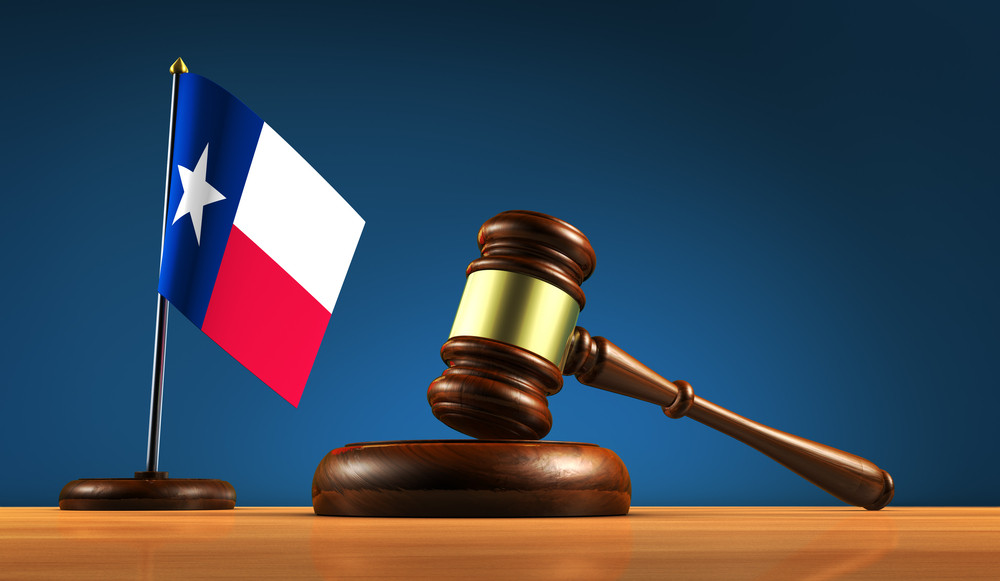
What’s Going on with THCA in the Lone Star State? Is THCA Legal in Texas?
The legal landscape for hemp in Texas has long felt like a high-stakes game of musical chairs where the music stops without warning. Just when residents and business owners felt they had a grasp on what was permitted, a fresh wave of regulations arrived in early 2026 to stir the pot once again. The current situation involving Tetrahydrocannabinolic Acid (THCA) is a whirlwind of administrative shifts, court-ordered pauses, and a fundamental debate over how chemistry meets the law. This tension has left many wondering where the line is drawn as it pertains to the question of “is THCA legal in Texas?”, in a state known for its rugged individualism but also its strict regulatory tendencies.
The Lone Star State’s Complicated Relationship with Hemp
To grasp where things stand today on is “THCA legal in Texas?”, we have to look back at the foundation established several years ago. In 2019, the Texas Legislature passed House Bill 1325, which famously legalized the production and sale of hemp. This legislation was a response to the federal 2018 Farm Bill, and it defined hemp as any part of the cannabis plant with a Delta-9 THC concentration of no more than 0.3% on a dry weight basis. This definition was the catalyst for a massive boom in the local economy, giving rise to thousands of retail shops and local farms. For years, the focus was almost entirely on that Delta-9 threshold, which acted as the clear boundary between legal hemp and illegal marijuana.
However, the legal clarity began to blur as the market evolved. THCA, or tetrahydrocannabinolic acid, emerged as a significant point of contention. THCA is the acidic precursor to Delta-9 THC; in its raw form, it does not produce the same effects as its post-decarboxylation counterpart. Because THCA is technically a distinct molecule from THC, many interpreted the 2019 law as permitting its sale, provided the Delta-9 levels remained below that 0.3% limit. This interpretation turned Texas into one of the largest markets for THCA flower in the country. But as the popularity of these products soared, so did the scrutiny from state health officials.
Breaking Down the March 2026 Regulatory Storm
The peace between the hemp industry and state regulators was shattered in early 2026 when the Texas Department of State Health Services (DSHS) moved to implement sweeping new rules. These changes, which officially targeted the retail market on March 31, 2026, were designed to close what officials viewed as a loophole in the original law. The DSHS argued that the state needed to adopt a more rigorous testing standard to verify that hemp products were truly what they claimed to be. These rules didn't just affect how products were labeled; they fundamentally changed the math used to determine whether a product was legal or a controlled substance.
The Total THC Calculation Explained
The primary weapon in the DSHS arsenal is the "Total THC" formula. Under the rules that took effect on March 31, laboratories are now required to calculate the sum of Delta-9 THC and the potential THC that would be created if the THCA in the product was heated. The specific formula used is $Total THC = Delta-9 THC + (0.877 \times THCA)$. This change is catastrophic for THCA flower because natural hemp buds often contain high levels of THCA even if their Delta-9 levels are near zero. Once that multiplier is applied, almost every THCA-heavy product on the market suddenly jumps way over the 0.3% limit.
This technical shift effectively moved the goalposts for every retailer in the state. Previously, a shop could point to a lab report showing 0.2% Delta-9 THC and be confident in its compliance. Under the new DSHS standard, if that same product has 20% THCA, the "Total THC" would be calculated as roughly 17.7%, making it a prohibited item. This administrative move didn't just target the chemistry; it also introduced massive financial hurdles. Licensing fees for manufacturers were hiked from a few hundred dollars to $10,000 per facility, while retail registration fees jumped to $5,000 per location. For many small "mom and pop" shops, these costs were seen as a secondary method of forcing the industry to contract.
Why the Industry Argues This Rule is Overreach
The pushback from the hemp community was immediate and centered on a specific legal argument: state agencies do not have the power to write new laws. Industry advocates, led by groups like the Texas Hemp Business Council, argue that the DSHS exceeded its authority by redefining hemp. They maintain that the 2019 Legislature deliberately chose to focus on Delta-9 THC alone. By introducing a "Total THC" standard through administrative rulemaking rather than a legislative vote, the DSHS is accused of bypassing the democratic process. This distinction is vital because it forms the basis of the current court battles that have put the state in a state of legal limbo.
A Temporary Sigh of Relief in Travis County
While the DSHS rules were supposed to be the final word on the matter, the Texas judicial system had other plans. Shortly after the March 31 deadline, several hemp businesses and trade associations filed a lawsuit to block the enforcement of the new regulations. They argued that the sudden removal of these products would cause irreparable harm to the industry, leading to store closures and job losses across the state. In April 2026, a Travis County judge issued a temporary restraining order, providing a few weeks of breathing room for retailers.
The Impact of the May 1st Injunction
The situation took another dramatic turn on May 1, 2026. A district judge in Travis County granted a temporary injunction that prevents the state from enforcing the "Total THC" ban on natural smokable hemp products until at least July 27, 2026. This ruling is a major victory for THCA advocates, as it essentially hits the "pause" button on the DSHS crackdown. For the time being, the court has ruled that the state cannot use the new formula to seize products or pull them from shelves. This also applies to the massive fee increases, meaning retailers can continue to operate under the older, more affordable registration rates while the case proceeds.
It is important to recognize that this is not a permanent legalization of THCA. It is a temporary stay of execution. The judge's decision suggests there is a "likelihood of success" for the industry's argument that the DSHS overstepped its bounds, but the final merit of the case has yet to be decided. For consumers, this means that THCA flower and pre-rolls are currently back in a legal gray area where they can be sold, but the long-term future is hanging by a thread. This legal tug-of-war has created a confusing environment where a product might be legal one week, prohibited the next, and then "un-prohibited" by a court order a few days later.
Why the Delta-8 Ruling Creates a Confusing Double Standard
While the hemp industry was celebrating the THCA injunction, another ruling came down from the Texas Supreme Court on that same day, May 1, 2026, that sent a very different message. The high court upheld the DSHS's authority to prohibit Delta-8 THC, a popular isomer that has also been in the crosshairs for years. This creates a bizarre paradox in Texas law. While a lower court is protecting natural THCA flower based on the idea that the DSHS cannot redefine hemp, the highest court in the state has signaled that the health agency does have significant power to regulate consumable hemp products to protect public safety.
Legislative Intent vs. Administrative Reach
The discrepancy between the THCA injunction and the Delta-8 ruling highlights a deep rift in how Texas interprets regulatory power. The Supreme Court's stance on Delta-8 suggests that the state believes the DSHS has the right to act as a "gap-filler" when the Legislature is not in session. If the state can successfully apply this logic to THCA, the current injunction might be short-lived. The state’s legal team is already arguing that the Delta-8 decision should serve as a precedent to allow the "Total THC" rules to stand. They argue that because THCA "fundamentally" becomes Delta-9 when used as intended, it falls under the state's mandate to control intoxicating substances.
- THCA Flower: Currently protected by a temporary injunction until late July 2026.
- Delta-8 Products: Facing a much steeper uphill battle following the recent Supreme Court decision.
- Total THC Formula: Paused for now, but remains the state's primary goal for future enforcement.
- Licensing Fees: Reverted to original lower rates for the duration of the injunction.
The September 2025 Vape Ban and Its Lasting Effects
It is crucial for Texans to realize that not all THCA products are covered by the current court-ordered pause. A separate law, Senate Bill 2024, went into effect on September 1st, 2025, and it specifically targeted inhalable hemp products. This law was passed by the actual Legislature, not just a state agency, which makes it much harder to challenge in court. SB 2024 effectively prohibited the sale of any hemp-derived vape cartridges or disposables. This means that even while THCA flower is enjoying a temporary reprieve in 2026, THCA vapes remain strictly off-limits in the retail market.
This distinction often confuses consumers who see flower on the shelves but are told that cartridges are illegal. The difference lies in the source of the authority. Because the ban on vapes was a legislative act, it holds more weight than the DSHS administrative rules. This has led to a shift in the market where many shops have pivoted away from liquid extracts and back toward natural plant material. It also demonstrates that the Texas government is willing to use multiple avenues—both legislative and administrative—to restrict the hemp market, making it a very difficult environment for businesses to maintain a long-term strategy.
Future Outlook: The July 2026 Hearing and the Federal Horizon
The next major milestone for THCA in Texas is the hearing scheduled for July 27, 2026. This will be the moment when the court decides whether to extend the injunction or allow the DSHS rules to finally take full effect. If the industry wins this round, THCA could remain legal in Texas until the next legislative session in 2027. If the state wins, we could see an immediate "blackout" of THCA products across thousands of stores, likely followed by a wave of permanent business closures due to the retroactive enforcement of the $5,000 retail fees.
Beyond the borders of Texas, the federal government is also considering changes to the 2018 Farm Bill that could render this entire state-level debate moot. There have been ongoing discussions in Washington D.C. about introducing a federal "Total THC" standard that would apply to all states. If Congress chooses to adopt the same formula the DSHS is pushing, the local court wins in Travis County won't matter much. However, until those federal changes are set in stone, Texas remains the primary battleground for the future of hemp. The outcome of the July hearing will serve as a bellwether for other states that are watching to see if a state agency can successfully bypass the will of the Legislature.
THCA’s path forward in TX remains tied to a courtroom schedule that will likely dictate the industry's fate for the foreseeable future. While the temporary injunction offers a brief window of stability, the underlying friction between state agencies and legislative intent is far from settled. Observing these developments requires a keen eye on both the local judiciary and the evolving federal standards that could eventually override these regional disputes. Texas remains a primary battleground for the definition of hemp, and the outcome here will undoubtedly resonate far beyond its borders.
Recent Posts
-

2026 Cannabinoid Matchup: THCA vs. CBC
Building a well-rounded hemp collection in today’s times has evolved into a personalized craft tailo …Sep 24, 2026 -
Kratom vs. CBGA: How Do They Measure Up Against One Another?
The modern search for plant-based wellness solutions has introduced a diverse spectrum of botanical …Sep 23, 2026 -
Inside the Gel Cap: How Much Kratom is in 1 Capsule?
Holding a pre-filled Kratom capsule between your fingers gives the impression of a perfectly measure …Sep 22, 2026