
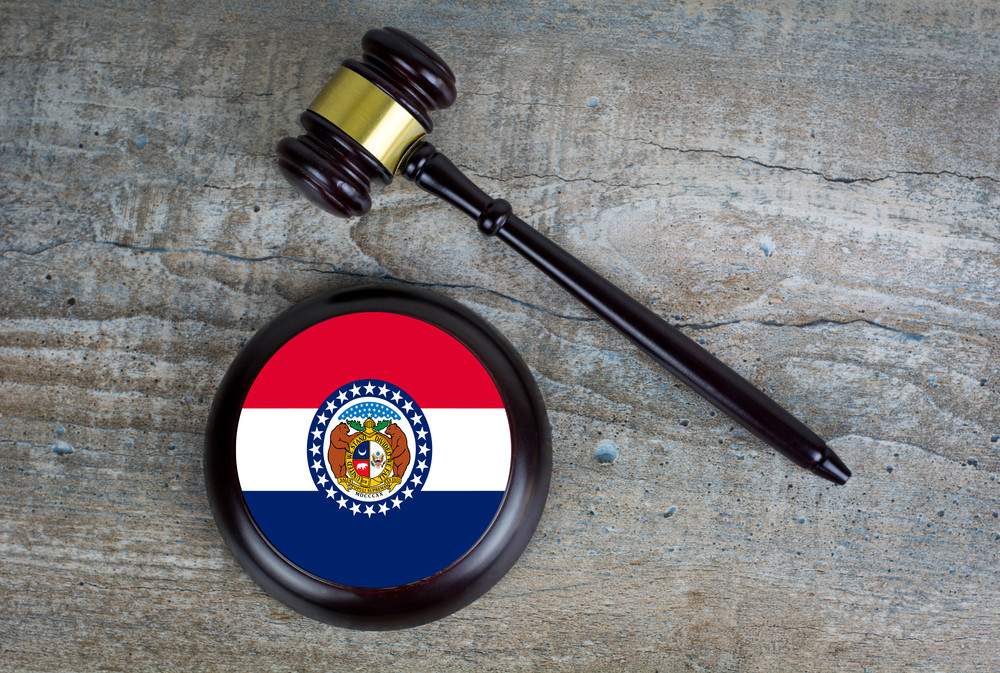
What's Going on with THCA in the Show-Me State? Is THCA Legal in Missouri?
Walking into a neighborhood vape or hemp shop anywhere from the Delmar Loop to downtown Kansas City or St. Louis, it's almost impossible to miss the flood of new THCA products commanding prime shelf space. In a state that already voted to legalize adult-use cannabis, watching these items sell openly right down the street from state-regulated dispensaries catches plenty of folks completely off guard. Curious buyers naturally want to know whether this booming inventory is genuinely protected under Missouri statute or just coasting on borrowed time. State officials haven't stayed quiet either, trading administrative blows and legal threats that leave both retailers and customers guessing where the boundaries stand. Getting real clarity takes looking past the storefront buzz to see how state codes, retail frameworks, and pending statutory changes actually treat these items today.
The Statutory Baseline and the Chemistry of Consumption
To see why THCA products appeared on display shelves throughout Missouri, you've got to look directly at the legal framework established by the 2018 Farm Bill and mirrored under Missouri Senate Bill 133. That legislation created a precise standard for legal industrial hemp: any cannabis plant material containing no more than 0.3% Delta-9-Tetrahydrocannabinol on a dry-weight basis qualifies as lawful hemp. Because statutory language focused specifically on Delta-9 rather than all cannabinoids, product creators recognized a major distinction in how cannabis grows. Natural hemp plants don't generate significant amounts of active Delta-9 while growing in the field. Instead, the plant naturally develops cannabinoid acids, predominantly tetrahydrocannabinolic acid, or THCA.
This botanical reality separates retail inventory into two distinct categories based on whether someone applies heat to the product.
On one side of the counter, retailers carry heated lines like smokable flower (loose buds, pre-rolls, and joints) and vapes (pre-filled vape cartridges and AIO disposable vape pens). When a consumer sparks a pre-roll or pulls from an AIO disposable vape pen, thermal energy triggers rapid decarboxylation—a chemical reaction that sheds a carboxyl group and converts raw THCA into active Delta-9 right as it's inhaled. Because pre-sale compliance testing historically measured Delta-9 content prior to consumption, these smokeables and vapeables tested well below the 0.3% dry-weight ceiling, clearing them for retail distribution.
On the other side of the counter, storefronts carry a wide variety of non-heated items: gummies, sublingual tinctures, capsules, and swallowable tablets. Unlike smokeables or vapeables, nobody heats up a gummy or cooks a tablet before using it. These ingestibles are consumed at room temperature or cold, which means the THCA travels through the digestive tract in its natural, acidic form without undergoing thermal decarboxylation. Manufacturers use cold extraction methods to maintain the cannabinoid's raw profile, keeping Delta-9 levels well beneath the legal limit.
Alongside these edible options, canned beverages have grown into a massive unheated staple on specialty shelves. Craft hemp drinks, such as 12oz cans and 16oz bottles of seltzers, sodas, and social tonics containing anywhere from 5mg to 25mg of cannabinoids, rely on advanced water-soluble nano-emulsions and cold-fill canning processes. Because these drinks are sipped chilled, the raw THCA stays completely unheated, avoiding conversion to THC. As long as the finished beverage tests below the 0.3% Delta-9 dry-weight mark, it entered the open commercial stream under the exact same agricultural definitions as raw flower.
Missouri's Regulatory Crossfire: Executive Orders and Agency Enforcement
While Missouri's agricultural statutes initially followed federal guidelines, state officials haven't treated the proliferation of hemp-derived products with passive approval. Over the past couple of years, tension between open retail storefronts and the state's tightly controlled cannabis market reached a boiling point. Former Governor Mike Parson ignited an administrative battle by issuing Executive Order 24-10, directing the Department of Health and Senior Services (DHSS) to embargo intoxicating hemp foods and beverages sold outside authorized channels. Although legal pushback from industry groups prompted adjustments to those immediate embargoes, the Missouri Attorney General's office followed up by issuing dozens of warning letters to businesses selling high-potency THCA goods.
Distinguishing State-Regulated Dispensaries from Open Hemp Retail
To make sense of Missouri's current market, it's essential to understand the structural gulf between licensed cannabis dispensaries and independent hemp storefronts. Missouri voters established a comprehensive legal cannabis framework through constitutional amendments, creating Article XIV of the Missouri Constitution. That system is overseen by the Division of Cannabis Regulation (DCR) within the DHSS. Under Article XIV, licensed dispensaries operate within a closed, seed-to-sale tracking network. Adults 21+ can legally buy and possess up to 3 oz of cannabis flower or its equivalent, with all retail purchases subject to a 6% state sales excise tax that supports veterans' health services and local programs. Dispensary products must pass rigorous state-mandated lab testing, and inventory comes exclusively from licensed in-state cultivation and manufacturing facilities.
Specialty vape shops, hemp storefronts, and dedicated wellness boutiques operate in a completely separate commercial reality. These businesses sell products derived from Farm Bill-compliant industrial hemp rather than state-licensed marijuana. Customers don't need a medical card, and storefronts aren't connected to the DCR seed-to-sale tracking system. As long as buyers prove they're 21+, they can walk into a local boutique and purchase THCA flower, vapes, or ingestibles without purchasing limits. This parallel market created intense friction, as state officials and dispensary operators argued that unregulated storefronts were selling potent cannabinoid products without paying the 6% excise tax or meeting the constitutional testing standards required of licensed operators.
Retail Gateways Across the Show-Me State
Consumers looking for compliant THCA-based products across Missouri have several distinct purchasing pathways, whether shopping locally in physical stores or placing remote orders online.
Brick-and-mortar specialty vape/hemp storefronts remain the primary access point in cities like Springfield, Columbia, and St. Joseph. Visiting a physical shop allows buyers to inspect product containers firsthand, ask trained retail staff questions about specific formulations, and review physical lab paperwork before paying. Retail staff must check government photo identification to confirm the customer is 21+ before completing any sale. Many neighborhood shops also run their own web portals, giving local customers the option to order online for in-store pickup or curbside collection to save time.
Direct-to-consumer delivery services have also emerged as a convenient local option. Several licensed specialty retailers dispatch dedicated courier teams to bring sealed orders straight to residential doorsteps. Just like an in-person retail transaction, courier drivers must scan a valid photo ID at the front door to confirm age before handing over the goods. For shoppers living outside major metropolitan areas, ordering online from reputable out-of-state merchants remains an option protected by federal interstate commerce rules. The 2018 Farm Bill protects the transit of compliant hemp commodities across state lines, allowing national retailers to ship lab-tested THCA products through standard mail carriers. Responsible online merchants utilize digital age-verification systems during checkout, requiring customers to upload proof of age before orders process.
Verifying Quality: Certificates of Analysis and Packaging Integrity
Because high-grade THCA flower and vape oils look and smell identical to dispensary cannabis, verifiable paperwork serves as an essential line of consumer defense. Missouri regulations and standard retail practices require reputable brands to attach traceable batch records to every product. Quality manufacturers print a clear QR code on outer packaging, allowing consumers and local authorities to scan the label and instantly view a third-party Certificate of Analysis (COA).
When evaluating a lab report, consumers should focus on five core checkpoints:
- Dry-Weight Delta-9 Levels: Check that active Delta-9 concentration stays at or below 0.3% to confirm the product meets legal hemp definitions.
- Cannabinoid Profile Breakdown: Review the full breakdown to see whether an oral tincture, gummy, or beverage contains unheated THCA or active converted compounds.
- Accredited Laboratory Credentials: Confirm that the analysis comes from an independent, ISO-certified testing laboratory rather than an unverified internal document.
- Matching Lot Identifiers: Match the batch or lot code printed on the bottom of the container with the specific code recorded on the lab certificate.
- Full-Panel Contaminant Clearance: Check the report to verify the batch passed testing for residual extraction solvents, heavy metals, pesticides, and mold.
Packaging standards are just as critical for compliance and safety. Compliant brands package products in tamper-evident containers with child-resistant caps or resealable seals. State rules prohibit packaging that mimics well-known candy brands, uses cartoon graphics, or appeals directly to minors. When traveling around Missouri with compliant THCA items, it's smart to keep them in their original packaging alongside the purchase receipt, giving law enforcement clear proof of compliance if questions arise during a routine stop.
The Impending Statutory Sunset: HB 2641 and the Federal Total-THC Cap
While THCA items currently sit on specialty store shelves across Missouri, a sweeping statutory shift is poised to overhaul the market. The Missouri General Assembly addressed the regulatory rift by passing House Bill 2641, known as the Intoxicating Cannabinoid Control Act, signed into law by Governor Mike Kehoe. This state statute directly aligns Missouri enforcement with federal legislation, establishing a firm statutory deadline that closes the regulatory gap between hemp and marijuana.
The heart of this transition is the adoption of a post-decarboxylation total-THC testing standard. Instead of measuring only Delta-9, testing facilities must calculate total potential THC by multiplying the THCA percentage by 0.877 and adding that figure to any D9 present. Because premium THCA flower and concentrated vape carts typically boast cannabinoid levels between 15%–30% THCA, running that mathematical formula immediately pushes them far above the 0.3% threshold. Under HB 2641, any product exceeding that total-THC ceiling is legally reclassified as marijuana, restricting its sale strictly to DHSS-licensed dispensaries operating under Article XIV.
The legislation creates an even steeper challenge for non-heated products by incorporating an aggressive federal ceiling of 0.4mg of total THC per container on finished consumer goods. That restriction pulls the rug out from under unheated gummies, capsules, and tinctures, but it hits craft coolers the hardest. Because the limit applies to the entire packaged volume rather than a single sip, even a micro-dosed social tonic or single-serve sparkling beverage breaches that threshold several times over. As state enforcement takes hold under HB 2641 alongside national spending timelines, open retail storefronts face an unavoidable inventory phase-out, reshaping Missouri's hemp landscape from top to bottom.
The Clock Ticking on Missouri's Open Counters
Missouri’s parallel market showed how fast consumer demand could outpace statutory text, turning a single dry-weight technicality into a massive retail presence right next door to licensed adult-use dispensaries. With state agencies and lawmakers now pushing hard to shut the door under total-THC limits, that open-shelf ambiguity won't last much longer. For everyday buyers, protecting yourself means leaning on verifiable lab paperwork rather than storefront promises whenever you're shopping outside the constitutional dispensary network. Whether these brands manage to pivot or get cleared off shelves entirely, the Show-Me State's run with over-the-counter cannabinoids is rapidly running out of road.
Recent Posts
-

What's Going on with THCA in the Show-Me State? Is THCA Legal in Missouri?
Walking into a neighborhood vape or hemp shop anywhere from the Delmar Loop to downtown Kansas City …Oct 18, 2026 -
Kava vs. CBDA: How Do They Measure Up Against One Another?
Stepping into the realm of plant-based wellness can feel like standing at an intriguing crossroads b …Oct 16, 2026 -
Choosing Your Next Cannabinoid + Live Resin: THCA Live Resin vs. Delta 8 Live Resin
Anyone who loves concentrates knows that unmistakable burst of loud, fragrant aroma the second you p …Oct 15, 2026