
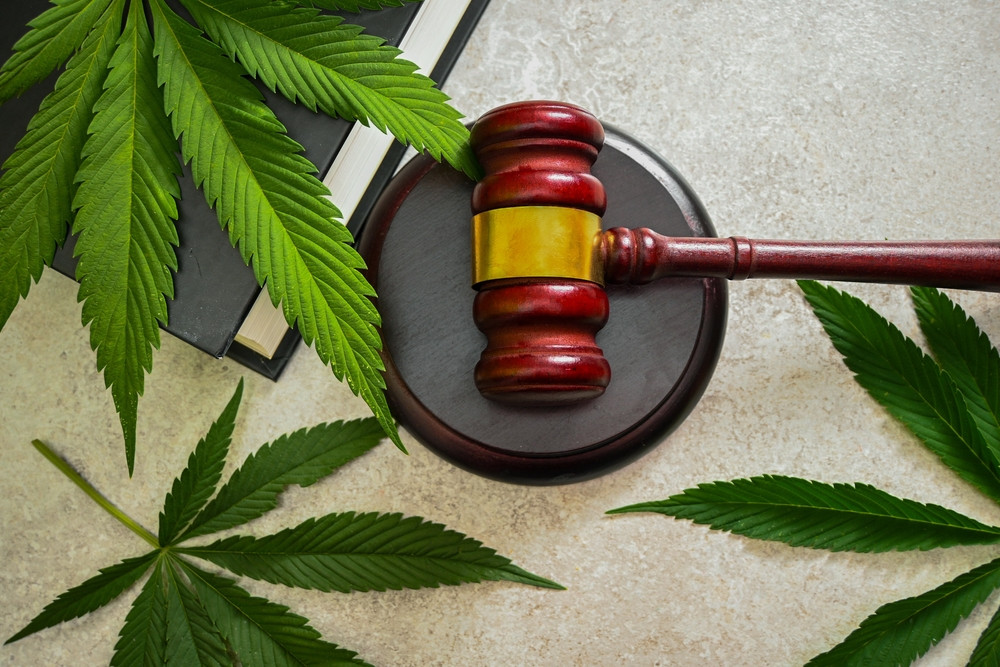
What You Need to Know About the Possible THC Ban and Law Changes
The era of the "hemp loophole" is hitting a brick wall, and for anyone running a shop or filling a cart, the view is getting hazy. We’ve spent years navigating a market that felt like the wild west, but the federal government just handed the sheriff a very big badge. With the 2026 Extensions Act already signed and a one-year clock ticking, the rules for what can stay on the shelf are being rewritten in real-time. This isn't just about a few minor tweaks; it’s a fundamental shift in how we define a plant that has become a multi-billion dollar backbone for small businesses across the country. Meaning, this shifting legal tide is more than just a regulatory hurdle; it’s a fundamental transformation of the relationship between a plant and the law.
The Ticking Clock of the 2026 Extensions Act
The legislative landscape for hemp changed forever on November 12, 2025, when the federal government signed a massive spending package that included a sleeper provision known as Section 781. This specific section is the "Doomsday Clock" for the intoxicating hemp industry as we know it. While the 2018 Farm Bill opened the doors by defining hemp as any cannabis plant with less than 0.3% Delta-9 THC, Section 781 effectively tries to weld those doors shut. The core of this change lies in a new, much stricter definition of what actually constitutes "hemp."
Under these new federal guidelines, the threshold for legality is no longer just about the Delta-9 THC content of the raw plant. Instead, the focus has shifted to the total cannabinoid profile of the finished product. The most striking change is the introduction of a 0.4mg-per-container limit on total THC. This is not a percentage-based rule; it is a hard cap on the total weight of psychoactive compounds in a bottle, bag, or jar. To put that in perspective, almost every gummy, tincture, or beverage currently sitting on a hemp shop shelf contains far more than 0.4mg of THC. By switching to a "per-container" limit, the federal government is moving to treat these items not as agricultural products, but as controlled substances.
Because of a massive push from industry advocates and certain lawmakers, a 365-day implementation grace period was secured. This means the federal ban doesn't officially sink its teeth into the market until November 12, 2026. However, that date is a deceptive safety net. While the federal hammer hasn't dropped yet, states are already using the federal language as a blueprint for their own immediate crackdowns. This creates a fragmented map where a product might be legal in one town and a felony in the next. The "possible" ban is already a reality in many jurisdictions, and the next few months will decide if the industry survives or vanishes into the history books.
Redefining the Plant from the Roots Up
The 2026 Extensions Act does more than just cap milligrams; it changes the chemical definition of hemp to exclude "synthetic" or "semi-synthetic" cannabinoids. This takes aim at Delta-8, Delta-10, HHC, PHC, THCP and so on—compounds that have become the bread and butter of the hemp retail world. Lawmakers argue that because these compounds are often converted from CBD through a chemical process, they do not meet the original spirit of the 2018 Farm Bill. By reclassifying these as synthetic, the government can move them into Schedule I status without needing a separate act of Congress.
This redefinition also addresses the "THCA loophole". For years, raw hemp flower was sold because it contained THCA, which only converts to Delta-9 THC when heated. Since the 2018 law specifically mentioned Delta-9, THCA flower lived in a grey area. The 2026 language closes this by mandating a "total THC" calculation that includes THCA at its converted weight. This single change effectively makes smokeable hemp flower illegal under the new federal standard, as almost all flower exceeds the 0.3% total THC limit when THCA is factored in.
The "Big Four" Pressure Cooker
Each of these states has been at the forefront of the upcoming changes in the hemp industry.
- Texas: The March 2026 "Health Department End-Run"—how they’re banning products through regulation since they couldn't pass it through legislation.
- California: AB 8 and the "THC-Free" mandate for food/bev. We’ll talk about the "Track-and-Trace" nightmare for hemp brands.
- Florida: Aligning with the 0.4mg federal cap while the 2026 adult-use ballot initiative looms in the background.
- New York: The S05809 shift—licensed retailers getting more freedom but facing "nutrition-style" labels and strict age gates.
Not to mention, the impact these states will incur will have a domino-type effect on the others.
Texas and the High Price of Staying Legal
Texas has long been one of the largest and most active hemp markets in the country, but as of March 31, 2026, the game has changed. The Texas Department of State Health Services (DSHS) moved forward with a series of aggressive regulatory changes that bypass the state legislature entirely. These rules focus on two fronts: the chemical makeup of the products and the sheer cost of remaining a licensed business. In the Lone Star State, the "wild west" era ended with a very expensive thud.
The most immediate impact for Texas consumers is the sudden disappearance of THCA flower and high-potency concentrates. The DSHS now requires all testing to account for the "total THC" profile, mirroring the upcoming federal standard. This means that any product where the sum of Delta-9 and THCA (multiplied by the standard conversion factor) exceeds 0.3% is now considered a controlled substance. For shops that specialized in "high-THCA" flower, this rule rendered their entire inventory unsellable overnight.
Retailers are also facing much stricter requirements for age verification. While many shops already required customers to be 21, it is now a mandatory state law backed by heavy fines. Every transaction must include a scan or verification of a valid government ID, and the penalties for non-compliance can lead to immediate license revocation. This is a move to align the hemp industry with the standards of the liquor industry, signaling that the state no longer views hemp as a "supplement" but as an adult-use intoxicant that requires constant monitoring.
For the business owner, the financial burden in Texas has become a massive barrier to entry. Licensing fees have skyrocketed. A manufacturing facility must now pay $10,000 per year for its permit, and retail locations are looking at $5,000 per year, per location. For a small business owner with three or four shops, these fees alone can eat up the annual profit margin. The intent behind these fees seems clear: to consolidate the market. By making it too expensive for the "mom and pop" shop to operate, the state is naturally pushing the industry toward larger, more corporate entities that can afford the overhead.
Packaging and labeling have also come under fire. Products must now feature QR codes that link directly to a Certificate of Analysis (COA) from an accredited lab, and the labels must be clear of any imagery that could be construed as "appealing to minors". This includes bright colors, cartoonish fonts, or names that mimic popular candy brands. Texas is sending a clear message: if you want to sell these products, you will do so under the most rigid, professional, and expensive framework possible.
California’s Purity Squeeze and AB 8
While Texas is hitting the wallet, California is hitting the laboratory. The state’s Assembly Bill 8 (AB 8) has introduced a phased approach to hemp regulation that is creating a "regulatory squeeze." Phase 1, which took effect on January 1, 2026, has already fundamentally altered what you can find in a California wellness shop. The state is no longer interested in the "grey market" and is forcing hemp companies to either become licensed cannabis businesses or exit the state entirely.
The most controversial part of AB 8 is the "purity mandate". As of the start of this year, all hemp extracts sold in non-cannabis retail must be 99% pure CBD isolate and effectively "THC-free." This is a massive blow to the "full-spectrum" market. Many people prefer full-spectrum products because they believe the combination of various cannabinoids works better than CBD alone. However, California law now views any presence of THC—even the tiny amounts naturally found in hemp—as an intoxicating substance.
This rule has cleared thousands of products off the shelves of grocery stores and health food shops. If a tincture contains even 0.01% THC, it can now only be sold in a licensed marijuana dispensary. For hemp brands, this means they have to create two entirely separate supply chains: one for the rest of the country and one specifically for California that uses only isolate. Many brands are simply choosing to stop shipping to the state altogether rather than deal with the formulation and testing headaches.
The second phase of California’s plan involves bringing hemp into the METRC system, which is the "seed-to-sale" tracking system used for legal marijuana. This will be fully implemented by 2028, but the groundwork is being laid now. Tobacco retailers in California are already prohibited from possessing or selling intoxicating hemp products. If a smoke shop is caught with Delta-8 or THCA products, they face a $1,000 fine for the first offense and potential loss of their tobacco license for subsequent violations.
By moving hemp into the same track-and-trace system as marijuana, California is eliminating the distinction between the two plants. The state is essentially saying that if a product has a psychoactive effect, the source of the THC (hemp or marijuana) is irrelevant. This includes a 15% excise tax on all intoxicating hemp products, matching the tax rate for cannabis. For the consumer, this means the "cheap" alternative to the dispensary is disappearing, as prices rise to cover the cost of tracking, testing, and taxes.
New York’s Retail Revolution and the Labeling Maze
New York has taken a distinct path with Senate Bill S05809, which went into full effect on January 1, 2026. Rather than a total ban, the state is attempting to "professionalize" the hemp retail space. New York’s approach is a mix of increased freedom for licensed retailers and a mountain of new paperwork and labeling requirements that make the old rules look simple.
The biggest win for New York businesses is that licensed hemp retailers are now permitted to sell "any and all forms" of cannabinoid hemp, provided they follow the safety rules. This was a move to stop the constant raids on "unlicensed" shops by giving them a legal path to follow. However, that path is paved with very specific labeling requirements. Every hemp product in New York must now feature a nutrition-style fact panel. This panel must list the serving size, the amount of THC per serving, and the total THC in the package.
New York is also cracking down on medical claims. Labels must feature a prominent warning that the product has not been evaluated by the FDA and is not intended to treat any specific condition. While this has been a "best practice" for years, it is now a strictly enforced law. Furthermore, New York has narrowed its definition of THC for labeling purposes to focus primarily on Delta-9, but it still maintains a 21+ age gate for all smokeable flower and pre-rolls. The goal in the Empire State is to create a market that looks and feels like the supplement aisle of a pharmacy—clean, labeled, and heavily regulated.
Florida’s Pre-Election Regulatory Pivot
Florida is currently in a state of high-tension transition. As of April 2026, the state legislature is moving fast to align Florida law with the federal 0.4mg-per-container limit. This is a massive shift for a state that has one of the most vibrant hemp scenes in the Southeast. The rush to change the laws is driven by two things: the upcoming federal deadline and a major adult-use marijuana initiative on the November 2026 ballot.
Lawmakers in Tallahassee are trying to "clear the field" before the election. By banning or strictly limiting hemp-derived THC now, they ensure that if recreational marijuana passes in November, the market will be funneled exclusively through the heavily regulated and taxed medical/marijuana infrastructure. For current hemp shop owners, this feels like a betrayal. Many of these businesses were built on the promise of the 2018 Farm Bill, only to see the goalposts moved just as the market reached its peak.
The Florida proposals currently being debated would not only cap THC at 0.4mg per container but also introduce a 5mg per serving limit on any "intoxicating" hemp beverage. This has put the thriving hemp-infused seltzer and soda market in the crosshairs. If these laws pass in their current form, Florida would go from one of the most open hemp states to one of the most restrictive in the span of a single legislative session.
The Southern Crackdown: Tennessee, Georgia, and South Carolina
The Deep South has become the frontline of the battle over THCA and "synthetic" cannabinoids. While these states were once seen as slow to react, they have now taken some of the most aggressive steps in the nation to close what they perceive as dangerous legal loopholes.
The Tennessee THCA Ban of 2026
Tennessee was once a haven for hemp flower enthusiasts, but that changed on January 1, 2026. The state legislature passed a bill that effectively eliminated the sale of THCA-rich products by reclassifying THCA into the "total THC" calculation. This move was supported by both law enforcement and the state’s Alcoholic Beverage Commission, who argued that high-potency THCA flower was indistinguishable from illegal marijuana.
The impact was immediate. Hundreds of shops across the state had to clear their shelves of flower, vapes, and concentrates. The state also introduced a new excise tax on the remaining "legal" hemp products (those under the new total THC limit) to fund increased enforcement. Tennessee’s approach has become a model for other conservative states that want to remove psychoactive products without banning hemp as a whole. They are focusing on the "intoxicating" nature of the product rather than the source of the plant.
South Carolina’s H.3924 and the "Intoxicating" Definition
South Carolina is currently moving through the final stages of H.3924. This is a bill that treats hemp-derived cannabinoids as "intoxicating beverages" similar to beer and liquor. This bill passed the Senate in late March 2026 and represents a fundamental shift in how the state views these products. The General Assembly has stated that it has a "substantial interest" in regulating impairment, and they are using their police power to do exactly that.
H.3924 sets a strict limit of 5mg of THC per serving and 10mg per container for any hemp-derived beverage. It also completely bans "synthetic cannabis products," which they define as any cannabinoid synthesized from the plant. This targets Delta-8 and HHC directly. The bill also mandates that all products be registered with the Department of Revenue and undergo on-site inspections. South Carolina is not just banning products; they are building a massive enforcement apparatus to ensure that "non-compliant" items never even make it across the state line.
Ohio Senate Bill 56 and the Voter Referendum
Ohio is currently the site of a fierce political tug-of-war. On March 20, 2026, Senate Bill 56 took effect, making intoxicating hemp products and THC-infused beverages illegal again in the state. This was a direct reaction by the state legislature to the voter-led legalization of recreational marijuana in 2023. Lawmakers felt that the "unregulated" hemp market was undermining the "regulated" marijuana market, so they moved to shut it down.
However, the industry in Ohio is not going down without a fight. A massive petition movement is currently underway to put a referendum on the November 2026 ballot that would overturn SB 56. The argument from the hemp industry is that the state is overstepping its bounds and destroying small businesses to protect a few large marijuana corporations. For now, Ohio shop owners are in a state of "liquidation," trying to sell off their stock before the full weight of the criminal penalties kicks in.
The Missouri and New Jersey Alignment Strategy
Missouri and New Jersey are both moving toward a "total alignment" strategy with the federal government. In Missouri, as of April 6, 2026, there’s an urgent push to pass legislation that mirrors the 0.4mg-per-container limit found in the federal Extensions Act. This would effectively consolidate the entire market into the hands of a few licensed marijuana operators, as the existing hemp businesses would have nothing left to sell that meets the new standards.
New Jersey is following a similar path, though they are focusing more on the "safety and testing" aspect. The state’s forcing hemp brands to undergo the same rigorous testing as marijuana brands, which includes testing for heavy metals, pesticides, and residual solvents. While this is good for consumer safety, the cost of these tests is often more than a small hemp brand can afford. Like California, New Jersey is using high standards as a way to "naturally" prune the market of smaller, less-capitalized players.
Minnesota’s Path of Reasonable Regulation
Among all this chaos, Minnesota stands out as the one state that seems to have found a middle ground. Rather than a total ban, Minnesota has created a clear, workable framework for hemp-derived THC. They were one of the first states to set a 5mg per serving and 50mg per package limit, and they have stuck to it even as other states panic.
Minnesota’s success is based on a few key factors. First, they focus on transparency—every product must have a clear COA. Second, they focus on accessibility—products can be sold in liquor stores and breweries, provided they meet the milligram caps. This has created a stable, predictable market that generates significant tax revenue without the constant threat of police raids or sudden bans. Many in the industry point to Minnesota as the "gold standard" of how things should be done, but unfortunately, most other states are choosing the path of prohibition instead.
The Economic Fallout: 300,000 Jobs on the Line
The shift toward a federal ban isn't just a legal debate; it’s an economic disaster for the thousands of people who work in this industry. Current estimates suggest that over 300,000 jobs are at risk nationwide if Section 781 is fully implemented this November. These aren't just people working in smoke shops; they are farmers who transitioned from tobacco to hemp, lab technicians who specialize in cannabinoid testing, and truck drivers who move product across state lines.
The hemp industry has grown into a $28 billion powerhouse in less than a decade. For many small towns in the South and Midwest, hemp was the first new "cash crop" they had seen in generations. If the market is consolidated into a few licensed marijuana facilities, that wealth will be drained out of those local communities and into the hands of large investment groups. The "possible" ban is a threat to the survival of the American small-business owner.
For the shop owner, the threat of a ban has already destroyed the value of their business. A year ago, a successful hemp shop might have been worth hundreds of thousands of dollars. Today, with the November 2026 deadline looming, those businesses are nearly impossible to sell. No one wants to buy a business that might be illegal in six months. This has left owners in a "sunk cost" trap, where they have to keep the doors open and try to make as much money as possible before the clock runs out, knowing that their "exit strategy" has vanished.
Navigating the Final Grace Period
We’re watching a billion-dollar industry get dismantled and rebuilt in real-time, often without regard for the small businesses that built it from the ground up. So, as we move toward November 12, 2026, the industry is in a "fire sale" environment. Manufacturers are trying to move as much inventory as possible, and retailers are being extremely cautious about what they order. The biggest challenge for everyone involved is the lack of clarity. Even with the federal language signed, the FDA still hasn't published the official list of "prohibited cannabinoids" that was promised for early 2026. This leaves everyone guessing whether compounds like CBN or CBG will also be caught in the 0.4mg dragnet.
The best advice for consumers and business owners right now is to stay informed on a week-to-week basis. The laws are moving faster than the news cycle can keep up with. We are in the middle of a massive national experiment in regulation, and the outcome will define the future of cannabis in America for the next fifty years. Whether you agree with the ban or not, the reality is that the shelf you see today will look very different by this time next year.
Recent Posts
-

2026 Cannabinoid Matchup: THCA vs. CBC
Building a well-rounded hemp collection in today’s times has evolved into a personalized craft tailo …Sep 24, 2026 -
Kratom vs. CBGA: How Do They Measure Up Against One Another?
The modern search for plant-based wellness solutions has introduced a diverse spectrum of botanical …Sep 23, 2026 -
Inside the Gel Cap: How Much Kratom is in 1 Capsule?
Holding a pre-filled Kratom capsule between your fingers gives the impression of a perfectly measure …Sep 22, 2026