
How to Decarb THCA Isolate Powder the Right Way
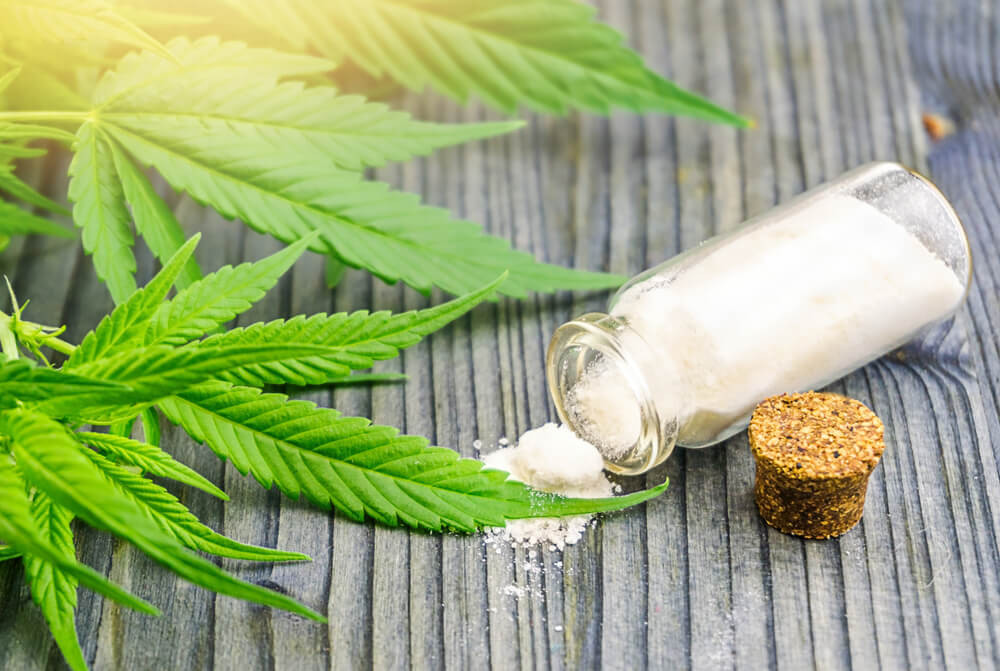
Imagine looking at a pile of white, snowy crystals that hold massive potential but currently sit as still as a winter morning. Most folks grab a jar of THCA isolate thinking they can just toss it into a recipe and get the results they want, but that is not how the chemistry works. You have to wake those crystals up with a bit of controlled heat before they will do anything useful. And so, getting this process right is the bridge between a boring powder and a truly potent addition to your routine, as you’ll soon find out here today.
The Raw Potential of THCA Isolate
When you first hold a gram of high-quality isolate, you are looking at one of the purest forms of the plant's bounty available. It looks more like baking soda or fine sea salt than anything else, and that purity is exactly why it requires a specific touch. Unlike flower, which is full of plant matter, fats, and waxes, isolate is stripped down to the bare essentials. This means there is no "buffer" between the heat and the active compounds. When you put flower in the oven, the moisture in the buds and the structure of the leaves help regulate how the heat hits the trichomes. With powder, you are dealing with a concentrated substance that reacts much faster and more uniformly to every degree of temperature change.
This purity is a double-edged sword for the home enthusiast. On one hand, you don't have to worry about the grassy taste or the smell of toasted hay that comes with decarbing raw buds. On the other hand, the margin for error is slimmer. If your oven has a hot spot or if your timing is off by ten minutes, you can easily overcook the batch. Understanding this material requires a bit of respect for the chemistry involved. You’re essentially taking a non-psychoactive precursor and stripping away a specific molecular component to make it active. This is not just a culinary trick; it is a fundamental shift in the state of the matter you are working with.
Why Purity Changes the Rules for Heat
The reason isolate is so popular among those who make their own oils or topicals is the lack of "noise." You get a clean, predictable result every time, provided you follow the steps. Because there are no terpenes or chlorophyll to get in the way, the final product is almost odorless and tasteless. This makes it a dream for anyone who wants to add potency to their food without making everything taste like a forest. However, because the isolate is immensely pure, it’s very sensitive to oxidation. When you heat it, you aren't just activating it; you are exposing those clean crystals to the air while they are at their most vulnerable.
Most people who fail at this process do so because they treat the powder like they would treat a tray of brownies. They set a timer, walk away, and come back when it dings. With isolate, you’ve to be a bit of an observer. The powder will go through several distinct physical phases—melting from a white solid into a cloudy liquid, then clearing up, and finally beginning to bubble. Those bubbles are your primary indicator of success. They represent the carbon dioxide being pushed out of the substance, leaving behind the active version you are looking for. If you don't stay close and watch for these signs, you are just guessing.
The Science of the Heat Transformation
To get this right, we gotta talk about what’s actually happening inside that glass jar while it sits in the oven. The "A" in THCA stands for acid. In its natural state on the living plant, the compound has a carboxyl group attached to its molecular chain. This extra little bit of "baggage" makes the molecule too large to fit into the receptors in your body that create the desired effect. Heat acts like a pair of molecular scissors, snipping off that carboxyl group. Once that happens, the substance is "activated." This process is known as decarboxylation, and while the name sounds like something out of a high school chemistry textbook, the application is straightforward.
The tricky part is that this reaction doesn't happen all at once. It is a curve. If you apply too little heat, the "scissors" never start cutting. If you apply too much heat, or leave it for too long, you go past the point of activation and start degrading the compound into other things you might not want, like cannabinol (CBN). While CBN has its own uses, most people who are decarbing isolate are looking for maximum potency of the primary active compound. The goal is to hit the peak of that curve and stop just as the reaction finishes. It is a delicate balance of time and temperature that requires a steady hand and a bit of patience.
As the temperature rises, the thermal energy causes the molecules to vibrate with increasing intensity. When they reach a specific energy threshold, the bond holding the carboxyl group breaks. This releases carbon dioxide gas, which is why you see bubbles forming in the liquid. If you were to do this in a vacuum or a lab setting, you could measure the exact amount of gas released to know when the reaction is one hundred percent complete. At home, you have to rely on your eyes. The bubbling starts out slow, picks up speed until the liquid looks like it is simmering, and then eventually tapers off.
When the bubbles stop, it means there’s no more carbon dioxide to release. The "scissors" have finished their work. This is the moment where many beginners get nervous. They see the bubbling slow down and worry they have overcooked it, or they see it still bubbling slightly and pull it out too early. Realize that as long as you stay within the safe temperature range, a few extra minutes at the end won't ruin your batch, but pulling it out while it is still actively "fizzing" means you are leaving potency on the table. You want to see the liquid go almost completely still before you call it a day.
Gathering Your Professional Toolkit
Before you even think about preheating the oven, you need to make sure you have the right gear. This isn't the time to use a flimsy aluminum baking sheet or a plastic bowl. You are dealing with a sticky, precious substance that you want to be able to recover fully once the process is done. The most important piece of the puzzle is your vessel. Most professionals and seasoned home enthusiasts prefer borosilicate glass or high-quality silicone. Borosilicate is the same stuff used in lab beakers; it can handle rapid temperature changes without cracking, and more importantly, it is easy to scrape once the liquid cools down.
You also need a way to track the heat that is more accurate than your oven’s built-in dial. Most home ovens are notoriously bad at maintaining a steady temperature. They tend to swing back and forth—heating up past the target, then cooling down significantly before the heating element kicks back in. A ten-degree swing might not matter for a roast chicken, but it can be a problem for isolate. This is why a secondary oven thermometer is a requirement, not a suggestion. You place it right next to your glass jar, so you know exactly what the environment is like for your powder.
Choosing the Right Heat-Safe Vessel
If opting to use glass, a small Mason jar or a heavy-duty glass dram is usually the best bet. The reason for using a jar rather than a flat dish is surface area and recovery. When the isolate melts, it becomes a very thin, very sticky oil. If you spread it out over a wide, flat dish, you are going to lose a lot of it when you try to scrape it back up. In a small jar, the liquid pools at the bottom, making it much easier to collect with a syringe or a tool later. If using a jar, just make sure you don't put the lid on tight—the gas being released needs a way to escape, or you'll end up with a pressurized situation that could lead to the glass breaking.
Silicone is another popular choice, specifically small silicone "pucks" or mats with raised edges. The benefit here is that once the oil cools and hardens slightly, you can often just pop it right out of the silicone without any scraping. The downside is that some people feel silicone doesn't transfer heat as evenly as glass. If you go the silicone route, make sure it is medical-grade and rated for temperatures well above what you'll be using. Low-quality silicone can sometimes leach a "rubbery" smell into your product, which’s the last thing you want when you've gone to the trouble of buying pure isolate.
The Importance of a Reliable Oven Thermometer
It cannot be emphasized enough how much of a difference a five-dollar thermometer can make. We have seen ovens set to 240 °F that were actually sitting at 275°F, and have seen others that couldn't even break 210°F. When decarbing, you’re looking for that "sweet spot" where the magic happens. Without a secondary thermometer, you are flying blind. Place the thermometer on the middle rack where your jar will sit and let the oven preheat for at least twenty minutes. This gives the internal walls of the oven time to absorb heat, which helps stabilize the air temperature inside.
Once you see that the thermometer is holding steady at your target temperature, you are ready to begin. If noticing the temperature jumping around too much, you can try placing a pizza stone or even a few heavy bricks on the bottom rack of the oven. These act as a "thermal mass", soaking up heat and radiating it back out slowly, which helps smooth out those annoying temperature spikes. It sounds like a lot of extra work, but when you consider the cost of a few grams of isolate, taking these precautions is just smart business.
Setting Up Your Workspace for Success
Working with THCA isolate requires a clean, draft-free environment. Because the powder is so fine and light, a sudden gust from a window or an overhead fan can literally blow your stash away. We always recommend clearing off a dedicated spot on your kitchen counter and laying down a piece of parchment paper. This way, if you spill a bit of the powder while transferring it to your jar, you can easily fold the paper and pour it back in. It is all about minimizing loss.
You should also have your tools ready to go. A small metal spatula, a stainless steel dab tool, or even a clean toothpick can be helpful for moving the powder around. If you plan on mixing your decarbed oil into a carrier like MCT oil or butter immediately after it comes out of the oven, have those liquids measured and ready. The oil’s much easier to work with when it’s warm and runny; once it cools back down to room temperature, it can become very thick and difficult to stir into other ingredients.
The Step-by-Step Decarb Process
Setting up the workspace is the final hurdle before the actual chemistry begins. You want to move with intention here, as any spilled powder is a direct loss of your hard work and resources. Once your environment is steady and your oven has settled into its rhythm, you can follow these specific tips to get the jar ready for the rack:
- Weight and Transfer: Use a piece of parchment paper to guide your measured isolate into the glass. This guarantees that every tiny crystal makes it into the jar rather than sticking to the scale or your fingers.
- Creating a Uniform Layer: Gently shake the jar from side to side until the powder sits in a flat, even layer across the bottom. A heap of powder will heat unevenly, so taking a moment to level it out prevents the edges from overcooking while the center stays cold.
- The Safety Buffer: Place the jar onto a sturdy baking sheet instead of putting it directly on the wire rack. This provides a stable base and makes it much easier to slide the whole setup in and out of the oven without any shaky hands causing a spill.
- Managing Internal Pressure: If you are using a jar with a lid, set it on top without engaging the threads. This creates a "hat" for the jar that keeps dust out but permits the carbon dioxide gas to escape freely, which is vital for preventing pressure from building up inside the glass.
- Targeted Placement: Slide the tray into the center of the oven, positioning it as close to your secondary thermometer as possible. This proximity gives you the most accurate picture of what the isolate is experiencing during the bake.
With the jar finally in place, the clock starts running on the physical shift from solid to liquid. Now is the time to stay close to the oven door and begin the process of active observation as the heat starts its work.
Step 1: Preparing the Isolate for the Heat
In the first few minutes, you won't see much change. The powder will just sit there looking like powder. But around the 5-10 minute mark, you'll notice the edges of the pile starting to look "wet"/ This is the isolate beginning to melt. Because it’s so pure, it doesn't stay in a semi-solid state for long; it transitions fairly quickly into a viscous liquid. This is a good time to check your thermometer. If the temp has dropped because you opened the door, don't panic. The oven will recover. Just make sure it doesn't overshoot your target as it heats back up.
Some people like to stir the powder once it starts melting, but this is usually advised against. Every time you put a tool into that jar, you risk some of the product sticking to the tool and being wasted. If the powder was leveled out properly at the start, it will melt down into a nice, even pool all on its own. The only reason to stir would be if you are decarbing a very large amount and the center of the pile still looks dry while the edges are starting to bubble. In most cases, just letting it sit is the way to go.
Step 2: Watching the Melt Begin
As the melting continues, the liquid will likely look a bit cloudy or opaque. This is normal. It is a mixture of the melting crystals and the tiny air pockets trapped between them. As the temperature of the liquid itself reaches the decarb threshold, you will start to see the first few tiny bubbles. They usually start around the perimeter of the jar where the heat transfer is most direct. These early bubbles are small and infrequent, like the beginning of a pot of water coming to a boil. This is the signal that the chemical reaction has officially kicked off.
During this phase, notice the liquid starting to clear up. It goes from that cloudy, milky look to a transparent, honey-like appearance. This is one of the most satisfying parts of the process. It looks like you’re watching a solid turn into liquid gold right before your eyes. Keep a close eye on the bubbling. It will gradually become more intense. The bubbles will get larger and start coming from the center of the pool as well as the edges. This is the "active" phase where the majority of the conversion is happening.
Step 3: Reading the Bubbles Like a Pro
This is where most of your time will be spent. Depending on your oven and the amount of isolate, the heavy bubbling phase can last anywhere from fifteen to forty minutes. You are looking for a steady "fizz." If the bubbles are very tiny and coming off in huge clouds, your heat might be a bit too high. If there are only one or two bubbles every few seconds, it might be a bit low. You want a consistent, rolling simmer of bubbles. This is the carbon dioxide leaving the building, and as long as it’s happening, the reaction is incomplete.
As you approach the end of the process, the bubbling will start to slow down. The large, vigorous bubbles will be replaced by smaller, lazier ones. Eventually, the surface of the liquid will become mostly still. You might see one or two tiny bubbles pop every minute or so, but the "action" is over. This is the point where you want to pull the jar out. If you wait until there is absolutely zero movement for ten minutes, you might be overcooking it. When it reaches that 95% still point, you have hit the peak. Use an oven mitt to carefully remove the tray and set it on a heat-safe surface to cool.
Step 4: Temperature and Timing Nuances
While 240° is the standard recommendation, there’s some room for adjustment based on your specific goals. Some folks prefer a "low and slow" approach, setting the oven to 220°F and letting it go for a longer period. The theory here is that lower temperatures preserve more of the subtle qualities of the extract and reduce the risk of accidental degradation. It takes longer—sometimes over an hour—but it is a very safe way to go if you aren't in a hurry. It's like slow-cooking a brisket; you get a very consistent result because the heat is so gentle.
On the flip side, some people go up to 250 °F-260°F in order to speed things up. While this works, you have to be incredibly vigilant. At those temperatures, the window between "perfectly decarbed" and "starting to burn" is very narrow. For someone working at home without professional lab equipment, sticking to the middle ground is usually the best path. Hence, 240°F provides enough energy to complete the reaction in a reasonable timeframe without being so hot that a small mistake ruins the batch. It is the goldilocks zone for home decarboxylation.
Why 240 Degrees is the Magic Number
The reason 240 degrees is so widely cited in the industry is based on the boiling point of various compounds and the energy required to break that carboxyl bond efficiently. At this temperature, the conversion happens at a pace that is easy for a human to monitor. It isn't so fast that you'll miss the end of the bubbling, and it isn't so slow that you'll fall asleep waiting for it to start. It's a practical balance that accounts for the fluctuations of a standard kitchen oven.
It's also worth noting that altitude can play a minor role. If you are living high up in the mountains, your "boiling" points and heat transfer might be slightly different than someone at sea level. However, for a dry process like this in an oven, the atmospheric pressure has a much smaller impact than it does on something like boiling water or baking a cake. If at a high altitude, you might find that things happen just a tiny bit faster, but as long as you’re watching those bubbles, you will be just fine regardless of elevation.
Troubleshooting Common Isolate Issues
Even with the best preparation, the physical behavior of isolate can be unpredictable once it hits the heat. Home appliances are not lab-grade instruments, so being able to read the signals the oil is sending is vital for saving a batch that looks like it is going south. Rather than panicking when the liquid doesn't look like a professional photo, using certain manual adjustments can get the chemistry back on track, such as:
- Managing Color Shifts and Air Exposure: Ideally, the finished oil should sit somewhere between a pale straw yellow and a clear gold. If the liquid begins to turn a deep amber or a dark reddish-brown, it is a clear sign of oxidation caused by too much air contact at high temperatures. To fix this, look at the size of the jar. Using a vessel that is just large enough for the liquid reduces the amount of oxygen sitting on top of the oil. For extra protection, a piece of foil crimped loosely over the top of the jar can block some of the direct airflow inside the oven. While a darker color might mean a slightly heavier profile, it is mostly a visual issue and does not mean the batch is ruined unless it smells scorched.
- Jumpstarting a Stalled Reaction: Sometimes the powder melts into a clear pool but simply refuses to bubble. This happens when the internal temperature of the oven is hovering just below the 200-degree mark, which is not enough energy to force the carbon dioxide out. If the secondary thermometer shows a dip, a small nudge to the heat dial—usually no more than five degrees—is necessary. Once the oil reaches that specific thermal threshold, the fizzing should return within a few minutes. It is a physical requirement; without that exact energy, the molecular bonds will stay intact.
- Clearing up Milky or Cloudy Liquid: If the melt looks opaque or cloudy long after the powder has dissolved, it usually means the temperature is rising too slowly. The clouds are tiny pockets of air and un-melted micro-crystals that haven't quite reached the liquid state. Increasing the heat slightly or moving the tray to a more central location in the oven helps the liquid transition into a fully transparent state. Transparency is a key visual marker that the substance is ready for the final stage of the process.
- Dealing with Hot Spots and Scorching: If one side of the jar is bubbling violently while the other side is still, the oven has a hot spot. To prevent the active side from burning while the rest catches up, rotate the baking sheet 180 degrees every ten minutes. This distributes the heat more evenly across the glass and prevents the oil from degrading on the side of the jar closest to the heating element. It also ensures that the entire batch reaches the finish line at the same time.
Handling the Liquid Gold After the Bake
Once you pull that jar out of the oven, you have a very hot, very sticky liquid on your hands. This is the moment where you need to decide what your end goal is. If you’re planning on making a tincture or a carrier oil, add your oil (like MCT, olive oil, or hemp seed oil) directly into the warm jar while the isolate is still liquid. Because both liquids are warm, they will bond together almost instantly with a little bit of stirring. This is simpler than trying to scrape cooled, hardened isolate out of a jar and then melting it back down later.
If you want to keep the decarbed isolate in its pure form, you just need to let it cool. As it reaches room temperature, it will thicken significantly. Depending on the purity and the specific batch, it might stay as a thick, sappy oil, or it might eventually "crash" back into a solid, albeit in a more crystalline, amber-like form. If it hardens too much to get out of the jar, you can always give it a quick thirty-second "bath" in some warm water to loosen it up. Just make sure no water gets inside the jar, as moisture can lead to mold or spoilage over time.
And now that you've done the hard work of activating your isolate, you want to make sure it stays potent for as long as possible. The three enemies of your finished product are light, heat, and air. Ideally, you should store your decarbed oil in a cool, dark place. An amber glass jar is perfect for this, as it filters out the UV rays that can break down the active compounds. A kitchen cabinet away from the stove or a drawer in a cool room is usually sufficient.
You don't necessarily need to refrigerate it, but doing so can extend the shelf life even further. Just keep in mind that if you put it in the fridge, it will become very hard and difficult to use. You'll have to let it come back to room temperature every time you want to take a dose. For most people, a simple dark jar in a cupboard is the best balance of convenience and preservation. If you've done the decarb correctly and kept your workspace clean, your activated isolate should remain shelf-stable and effective for many months.
A Final Reflection on the Craft of Decarbing THCA Isolate Powder
Overall, taking the time to move through this process with patience is crucial. It’s doing more than just preparing a product; you’re mastering the physical transformation of a raw material into its most functional state. The shift from those initial white crystals to a clear, still liquid represents the successful bridge between potential and activity. It can be a rewarding feeling to watch the bubbling subside and realize that you have effectively unlocked the essence of the powder through nothing more than steady heat and a keen eye. As long as you respect the temperature and trust what the bubbles are telling you, the results will speak for themselves every time you reach for that jar.
Recent Posts
-

What's Going on with THCA in The Mountain State? Is THCA Legal in West Virginia?
Walking past downtown dispensary shops and specialty vape/hemp storefronts from Huntington to Morgan …Oct 05, 2026 -

Kava vs. CBG: How Do They Measure Up Against One Another?
Finding an effective way to unwind during a demanding week often leads curious wellness seekers towa …Oct 02, 2026 -

How Long Do Mushroom Vapes Last Before Possibly Losing Their Potency?
Taking the first pull from a fresh mushroom vape delivers a potent botanical experience, but that pe …Sep 29, 2026